


On January 1, 2020 the International Maritime Organization (IMO) implemented new fuel standards for oil-powered vessels, except those equipped with exhaust scrubbers to remove pollutants. In the absence of a scrubber, the IMO 2020 rule stipulates that ships' bunkers contain less than 0.5% sulfur. Using a scrubber allows the vessel to burn cheaper high-sulfur fuel. Last March, a shipowner’s estimated $2.5 million scrubber investment for a 2-MMbbl Very Large Crude Carrier (VLCC) would take just over three years to recover, based on average fuel prices during the first quarter of 2019. This year, barely a month after the new regulation came into force, the payback period has shortened dramatically, to less than a year, though the coronavirus’s effect on shipping demand and fuel prices, among other factors, could again put payout timing at risk. Today, we look at changing price spreads between high-sulfur and low-sulfur bunker and the scrubber payback economics that suggest a rosier outlook for vessel owners who invested in scrubber installations, at least for now.
This blog is based on research from Morningstar Commodities. A copy of the original report is available here.
As we’ve explained in multiple blogs in the RBN blogosphere, (see our Thunder Rolls blog series), the IMO 2020 regulation that took effect on New Year’s Day is the culmination of a series of standards set in motion in October 2008, and is expected to dramatically lessen demand for high-sulfur fuel oil (HSFO) and, in the process, upset refinery economics around the globe. In 2018, that bearish market view of HSFO after 2020 was reflected in lower forward curve prices — the thinking at the time was that the discounted cost of high-sulfur fuel would encourage more vessel owners to invest in scrubbers to allow them to continue using cheaper, noncompliant fuel, justifying their investment through the savings. But the shortage of heavy crude oil in 2019 reversed that expectation, throwing a curveball at the economics of installing scrubber technology.

When we calculated the timing of scrubber paybacks in Just Can’t Get Enough nearly a year ago, in March 2019, price spreads between low- and higher-sulfur fuel oils had narrowed in the wake of changing fundamental and geopolitical circumstances. The price premium for clean-burning 0.5% sulfur marine fuel oil over high-sulfur bunker fuel at the U.S. Gulf Coast had declined steadily, from nearly $11/bbl in early January 2019 to less than $2/bbl during the first week of March 2019. This, despite the impending IMO 2020 regulation that was expected to widen the spread between low- and higher-sulfur marine bunkers as traders bet that demand for high-sulfur fuels would evaporate in the runup to the new rule. That reversal of market sentiment followed a shortage of the heavy crude that Gulf Coast refineries are configured to process, due to OPEC production cuts and lower output from Venezuela and Iran. At the time, we determined that the average $43/metric ton (MT), or $6.62/bbl, low- to high-sulfur spread during the first quarter of 2019 would have left scrubber owners waiting 3.1 years for their investment to be recouped. Immediately after the IMO regulations came into force, compliant low-sulfur fuel prices skyrocketed, and heavy-sulfur bunker prices tanked, causing the spread to widen to an average $234/MT, or $37/bbl, for forward deliveries at the Gulf Coast during January 2020, according to CME Group. Since then the spread has narrowed as low-sulfur fuel prices returned to earth and the coronavirus has battered shipping demand.
About the song
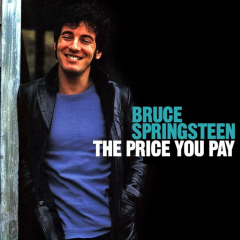
“The Price You Pay” was written by Bruce Springsteen and appears as the second song on side four of Springsteen's fifth studio album, The River. The lyrics address how the choices we make determines the price we pay. Personnel on the record were: Bruce Springsteen (lead vocals; electric, acoustic, and 12-string guitar; harmonica, percussion), Clarence Clemons (sax, backing vocals), Danny Federici (Hammond organ, piano), Garry Tallent (bass), Steven Van Zandt (electric guitar, backing vocals) and Max Weinberg (drums, percussion).
The River was recorded between March 1979 and August 1980 at The Power Station in New York City. The album was produced by Jon Landau, Bruce Springsteen and Steven Van Zandt, and released in October 1980. It is Springsteen's only double studio album. Seven singles were released from the LP, with “Hungry Heart” reaching #5 on the Billboard Hot 100 Singles chart. “Hungry Heart” was originally written for The Ramones, but after Springsteen’s manager/producer Jon Landau heard it, he advised Springsteen to keep it for himself. One has to wonder if the Ramones would have had a hit with the song if they had recorded and released it. The River went to #1 on the Billboard Top 200 Albums chart, and has been certified 5x Platinum by the Recording Industry Association of America.
Bruce Springsteen is an American singer, songwriter and musician who is a solo artist and leader of the E Street Band. Nicknamed “The Boss,” Springsteen has sold over 135 million records worldwide. He has released 19 studio albums, 23 live albums, one soundtrack album, eight compilation albums, seven EPs and 70 singles. He has won one Academy Award, four American Music Awards, one Brit Award, two Golden Globe Awards, 20 Grammy Awards, two Grammy Hall of Fame Awards and one Tony Award. Springsteen is a member of the Rock and Roll Hall of Fame, the Songwriters Hall of Fame, and the New Jersey Hall of Fame. He is a recipient of a Kennedy Center Honor and Presidential Medal of Freedom. The Boss and his E Street Band started their 2023 tour last month in Tampa.




Comments
How much of an impact are the exclusion areas like Singapore on the decision to put a scrubber in?
In reply to exclusion areas like Singapore? by g p
If you mean the ports excluding scrubbers that are open loop (using seawater to clean the scrubber) then this does have an impact on the scrubber investment. Our assumption is that the scrubber is closed loop so that it could be used in all regions. If the scrubber is open loop then the investment risk is higher and payback wouold be constrained by the limit on voyages.
In reply to If you mean the ports by Sandy Fielden
My impression is that most scrubber purchases have been, and continue to be, for open loop systems. There's really nothing wrong with them, Singapore is being overly fussy...possibly to defend their bunkering business. So anyhow if you just model closed loop, you're kind of modeling an abstraction.
That said, if the overall market shifts to requiring closed loop that would be interesting. I mean, I would still hate it. But would the sort of market adjustment you all love to analyze.
I guess if you're modeling closed loop costs/benefits, my question is irrelevant. But would still be interested in some analysis of closed versus open cost/benefit. Cost would probably be easier to quantify as the benefit would differ by region (and even have an aspect of future optionality if more regions fall for the Singapore stu...err...fallacies.
The 2019 computation seems to have been done using spot prices what would the result if 2019 forward prices had been used instead?
In reply to Is the profitability of Scrubbers a surprise? by Levis Kochin
Hi Levis,
Back in March 2019 the forward curve for VLSFO didn't exist because it wasn't being traded yet.
Sandy