On Friday, global energy markets entered uncharted territory. Already facing declining demand due to the impact of COVID-19, markets then were dealt a body blow with the collapse of the OPEC-Plus alliance and the resulting prospect of a significant increase in supply. Saudi Arabia wanted to manage supply to balance against lower demand, but Russia was having none of it. Instead, reports from the OPEC-Plus meeting indicate that Vladimir Putin has declared war on U.S. shale. Then on Saturday, the plot thickened. Saudi Arabia made huge cuts in the price of its crude oil, presumably in a high-stakes move to bring Russia back to the negotiating table. Even though we are witnessing unprecedented market conditions, it’s not Armageddon. Crude oil will continue to be pumped, piped, shipped and refined. Most infrastructure projects under construction before the collapse in oil prices will be completed. The big question is, how will the market adapt? In today’s blog, we’ll begin an exploration of that question.
Events are moving fast these days. Last week in Free Fallin', we considered the impact of a collapse in the crude oil market that brought WTI Cushing for April delivery down to $44.76/bbl, with natural gas and NGL prices also coming down hard. Energy prices were already under pressure from continued record production levels from U.S. shale, weakening demand, a mostly mild winter and a general investor pall over all things carbon. At that point, the threat of a global coronavirus pandemic was enough to take the market to the edge of the abyss. What could be worse? About the only thing would be a meltdown of OPEC-Plus at its early-March meeting in Vienna. Which is just what we got. And now we are plunging into the abyss. WTI collapsed to the low $30s/bbl in weekend trading. Perhaps this really is Armageddon.

The Crude Oil Billboard keeps readers at the forefront of the U.S. crude oil market by offering access to data and information moments after its release. Say goodbye to PDF reports that come out after the market has already moved on.
The left graph in Figure 1 shows what the abyss looked like on Friday for Brent (army-green line) and WTI Cushing (blue line). Since January 2, prices for both were off by about one-third, down ~$21/bbl and ~$20/bbl, respectively. As indicated in the dashed red oval, crude prices were hit hard during the last week of February, but then gradually crept higher early last week — until the end of the week as the OPEC-Plus news started to leak out, and then became official on Friday. Various pundits started to predict that the price plunge would continue, headed down to levels not seen since the depths of the late-2015/early-2016 price crash. And that looks like where we are headed. So looking back to that last dire period for oil markets, what happened back then?
About the song
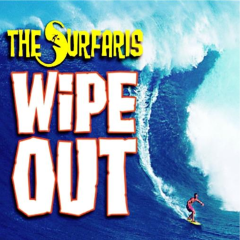
"Wipe Out" was written by Bob Berryhill, Pat Connolly, Jim Fuller and Ron Wilson (The Surfaris), and is the first cut on side one of The Surfaris' album of the same name. The band wrote the song on the spot in the studio for the B side of the single, "Surfer Joe." All of The Surfaris were in their mid-teens when they wrote “Wipe Out.” It is based on the same format as Preston Epp's 1959 hit, "Bongo Rock." Featuring an infectious drum beat throughout the song, the tune begins with a reverb-drenched sound of a board breaking, intended to sound like a surfboard breaking in two. This is followed by a manic voice saying, "Ha, ha, ha, ha, ha ... wipe out!" The Surfaris' manager, Dale Smallin, provided the recitation intro. Initially released in January 1963 on the independent label, DFS, then released again in February 1963 on the Princess label, the song became a hit after it was picked up for national distribution by Dot Records in April 1963. Dot quickly followed up with an album centered around "Wipe Out." The single went to #2 on the Billboard Hot 100 Singles chart. Personnel on the record were: Bob Berryhill (rhythm guitar), Jim Fuller (lead guitar), Pat Connolly (bass), Ron Wilson (drums) and Dale Smallin (recitation).
The Wipe Out LP, including its title track, was recorded at Pal Recording Studio in Cucamonga (now named Rancho Cucamonga), CA. During the recording, The Surfaris added saxophonist Jim Pash to the band. Richard Delvy produced the sessions. Delvy was a pioneer in the surf music scene, starting out as the drummer for The Bel-Airs, before going on to become a composer, arranger, music publisher, manager and record producer.
The Surfaris were an American surf rock band formed in Glendora, CA, in 1962. They are known for the hit records "Surfer Joe" and "Wipe Out,” which were the A and B sides of the same single. They have released nine studio albums and seven singles. "Wipe Out" has appeared on various compilation albums, and is featured in several television shows and movies. Original band member Bob Berryhill still occasionally performs with a band called The Surfaris. Pat Connolly left the music business in 1965. Ron Wilson died in 1989, followed by Jim Pash in 2005 and Jim Fuller in 2017.