For the first time since late September 2013, the ratio of crude oil to natural gas (CME/NYMEX) futures on Friday hit 30X. That means the price of crude oil in $/bbl was 30 times the price of natural gas in $/MMBtu. Such a wide disparity in the value of the liquid hydrocarbon versus the gaseous hydrocarbon has huge implications for where producers will be drilling, the proportion of associated and wet gas that will be produced, the outlook for NGL production, and a host of other energy market developments. The ratio has been moving higher for the past couple of years, and recently has been boosted by the combined impact of increased tension in the Middle East (higher oil prices) and a warm winter so far in many of the largest gas-burning population centers in the U.S (lower gas prices). But it’s pretty likely that the trend will be with us for the long term. So today, we’ll begin a series that looks at the implications of this price relationship.
Back in the early days of the Shale Revolution, we wrote a number of blogs on the crude-to-gas ratio. That price relationship was really driving a lot of what we were seeing in the market at the time. (See NGLs in a 50X Crude-to-Gas Ratio World from 2012 and Consequences of a Lower Crude-to-Gas Price Ratio from 2014.) Since then, the ratio has continued to bounce around, but it’s been a while since we’ve put it in the spotlight, so to begin we’ll review some of the history of this important price ratio.

Crude Oil TradeView provides up-to-date data and insights into the behavior of differentials for 33 crude assessments across North America. Each week, it also walks you through the reasoning of why differentials widen, narrow, flip (premium vs. discount), or blow out.
The crude-to-gas ratio is a measure of the relative value of hydrocarbons in a liquid form (e.g. crude oil) and hydrocarbons in a gaseous form (e.g. natural gas). Here, we are using the front-month futures contract price for CME/NYMEX crude oil at Cushing versus the natural gas price at Henry Hub. There are two ways typically used to express the crude-to-gas ratio: (a) the rule of thumb method, which is simply crude price divided by natural gas price; or (b) the Btu ratio method, which is gas price divided by (crude price/5.8), where 5.8 is the approximate number of MMBtu in a barrel of crude. RBN Energy sticks to the rule of thumb method since it is more intuitive.
About the song
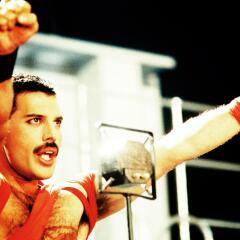
"Radio Ga Ga" was written by Roger Taylor, and appears as the first cut on Queen's 11th studio album, The Works. The song was released as the first single from the album in February 1984, and went to #16 on the Billboard Hot 100 chart. The inspiration for the song came to Taylor when he heard his three-year-old son say "radio ca-ca" when referring to the music playing on the radio. The song's lyrics became a reminiscence for when radio was the go-to place for hearing exciting new music at a time when music videos were taking over. As a side note, Lady Ga Ga (Stefani Germanotta) came up with her name when her producer, Robert Fusari, told her she reminded him of the Queen song, "Radio Ga Ga." Personnel on the record were: Freddie Mercury (lead vocal, backing vocals, synthesizer), Roger Taylor (drum programming, synthesizer, backing vocals), Brian May (electric guitar, slide guitar, backing vocals), John Deacon (bass) and Fred Mandel (synthesizer).
The Works was recorded between August 1983 and January 1984 at The Record Plant in Los Angeles and Musicland Studios in Munich, Germany. The LP, produced by Queen and Reinhold Mack, was released in February 1984 and went to #23 on the Billboard Top 200 Albums chart. Four singles were released from the album. The Works was certified Gold by the Recording Industry Association of America.
Queen is a British rock band formed in London in 1970. The group’s classic line-up was: Freddie Mercury (lead vocals, piano), Brian May (guitars, backing vocals), John Deacon (bass) and Roger Taylor (drums, backing vocals). Queen has released 15 studio albums, 10 live albums, two soundtrack albums, 15 compilation albums, seven EPs and 72 singles. The band has won five Brit Awards and four Ivor Novello Awards. Queen is a member of the Rock and Roll Hall of Fame, Songwriters Hall of Fame, UK Music Hall of Fame and Grammy Hall of Fame. The band also has a Grammy Lifetime Achievement Award. Freddie Mercury died in November 1991, and John Deacon retired from the band in January 1997. Original members Brian May and Roger Taylor have continued to tour under the Queen banner with supplemental touring musicians. Paul Rodgers was the featured vocalist for the band from 2004 to 2009. Adam Lambert has been the featured vocalist since 2011. The Queen and Adam Lambert Rhapsody Tour will begin in Europe in May 2020.