Europe is trying to wean itself off Russian natural gas, and few things would help it more than an expansion of U.S. LNG export capacity. But LNG projects don't just need long-term commitments for their output, they also need pipelines to transport natural gas from the Marcellus/Utica and other distant production areas to their coastal liquefaction plants. And, in case you hadn't noticed, new interstate gas pipelines face a lot of hurdles during the regulatory review process these days — getting a pipeline approved is tougher than snagging a Saturday morning tee time. Which brings us to, of all things, an important court ruling. In today's RBN blog, we discuss the implications of the DC Circuit's decision in City of Oberlin v. FERC.
On July 8, the U.S. Court of Appeals for the District of Columbia Circuit (a.k.a. the DC Circuit) updated a decision that could have a significant impact on the supply of feedgas to LNG export facilities. In the case of City of Oberlin, Ohio v. FERC, the DC Circuit reversed an earlier finding that the Federal Energy Regulatory Commission (FERC) had not explained why export volumes on a proposed interstate pipeline project can be used to help justify approval of the new pipe projects. The case involved the city of Oberlin's challenge to FERC's approval of the NEXUS pipeline, carrying natural gas from the Utica Shale in eastern Ohio to the gas hub in Dawn, ON (among other destinations). The project sponsors had included the gas flows to Dawn as support for approval of the pipeline, to help meet the requirements of FERC’s “certificate policy” that a public benefit had to be shown for pipeline construction to be authorized.
In what the DC Circuit now refers to as its "Oberlin I" decision, the court, in 2019, found that FERC needed to explain why volumes on NEXUS going to Canada were a benefit to the U.S. public. That decision had been used by LNG opponents, such as Sierra Club, to claim that the same issue affects feedgas pipelines built to serve LNG export terminals. They argued that such pipelines shouldn’t receive certificates to allow construction or the eminent domain rights that automatically go with those certificates if they didn’t show a benefit to the U.S. public. The DC Circuit's decision last month (“Oberlin II”) reversed Oberlin I, finding that FERC has now explained itself well enough and that, yes, natural gas exports can provide public benefits in the U.S. So, does this reversal clear the way for LNG feedgas pipelines to be built without running into legal roadblocks? Well, it pretty much knocks down one potential roadblock, but that’s a start.
About the song
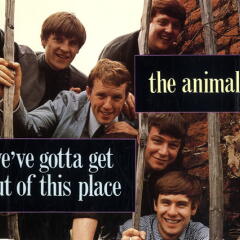
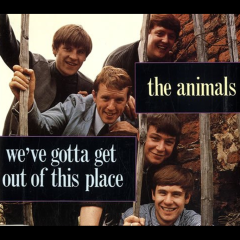
"We Gotta Get Out of This Place" was written by the husband/wife songwriting team of Barry Mann and Cynthia Weil. It was originally intended for The Righteous Brothers to cover, but when Barry Mann got a solo recording deal with Red Bird Records, they wanted him to release it first. That didn’t happen –– a demo made its way to English hit record producer Mickie Most, and he immediately recorded it with The Animals, who released it in July 1965, beating Mann to the punch. The song reached #13 on the U.S. pop singles chart, and #2 on the UK pop singles chart, whose #1 position was held by The Beatles with "Help!"
“We Gotta Get Out of This Place” appears on the album Animal Tracks, which The Animals released in the fall of 1965. It is also included in the hits collection Best of The Animals, released in 1966. The song begins with a bass intro by Animals bassist Chas Chandler, who would later go on to be the man who discovered, managed and produced Jimi Hendrix. "We Gotta Get Out of This Place" became a favorite song at high school graduations and proms, and would become hugely popular with American G.I.s serving in the Vietnam War.
Scores of artists have covered "We Gotta Get Out of This Place" over the years. At the 2012 SXSW Festival in Austin, TX, Bruce Springsteen recited the lyrics to the song at his keynote speech, stating "that's every song I've ever written" in testimony to the tune’s power.
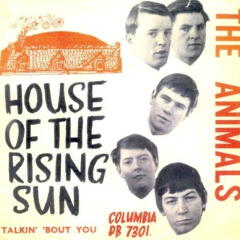
The Animals were formed in Newcastle, England, in the early 1960s. They hit it big with the release of their second single, "House Of the Rising Sun," which went to the top of the charts in June 1964. Eric Burden has always been the vocalist with the band, with various members drifting in and out. The version of The Animals on this recording was the longest lasting and most popular. Then, they consisted of Eric Burden (vocals), Chas Chandler (bass), Hilton Valentine (guitar), John Steel (drums) and Dave Rowberry (organ).
The Animals recorded 13 studio albums over the years. The group was inducted into the Rock & Roll Hall of Fame in 1994. "We Gotta Get Out of This Place" ranked #233 on Rolling Stone Magazine's 500 Greatest Songs of All Time. Eric Burden and The Animals’ guitarist Hilton Valentine still tour and play individually. Chas Chandler passed away in 1996. Jimi Hendrix's last public performance was playing guitar with his friend Eric Burden & War at Ronnie Scott's Jazz Club in London, jamming on the tune "Tobacco Road."