


A great deal of attention has been heaped on the carbon-capture industry over the past couple of years, from its inclusion in major federal legislation such as 2021’s infrastructure bill and last year’s Inflation Reduction Act, plus all sorts of recently announced carbon sequestration projects. Still, there are plenty of concerns that the technology is not fully baked, that many of the projects are not ready for prime time, and that few have the practical know-how to deploy carbon capture and sequestration (CCS) at scale. But what if there was a company that has been doing carbon sequestration for a very long time — decades in fact? And what if that company has built out a huge carbon dioxide (CO2) collection, distribution and sequestration system on the Gulf Coast along with concrete plans for a massive expansion of this network to capture a lot more manmade, “anthropogenic” CO2, not in decades but in just a few short years? A company like that would be pretty much the ideal acquisition candidate for a cash-flush multinational with big ESG goals and strategies, right? As we discuss in today’s RBN blog, that is just what is happening with ExxonMobil’s acquisition of Denbury, a deal that will create today’s undisputed leader in CCS.
ExxonMobil announced July 13 that it is acquiring Denbury in an all-stock transaction valued at $4.9 billion. As stated in the press release, the Denbury deal “provides ExxonMobil with the largest owned and operated CO2 pipeline network in the U.S. at 1,300 miles, including nearly 925 miles of CO2 pipelines in Louisiana, Texas, and Mississippi … as well as 10 strategically located onshore sequestration sites.” And all of this is located along the Gulf Coast industrial corridor, an area that has some of the highest concentrations of CO2 emissions anywhere in the world.
The replay of our Fall 2026 School of Energy (September 9 & 10, Houston) is now available online!
Learn from RBN experts, participate in hands-on Excel modeling, connect with industry peers, and gain a stronger understanding of today's interconnected energy markets.
Yup, it’s a big deal that will move CCS forward much faster than would be the case otherwise. We’ve been big fans of Denbury for a long time at RBN, so we are compelled to describe this deal with that highly overused phrase: “game changer.” The combination brings together two of the leading companies focused on CCS, both with deep experience in the technology, one with a leadership position in existing assets (Denbury) and the other with the money and strategic intent to take it where it needs to go (ExxonMobil).
About the song
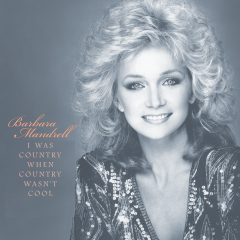
“I Was Country When Country Wasn't Cool” was written by Kye Fleming and Dennis Morgan. It appears as the fourth song on side two on Barbara Mandrell’s 11th album and only live album, Live. Released as the first single from the album in April 1981, it went to #1 on the Billboard Hot Country Songs Singles chart. The song features an uncredited guest appearance by country legend George Jones. This song propelled Mandrell to win the Country Music Association’s “Entertainer of the Year” award in 1981 and to earn a Gold certification for Live from the Recording Industry Association of America (RIAA). Personnel on the record were: Barbara Mandrell (lead vocals), George Jones (guest vocalist), Mike Jones (steel guitar, mandolin), Gene Miller (guitar, backing vocals), Charlie Bundy (bass, backing vocals), Gary Smith (piano, backing vocals), Lonnie Webb (synthesizer, backing vocals), and Randy Wright (drums, backing vocals).
Live was recorded live at the Roy Acuff Theater in Nashville and produced by Tom Collins. Released in August 1981, the album went to #4 on the Billboard Top Country and #86 on the Billboard 200 Albums charts and was certified Gold by the RIAA. It was one of Mandrell’s best-selling albums. Two Top 10 singles were released from the LP.
Barbara Mandrell is an American country music singer and multi-instrumentalist. She came from a musical family and got her professional start at the age of 11 playing steel guitar for Joe Maphis, who helped her secure a regular spot on the California country music television program, Town Hall Party. She also spent time traveling and performing in the Mandrell Family Band until securing her first record deal with Columbia Records in Nashville in 1969. She has had six #1 singles and hosted her own television variety show in the 1980s. She has released 25 studio albums, one live album, 20 compilation albums, and 54 singles. She has won six ACM Awards, seven American Music Awards, four CMA Awards and two Grammy Awards, and was inducted into the Country Music Hall of Fame in 2009. In 1997 Mandrell sold all of her musical instruments and retired from recording, touring and performing. Now, at the age of 74, she spends her time with her family at their Nashville home.




Comments
Good article...thanks. One additional fact not mentioned in the article is XOM's considerable experience with carbon capture and sequestration ar their LaBarge Wyoming gas plant. XOM touts having sequestered more CO2 there than has been anywhere else. Furthermore, they're slated to expand that operation. See this press release: https://corporate.exxonmobil.com/news/news-releases/2021/1021_exxonmobil-plans-to-increase-carbon-capture-at-labarge-wyoming-facility...