Corporate mergers and asset acquisitions are the normal course of business in almost any industry, but the pace of this kind of activity has recently picked up among Canada’s natural gas producers. Battered by several years of low prices, market share loss, and declining production, the position for many already-struggling gas producers only got worse when COVID hit last year. As you might expect, better placed and stronger gas producers are looking at struggling companies that have attractive assets to see if they might make accretive asset purchases or outright corporate takeovers. Today, we examine some of the most prominent natural-gas-related transactions and the motivations behind them.
Canada’s natural gas producers, perhaps even more so than their U.S. cousins, have had an exceptionally tough time the past few years. Crazy-low summer pricing and volatility, loss of market share in the U.S., and declining production were the issues that plagued the industry in the late 2010s. And that was before COVID arrived a year ago this month, further decimating the industry with immense uncertainty and further reductions in cash flow and production as drilling activity dried up. If there was a bright spot in 2020, it was that benchmark AECO prices recovered in the summer to levels well above what was seen in the previous three summers.
Unfortunately for some Canadian gas producers, however, the 2020 AECO summer price recovery was too little, too late. Limited cash flows, disappointing earnings, high debt levels, and little to no access to equity or additional debt had become too much to bear. Not to mention, a growing investor emphasis on environmental, social, and governance (ESG) issues served to further hinder the path to recovery for some producers. Short of declaring outright bankruptcy (and some have done that), the alternative for these companies was to either sell assets or merge with a stronger producer to save what had been built up in prior years.
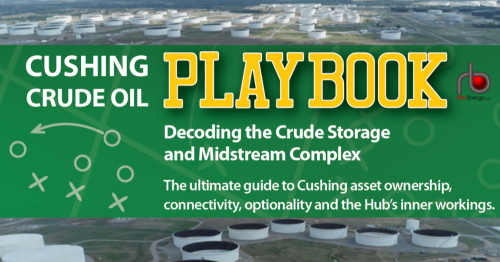
To truly understand Cushing — what it does and how it works — you need to know the hub’s assets and how they fit together. RBN’s Cushing Crude Oil Playbook provides the first one-stop, comprehensive guide to the hub’s assets.
About the song
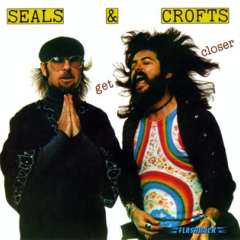
"Get Closer" was written by Jim Seals and Dash Crofts and appears as the second song on side one of Seals & Croft's eighth studio album of the same name. The song, which features vocals from Carolyn Willis, formerly of the group Honey Cone, was produced by Louie Shelton and released as a single in April 1976. It went to #2 on the Billboard Easy Listening chart and #6 on the Billboard Hot 100 Singles chart. Personnel on the record were: Jim Seals (lead vocals, guitar), Dash Crofts (lead vocals, mandolin); Louie Shelton, Ray Parker Jr., and Lee Ritenour (guitar); David Paich and Joe Sample (keyboards); David Hungate and Will Felder (bass); Jeff Porcaro and Ed Greene (drums); Milt Holland (tabla); and Merna Matthews, Shirley Matthews, Carol Carmichael, Donnie Shelton, and Carolyn Willis (lead and backing vocals).
The album Get Closer was released in May 1976. Produced by Louie Shelton, it went to #37 on the Billboard Top 200 Albums chart. Two singles were released from the LP.
Seals and Crofts were an American soft rock duo formed in Los Angeles in 1969 by Jim Seals and Dash Crofts. Both musicians met in Texas and moved to Los Angeles in 1959 to be part of The Champs, who were riding high in the charts from their 1958 hit, "Tequila." In 1969 they got a deal as a duo from Talent Associates, and recorded their first album as Seals & Crofts. They have released 17 studio albums, and 16 singles. The duo has been inactive since 2004, when they released their last album, Traces. Jim Seals lives on his coffee ranch in Costa Rica, and Dash Crofts lives in retirement on his ranch in Texas’s Hill Country.