The June 2013 decision by Southern California Edison (SCE) to permanently shut down its San Onofre Nuclear Generation Station (SONGS)—the largest power generator in the region—got the attention of the natural gas industry, and for good reason. Natural gas interests view gas-fired generation as the logical replacement for the now-gone 2,200 MW nuclear capacity, but many other forces are at work. In this two-part series we examine southern California’s electricity cunundrum, and how big a part natural gas is likely to play in keeping the lights and air conditioning on and the pool pumps pumping.
The two-unit, 2,200-MW SONGS facility for years was a linchpin in the region’s electric grid (see Play Me A Songs). A relatively low-cost, around-the-clock generator at a pivotal location, San Onofre provided critical voltage support—an electrical engineer’s way of saying it kept the grid on an even keel. Natural gas interests expect SONGS capacity to be replaced by gas fired generation. And gas will surely have a significant role in the electricity future of the Los Angeles Basin, San Diego, and California as a whole. But because of state policies and Federal rules, among other things, utilities and merchant power companies may well end up consuming less gas than they do now, and commercial and industrial firms may use more.
One big factor is California’s push for renewable energy and energy efficiency - including combined heat and power (CHP) plants that squeeze as much energy as possible out of each btu. Another is federal rules that will require about 3,800 MW of older gas-fired plants in southern California that use “once-through cooling” to be retired by 2020 (see Figure 1; note SONGS is just north of San Diego). Once-through cooling - like it sounds - releases cooling water after its been used only once, instead of recycling it—the preferred method now.

Figure 1
Source: California Energy Commission (Click to Enlarge)
Another 1,200 MW of gas-fired capacity in southern California is aging, inefficient and also likely to be taken offline within a few years. Regulators, gas-plant owners and others also need to wonder, how might the gas-delivery needs of power generators be affected by plans to export LNG from the region’s ports, or plans to pipe more U.S. gas south to Mexico?
In the first half of this two-part series we consider the closure of SONGS and how state policy and federal regulations are shaping natural gas’s future role in the southernmost third of the Golden State. In the second half, we will examine in more detail where gas demand is headed in California—and why—and what that means for gas producers with access to that market.
SCE decided in June it no longer made economic sense to hold out hope that SONGS units 2 and 3 could be restarted any time soon. Both units--which are co-owned by SCE (78.2%), San Diego Gas & Electric (20%) and the city of Riverside (1.8%)--had been taken offline in January 2012, Unit 2 for a planned routine outage and Unit 3 when operators detected a small leak in a steam generator tube. (Unit 1 was retired in 1992.) Subsequent testing found premature wear in tubes throughout both units’ steam generators, which had been replaced in 2009-10. It looked as if it might take years for federal nuclear regulators to approve fixing and restarting the units, so SCE and the other co-owners of SONGS decided it was better to pull the plug on them and work with state regulators to plan for replacing their output and reworking parts of southern California’s transmission system to keep the grid on an even keel without the nuclear capacity. As a result the power-supply situation in the LA Basin and San Diego this past summer was dicey, with utilities worried that the loss of a key transmission line or big gas-fired unit during a heat wave could cut off power to hundreds of thousands or even millions of customers.
Fingers-crossed for the near-term, entities like the California Energy Commission (CEC), the California Public Utilities Commission (PUC) and the California Independent System Operator (ISO)—the last of which orchestrates the operation of the state’s electric grid—are looking medium- and long-term at how best to deal with the loss of SONGS on top of the regulatory need to retire that 3,800 MW of gas-fired capacity in southern California that uses once-through cooling and the economic need to retire that 1,200 MW of other, older gas-fired capacity. What they ultimately do is being influenced significantly by the state’s very pro-environment policies. They include a mandate that 33% of the electricity consumed in the state in 2020 and beyond come from renewable soures; a requirement to reduce the state’s greenhouse gas emissions to 1990 levels by 2020, and a goal to cut them 80% from there by 2050; a goal of making all new homes “zero-net-energy” (that is, highly energy efficient and fitted with solar or other on-site power sources that meet all their needs) by 2020 and all businesses zero-net-energy by 2030; and a target of 6,500 MW of additional CHP capacity by 2030.
Taken together, these policies call for reducing demand for electricity, maximizing the role of renewable sources like solar and wind, and—because of the need to minimize greenhouse gas emissions--turning to gas-fired combined-cycle units and combustion turbines only to the extent they are truly needed. Of course, solar facilities make power only when the sun shines, and wind turbines spin only when the wind blows, so electric grids need back-up sources—typically in the form of gas-fired plants because of their operational flexibility—to ramp up when renewables output ramps down, and vice versa. But from California’s pro-environment perspective, running gas-fired units as supplements to renewables is one thing; running gas-fired plants flat-out around the clock to replace all of SONGS’s carbon-free output is quite another because it would set back the state’s greenhouse gas reduction effort. One more thing worth noting: Even though a lot of existing and planned gas-fired plants in southern California are likely to operate only part of the time, as a supplement to renewables, they need access to gas pipeline capacity so they will have all the gas they need when they need it. That’s why Southern California Gas and SDG&E (both are subsidiaries of Sempra Energy) want to beef up southern California’s existing gas-pipeline network (see Figure 2); both plan to propose new pipeline projects soon.

About the song
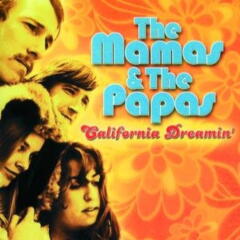
"California Dreamin'" was written by John and Michelle Phillips, and it appears as the first song on side two of The Mamas & The Papas’ debut studio album, If You Can Believe Your Eyes and Ears. A little-known fact about this song is that it was originally recorded and released by Barry McGuire, with The Mamas & The Papas singing backing vocals on it. After it failed to become a hit, producer Lou Adler, who worked with McGuire and The Mamas & The Papas, erased McGuire's vocals on the recording and added The Mamas & The Papas’ Denny Doherty singing the lead. After adding a guitar intro and alto flute solo, Adler re-released the song as a Mamas & Papas single in December 1965. If you listen closely to the song in headphones, on the left side, you can hear a snippet of McGuire's original lead vocal as the song begins. It went to #4 on the Billboard Hot 100 Singles chart and has been certified Gold by the Recording Industry Association of America (RIAA). The song was inducted into the Grammy Hall of Fame in 2001. Many artists have covered the song since its initial release. Personnel on the record were: Denny Doherty (lead vocals), John Phillips (backing vocals), Michelle Phillips (backing vocals), Cass Elliot (backing vocals), P.F. Sloan (guitar), Joe Osborn (bass), Hal Blaine (drums), Larry Knechtel (keyboards), Peter Pilafian (electric violin), and Bud Shank (alto flute).
If You Can Believe Your Eyes and Ears was recorded at Western Studios in Hollywood in late 1965 and early 1966. Produced by Lou Adler, the album was released in February 1966 and went to #1 on the Billboard Top 200 Albums chart. Four singles were released from the LP, which has been certified Platinum by the RIAA.
The Mamas & The Papas were an American folk rock vocal group formed in Los Angeles in 1965. They have sold more than 40 million records worldwide and have released five studio albums and 17 singles — six of the singles made the Top 10. The Mamas & The Papas are members of the Rock and Roll Hall of Fame and the Vocal Group Hall of Fame. The band officially broke up in 1969, with all four members going on to solo careers. Cass Elliot died in 1974, John Phillips in 2001, and Denny Doherty in 2007. Michele Phillips has continued to have a successful career as an actress.