Biodiesel has long constituted a small but stable portion of the diesel fuel diet in North America, its production being driven primarily by the U.S. Renewable Fuel Standard and Biodiesel Income Tax Credit (BTC). Produced from a variety of feedstocks, including soybean oil, corn oil, animal fats, and used cooking oils, biodiesel offers a low “carbon intensity,” or CI — a big plus in California and other jurisdictions with low carbon fuel regulations. The incentives for producing biodiesel are substantial, but there are two big catches with the fuel: a limited supply of feedstocks and properties limiting how much can be blended with petroleum-based diesel. Today, we continue our series on low carbon fuel standards with a look at biodiesel’s pros, cons, history, and prospects.
We’ve received even more interest in this blog series than we expected — clearly, folks want to get a handle on the low carbon fuel policies being evaluated and implemented in the U.S. and Canada to meet increasingly stringent greenhouse-gas-related regulations. They also want to better understand the impact these rules could have on refined products markets. In Part 1, we provided an overview of various policies that have been adopted and are being discussed to reduce GHG emissions from on-road transportation fuel use. We also noted some of the more widely-used approaches being taken, including fuel economy standards, renewable blending requirements, zero emission vehicle mandates, and low-carbon fuel standard (LCFS) programs in California and Oregon, the Canadian province of British Columbia, and the proposed Canadian Clean Fuel Standard. LCFS programs are usually established and measured based on the carbon intensity (CI) of fuels used. CI is a measure of the lifecycle GHG emissions associated with producing, distributing, and consuming a fuel, which is measured in grams of carbon dioxide equivalent per megajoule (gCO2e/MJ). (That’s the simple version.) Typically, LCFS policies establish downward-sloping carbon-intensity benchmarks for the jurisdiction’s total on-road transportation fuel pool and incentivize the production and blending of lower-CI fuels to meet the benchmarks.
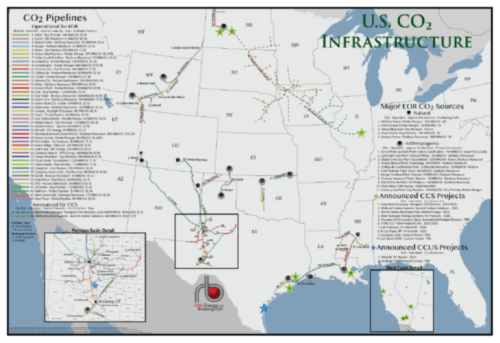
RBN Energy’s US CO₂ Infrastructure map brings together legacy Enhanced Oil Recovery (EOR) assets, as well as announced large-scale Carbon Capture and Sequestration (CCS) and Carbon Capture, Utilization and Sequestration (CCUS) projects, all in our signature concise, accurate, and intelligible style.
In Part 2, we focused on California’s LCFS, which was implemented in January 2011 and which grew out of a number of earlier efforts by the nation’s most populous state to improve air quality and, more recently, reduce its GHG emissions. The LCFS assigns a CI target value for petroleum-based gasoline and diesel fuels, as well as their substitutes (such as ethanol, biodiesel, etc.), using a total of four models to calculate the direct and indirect effects of producing and using the fuels. The LCFS then sets maximum CI limits on finished gasoline and diesel fuel consumed in California each year on a gradually declining scale to meet the 2030 goal of a 20% reduction in the carbon intensity of motor fuels consumed in the state. Petroleum-based fuels have CIs higher than the annual limits and renewable fuels are generally below the annual limits. If a fuel has a CI above the limit, it generates a deficit and if a fuel is below the line, it generates a credit. (Again, see Part 2 for details.)
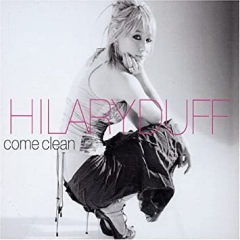
About the song
"Come Clean" was written by Kara DioGuardi and John Shanks and in January 2004 was the second single released from Hilary Duff’s second studio album, Metamorphosis. Produced by John Shanks, the song peaked at #35 on the Billboard Hot 100 Singles chart in the U.S., but broke into the Top 20 in the UK and Australia.
The song was used in the theatrical trailer for the 2004 film A Cinderella Story, which stars Duff. It also was used as the theme song for the MTV reality television shows Laguna Beach: The Real Orange County and Newport Harbor: The Real Orange County. A remix of “Come Clean” was included in Duff’s 2005 compilation album, Most Wanted, and another remix appeared in the Best of Hilary Duff LP in 2008.
Hilary Duff is an American actress, businesswoman, singer-songwriter, producer, and writer. She began her acting career at a young age, starring in the TV series Lizzie McGuire in 2001-04, followed by leading roles in The Lizzie McGuire Movie and several other films.