There’s been a slew of high-profile shipments of “carbon-neutral LNG” the past few months, typically involving the use of carbon credits to offset, ton-for-ton, the carbon dioxide equivalent of greenhouse gases released during the production, piping, and liquefaction of natural gas, the shipping of LNG, and often the regasification and ultimate consumption of the gas too. The problem is, there is no widely agreed-to definition for carbon neutral, nor is there a consensus on how to quantify and validate the GHG “footprint” of a specific LNG cargo. Now, an international group representing the world’s LNG importers has established a framework for “GHG-neutral LNG” that it hopes will gain widespread acceptance. Elements of the proposal are sure to be controversial, however, as we discuss in today’s RBN blog.
Visualize the infrastructure behind U.S. NGL movement.
The U.S. NGLs Map provides a comprehensive view of the transport, processing, and export networks moving NGLs across the U.S.
Carbon neutrality has quickly become a buzz phrase — a simple way to tell the world that you’re concerned about the climate and that you’re taking steps to mitigate your impact on it. Most often, carbon neutrality is used in reference to corporate environmental, social, and governance (ESG) goals to make their operations carbon neutral by 2050, or sometimes by 2040 or 2060. (Patagonia, the green-as-can-be maker of sustainable outdoor clothing and gear, plans to be carbon neutral by 2025, and Google claims that it’s been carbon neutral since 2007!) Generally speaking, corporate carbon neutrality means switching to renewable energy and taking other steps to minimize and then fully mitigate (mostly through carbon credits) other GHG-producing elements of a company’s operations and products. Most carbon credits are generated by renewable energy projects (wind farms and solar facilities) or “nature-based” efforts such as protecting existing GHG-absorbing resources (forest preservation) or adding new ones (tree planting).
The carbon neutrality issue is a little more complicated — and fraught — for companies that produce, process, and transport hydrocarbons like crude oil, natural gas, and NGLs. For one thing, their operations can release significant volumes of CO2, methane, and other GHGs (referred to as Scope 1 emissions); the power plants from which they secure the electricity to run their businesses emit GHGs too (Scope 2 emissions). Most important, though, is the fact that — unlike most other industries — the vast majority of the energy industry’s GHGs are Scope 3, that is, emitted when hydrocarbon end-products are consumed, whether that be natural gas burned at a gas-fired power plant, gasoline or diesel combusted in a car or truck engine, or propane used to cook steaks on a backyard grill.
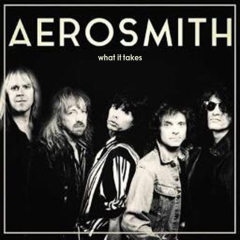
About the song
“What It Takes,” written by Steven Tyler, Joe Perry and Desmond Child, is a power ballad from the Aerosmith album Pump. The song went to #1 on the Billboard Mainstream Rock Tracks chart and #9 on the Billboard Hot 100 after its release in December 1989.
Pump was Aerosmith's 10th studio album. Released in September 1989, the LP was recorded earlier that year at Rik Tinory Productions in Boston and Little Mountain Sound in Vancouver, with Bruce Fairbairn producing. Six singles were released from the record, with three going to #1 on the Billboard Mainstream Rock Tracks chart, and three making it to the Top 10 on the Billboard 100. The single “Janie's Got a Gun” won Aerosmith its first Grammy Award. Personnel on the record were: Steven Tyler (lead vocals, guitar, keyboards, harmonica), Joe Perry (guitar, slide guitar, backing vocals), Brad Whitford (guitar), Tom Hamilton (bass, backing vocals) and Joey Kramer (drums).
Aerosmith is an American rock band formed in Boston in 1970. The group, which has been inducted into the Rock and Roll Hall of Fame, has made 15 studio albums, six live albums, 12 compilation albums, two EPs and 76 singles. Aerosmith has won six American Music Awards, four Billboard Awards, four Grammy Awards and 10 MTV Video Music Awards. The band has sold more than 150 million records worldwide and still records and tours, with its 2022 tour set to begin in Lisbon, Portugal, on June 1.