OPEC’s agreement at its November 30 meeting to cut crude oil output has sent prices soaring. Many U.S. producers already are anticipating brighter days, but before anyone pops the champagne it’s important to consider the deal’s potential vulnerabilities, and to factor in other market developments that reduce the agreement’s effect. Today we look at pre-deal maneuvering, the impact of those maneuvers on the level of supply, and the things that could still derail the move to market equilibrium.
At long last, the deal is done! Confounding skeptics, and sending crude oil prices soaring more than 10%, OPEC has agreed to reduce output beginning January 2017 by 1.2 million barrels per day (MMb/d). The long-sought agreement included a pledge by Russia to reduce its output by 300 thousand barrels per day (Mb/d), and on the expectation that other countries outside of OPEC would reduce output by another 300 Mb/d. Will OPEC be able to keep prices high after the initial shock of the deal wears off? To answer this question, and before we address the skepticism and headwinds facing the oil cartel, it is necessary to accurately gauge the starting point from which the cuts will be applied. Once that starting point is established, the market needs a barometer by which it can assess the deal’s chances of having a long-lasting effect.
Talk of an output cut started in earnest in mid-September (2016) after a number of failed attempts earlier in the year. OPEC members had every reason to believe that an eventual agreement would be hammered out at the November 30 meeting, and that October would be the benchmark from which cuts would be allocated. It was little wonder that OPEC exports (see Figure 1) soared in October.
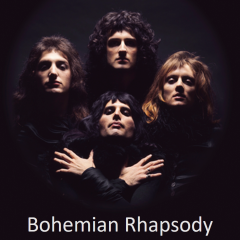
About the song
“Bohemian Rhapsody” is the lead single from Queen’s 1975 album, A Night at the Opera. The song was written by Queen’s frontman and lead vocalist, Freddie Mercury. No synthesizers were used on this recording. The song clocks in at just under six minutes, has no chorus, has multiple tempo changes, four key changes, has elements of the opera in it, and has lyrical content that refers to murder and nihilism ... all the elements for failure in the pop singles world! It was one of the earliest songs to have a promotional video with it — considered groundbreaking in 1975. The song shot to #1 on the UK charts after its release and peaked at #9 in the U.S.
After Freddie Mercury's death in November 1991, “Bohemian Rhapsody” re-entered the charts, and it did so again the following year after it was featured in the infamous AMC Pacer scene in the movie "Wayne's World." The song has sold over 6 million copies to date worldwide, was inducted into the Grammy Hall of Fame in 2004, and is listed in the Guinness Book of World Records as the UK's best single of the past 50 years.
When Queen was formed in London in 1970, its members were: Freddie Mercury (lead vocals and piano), Brian May (guitar and backing vocals), Roger Taylor (drums and backing vocals) and John Deacon (bass). The original foursome released 15 albums. After Freddie Mercury passed away in November 1991, May and Taylor toured under the Queen banner, using Paul Rodgers and then Adam Lambert as the group’s lead vocalist. Queen was inducted into the Rock and Roll Hall of Fame in 2001, and into the Songwriters Hall of Fame in 2003.