Many of the natural gas storage projects under development along the Gulf Coast involve the expansion of existing salt-cavern complexes and, with that, the sharing of at least some already-built infrastructure. That typically saves money, and the lower capital costs can help make a project a “go.” But at least a few well-sited projects competing for commitments are greenfield in nature and require not just the buildout of storage capacity itself but also the development of compression, freshwater wells, saltwater disposal wells, electricity supply, header pipelines and pipeline interconnections. In today’s RBN blog, we discuss two of the largest greenfield projects in the works: the Black Bayou Energy Hub in southwestern Louisiana and the Freeport Energy Storage Hub (FRESH).
The replay of our Fall 2026 School of Energy (September 9 & 10, Houston) is now available online!
Learn from RBN experts, participate in hands-on Excel modeling, connect with industry peers, and gain a stronger understanding of today's interconnected energy markets.
This is the fourth blog in our series on Gulf Coast gas storage. In Part 1, we explained that a combination of factors — rising gas production, increasingly undulating demand for gas (tied in part to the ups and downs of wind and solar power), frequent extreme weather events, new LNG export capacity, and plans for lots of new gas-fired power generation — have been boosting the value of Gulf Coast storage. We emphasized, however, that while gas storage capacity is increasingly valued for its role in providing volume assurance and the opportunities created by high deliverability, that doesn’t necessarily mean storage values will be high enough to support the large-scale buildout of new facilities. Instead, the development of new storage capacity is likely to be very targeted — it will happen only where it has strong customer support and makes economic sense.
We’ve also been discussing the existing and planned Gulf Coast storage sites of several major players in that space. In Part 1, we looked at Williams, which recently expanded its storage assets in the region with the purchase of Hartree Partners and its 115 Bcf of storage in Louisiana and Mississippi, and at Enbridge, which has more than 100 Bcf of Gulf Coast salt-cavern storage and is planning a 6.5-Bcf expansion at its 35-Bcf Tres Palacios site. In Part 2, we turned our attention to three other companies with existing Gulf Coast storage and plans for more: Kinder Morgan, with more than 155 Bcf along or near its Texas and Tejas intrastate pipeline systems (including a new 6-Bcf salt cavern at its Markham facility); EnLink Midstream (recently acquired by ONEOK), which owns three storage facilities in Louisiana and one in North Texas; and Enstor Gas, which has 110 Bcf of storage capacity across four states (Alabama, Mississippi, New Mexico and Texas) and plans to increase the capacity of one of its Mississippi sites by 34 Bcf.
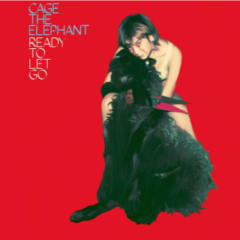
About the song
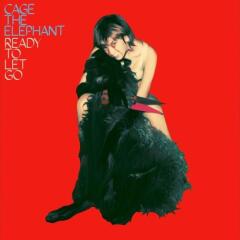
“Ready to Let Go” was written by Brad Schultz, Daniel Tichenor, Jared Champion, Matt Shultz, Matthew Minster, Nick Bockrath, and John Hill (Cage the Elephant). It appears as the sixth song on Cage the Elephant’s fifth studio album, Social Cues. It was released as the first single from the LP in January 2019 and went to #1 on the Billboard Hot 100 Singles chart. It has been certified Gold by the Recording Industry Association of America. The striking and bizarre video for the song was directed by Cage the Elephant’s vocalist Matt Schultz. Personnel on the record were: Matt Shultz (lead vocals, rhythm guitar), Nick Bockrath (lead guitar, pedal steel guitar, lap steel guitar, keyboards, celeste, cello), Daniel Tichenor (bass), Matthew Minster (piano, keyboards, vibraphone, backing vocals), Brad Shultz (rhythm guitar, keyboards) and Jared Champion (drums, percussion).
Social Cues was recorded in 2018 at Battle Tapes Recording, Blackbird Studio and Sound Emporium in Nashville and Village Recording Studio in Los Angeles. Produced by John Hill, the album was released in April 2019 and went to #21 on the Billboard 200 Albums chart. It won the award for Best Rock Album at the 62nd Annual Grammy Awards. Four singles were released from the LP.
Cage the Elephant is an American rock band formed in Bowling Green, KY, in 2006. The band relocated to London in 2008 before their debut album dropped. They have released six studio albums, two live albums and 17 singles. The band continues to record and tour. Their latest studio album, Neon Pill, was released in May 2024.