The prospect of procuring steady-as-she-goes production assets at reasonable prices has been spurring interest in the sprawling Anadarko Basin. In just the past few weeks, two privately held producers closed on deals totaling more than $4 billion, and earlier this month, publicly held Diversified Energy — in partnership with Carlyle Group, the global investment firm — announced an agreement to buy a big set of assets from Camino Natural Resources for nearly $1.2 billion. In today’s RBN blog, we discuss the big-money M&A happening in the Anadarko and the drivers behind it.
The 50,000-square-mile Anadarko Basin, which is centered in western Oklahoma but extends into the Texas Panhandle and western Kansas, has seen its ups and downs during the Shale Era. Back in the early-to-mid 2010s — after the booms in the Bakken and the Eagle Ford, and before the Permian took (and held) the spotlight — it seemed for a moment that all eyes were on the Anadarko’s SCOOP/STACK (see Figure 1 below; we’ll make brief mention of the adjoining Ardmore Basin in Part 2). Production from horizontal wells in the Anadarko continued rising through 2019, with crude oil output peaking at about 500 Mb/d and natural gas production approaching 7 Bcf/d.
But a combination of the Covid shock and better rock (and economics) elsewhere — especially the Permian — took the wind out of the Anadarko’s sails; so did the determination there was “pressure communication” between the STACK’s Meramec and Woodford formations, complicating development there. (Put simply, pressure communication means that wells in one formation are interfering with the other rather than behaving independently — a bad thing.) E&Ps in the play ratcheted down their Oklahoma capex; production sagged and then plateaued at less-impressive levels: about 300 Mb/d of oil and 5 to 5.5 Bcf/d of gas in recent years.
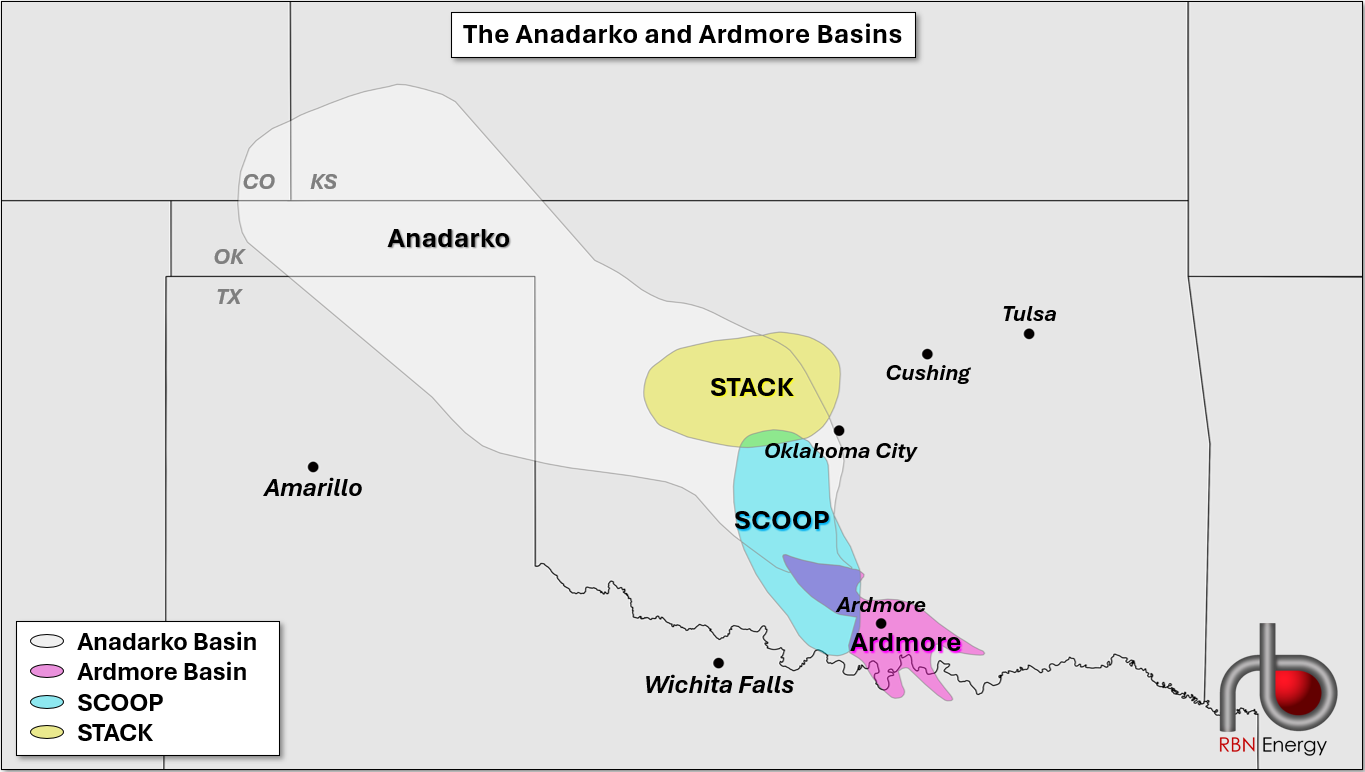
Figure 1. The Anadarko and Ardmore Basins. Source: RBN
Q1 2026 Earnings Calls: Venture Global Plans Expanded LNG Exports
Venture Global talked about its timeline for CP2 and discussed bolt-on expansions to its LNG facilities during its earnings call for the first quarter. The firm also discussed the role that Permian Basin supply will play in feeding CP2 once it is up and running.
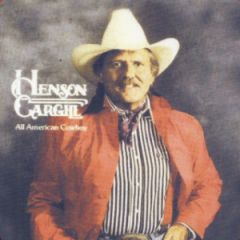
About the song
“Take Me Back to Oklahoma” was written by Henson Cargill and appears as the first song on his 1988 studio album, All American Cowboy. The song is a reflection on home, returning to one’s roots, and a nostalgia for living in Oklahoma. Personnel on the record were: Henson Cargill (vocals, guitar) and uncredited musicians (other instrumentation).
All American Boy is the eighth studio album from Henson Cargill. It features newly recorded versions of previously released material, along with a few new songs penned by Cargill. It was released from the independent Oklahoma City label, Amethyst Records, in 1988. It credits 25 players who participated in the record. It was offered for sale by mail-order from Cargill at the time.
Henson Cargill was an American country music singer and songwriter from Oklahoma City known mainly for his #1 country music hit single of “Skip a Rope,” written by Jack Moran and Glenn Douglas Tubb, and released in November 1967. After trying his hand at ranching and being a deputy sheriff in Oklahoma, Cargill started singing country music at bars around the OKC area in the mid-1960s. He joined The Kimberlys band and moved to Nashville, where he was signed by Fred Foster to a record deal at Monument Records in 1967. He released eight studio albums and 23 singles. In 1981, he gave up touring to open a nightclub in OKC called Henson’s. He retired from the entertainment business in 1988. Henson died in Oklahoma City in March 2007 at 66.
"About the Song" -- written by Mickey McMahan , RBN Director of Musicology