


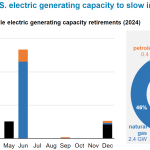
U.S. power-plant operators are expected to retire 5.2 GW of electric generating capacity in 2024, the lowest total since 2008, the Energy Information Administration (EIA) said in a report this week. That would represent a steep drop from last year, when 13.5 GW were retired. Most of the retirements -- 91% -- will be coal- or gas-fired generation (see graphic below).
Featured Articles


- Blog
Changes in Latitudes, Part 2 - Northeast Gas Pulled South by Florida Power Plants and Sabal Trail
Florida’s electric utilities are turning to natural gas-fired power and renewables for all their incremental generation needs and as replacements for the older coal units they’ve been retiring. The state’s big bet on natural gas has been spurring the development of new pipelines. And, because of big shifts in where gas is being produced and where it’s flowing, the Sunshine State will soon be receiving an increasing share of its gas needs from the Marcellus region. Today, we discuss the slew of new gas-fired power plants that have come online, the additional plants planned, and gas flows on Sabal Trail, the first new gas mainline into the state in almost two decades.


- Blog
Hello, Goodbye - New England Hopes New Life for Everett LNG Will Help Ease Reliability Concerns, Despite Mystic's Closure
The 1,413-MW Mystic Generating Station, a longtime workhorse for New England, shut its doors for good May 31. Located in Charlestown, MA, on the north side of Boston, Mystic is adjacent to the Everett LNG terminal, which supplied 100% of Mystic’s natural gas for several decades. The power plant’s closure meant the Everett terminal might also be history. However, the Massachusetts Department of Public Utilities (DPU) recently approved new contracts that will keep Everett LNG open for at least six more years. In today’s RBN blog, we’ll discuss the combined impact of Mystic’s demise and Everett’s stay of execution, how the region has handled this summer’s heat wave, and what could be in store for next winter.


- Blog
Atomic - How the Nuclear Power Meltdown Will Help U.S. Natural Gas Producers
The U.S. nuclear power sector is facing its biggest crisis in years, with an increasing number of nuclear units being retired for economic reasons and the four new units now under construction in the Southeast facing possible cancellation. Bad news for the nuclear sector is good news for owners and developers of natural gas-fired power plants — and, of course, for natural gas producers — because gas plants are a primary alternative to nuclear in providing reliable, around-the-clock power. Gas plants also are a go-to choice for supporting intermittently available renewable sources like wind and solar. Today we review the woes facing the nuclear sector, efforts by some states to prop it up with subsidies, and the strong economic/environmental case for ramping up gas-fired generation.
