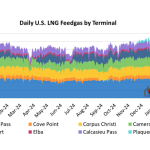
Total U.S. LNG feedgas demand dropped due to cold temperatures and the weekly average was 12.45 Bcf/d last week, down 2.27 Bcf/d from the previous week, primarily driven by lower flows to the two LNG terminals in Texas, Freeport and Corpus Christi.
However, once temperatures began to rise, feedgas demand climbed back above 14 Bcf/d over the weekend. (see chart below).
But the first part of last week was challenging for the terminals. Due to the chilly weather, all terminals experienced some disruption to feedgas intake and only the new Plaquemines LNG saw an increase in feedgas from the previous week. Freeport shut down completely on January 21 because of an interruption in the power feed related to the cold weather and Winter Storm Enzo, which impacted the South and Gulf Coast early last week.
Freeport was offline for three days and began restarting on January 24, and is now back at full utilization levels.
Corpus Christi did not shut down but saw a significant drop in feedgas intake during the frigid weather and is still only operating at about 70% of full capacity.
Intake at all the U.S. terminals, including Plaquemines, saw flow reductions at least one day during the cold snap and total U.S. Feedgas dropped below 10 Bcf/d during the peak of the impact. Intake at both Cove Point and Calcasieu Pass was also down significantly from the previous week.
All terminals except Corpus Christi are back at or above full utilization levels. For more about our thoughts on LNG in the U.S. this year, check out our blog Tired Of Waiting For You.