Reducing the cost of clean hydrogen to $2/kg by 2026 and $1/kg by 2031 is one the main targets included in the Multi-Year Program Plan published May 6 by the Department of Energy's (DOE's) Hydrogen and Fuel Cell Technologies Office (HFTO). The plan sets the HFTO’s mission, goals and strategic approach.
The vast majority of hydrogen is currently produced at less than $1.50/kg from the steam methane reforming of natural gas, often referred to as gray hydrogen. According to the newly published plan, alternative production pathways will be needed for clean hydrogen to achieve cost parity and enable greater market adoption. This will require varying levels of technology development across the different pathway options, as well as manufacturing innovations to enable the cost savings expected with economies of scale.
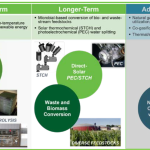
The clean hydrogen production pathways addressed in the report fall under two major categories. The electrolysis pathways (left side of graphic below) are based on commercial and near-commercial technologies that split water into hydrogen and oxygen, a process which can be powered by low-carbon energy sources such as wind and solar (green hydrogen) and nuclear (pink hydrogen), but at costs typically more than $5/kg. (For more on the hydrogen color scheme, see Don’t Let Me Be Misunderstood.)