Crude oil exports out of Western Canada are nothing new but startup of the 590-Mb/d Trans Mountain Pipeline Expansion (TMX) quickly turned Canada into a global leader in waterborne crude exports, Jeff Kralowetz, Vice President of Business Development at Argus Media, said during Tuesday’s keynote presentation at RBN’s School of Energy Canada, being held Tuesday and Wednesday at the Hyatt Regency in Calgary.
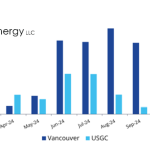
Waterborne crude exports from Western Canada were less than 100 Mb/d before TMX came online in May 2024, requiring just two or three cargoes each month from the Westridge docks near Vancouver. Volumes shifted dramatically higher once TMX began service, as the expansion increased the system’s overall throughput capacity from 300 Mb/d to 890 Mb/d. Volumes averaged 757 Mb/d in Q1, with cargo loadings jumping to about 28 per month.
“Even though TMX … came on very late, came on very expensive, very far over budget, it did exactly what it promised to do, that was it pulled crude off of the Enbridge line, the Keystone line, those lines that go down the middle of the U.S. and into the Gulf Coast, it took enough barrels off of those systems to eliminate the bottlenecks,” Kralowetz said. “The bottlenecks were what was causing the deep discounts in price for WCS, Cold Lake and the other heavy grades.”