


On its Q3 call, Westlake said its low-cost U.S. feedstock position is carrying it through a long chemical downturn, and it is leaning on that advantage to support a European business squeezed by soaring energy costs. CEO Jean-Marc Gilson said the downturn “has been unprecedented,” and that “a globally advantaged feedstock and energy position in North America has been a key strategic advantage as we navigate.” The oversupply is not going away soon. Global polyethylene capacity is set to grow 6% in 2027, and CFO Jonathan Baksht said recovery likely depends on closures elsewhere because “certain assets in the industry are operating at cash margins that are unsustainable over the medium-to-long term.” Dow and LyondellBasell made similar points on their earlier earnings calls.
In the U.S., Westlake’s crackers run entirely on ethane. Gilson said U.S. polyethylene demand has been “strong both for domestic and export markets,” with low industry inventories “supporting a more bullish sentiment for pricing.” Ethane is getting more expensive, though. Prices are up about 35% since quarter-end on strong demand, high cracker utilization and near-record exports. Even so, management expects polyethylene price gains to outpace ethane in Q4.
Europe is a different story. Gilson said European PVC “is likely to continue to be under significant pressure from the combination of weak domestic demand, increasing imports and high regional feedstock and energy costs.” European PVC plants are running at about 60% of capacity, which Gilson called “indicative of the high and escalating cost environment and regional supply-demand imbalance.” Power is the biggest problem. European power prices are now above €200/MWh, and Westlake is especially exposed because its European plants are in Germany, which Gilson said “unfortunately has one of the highest energy [prices] in Europe.”
Part of Westlake’s answer is to rely more on cheaper Gulf Coast supplies. It is closing its PVC plant in Cologne, Germany, and will serve those customers from its PVC plant in Wilhelmshaven, Germany, which it acquired in June (pictured below). “The combination of Wilhelmshaven[‘s] access to low-cost North American feedstocks and sales volume from the Cologne consolidation should enable us to run a highly competitive European commodity PVC business,” Gilson said. Westlake started up a separate plant at the Wilhelmshaven site last week that turns PVC into PVCO, a high-strength pipe, with first commercial sales expected in 2027. Management expects the European business to turn profitable next year.
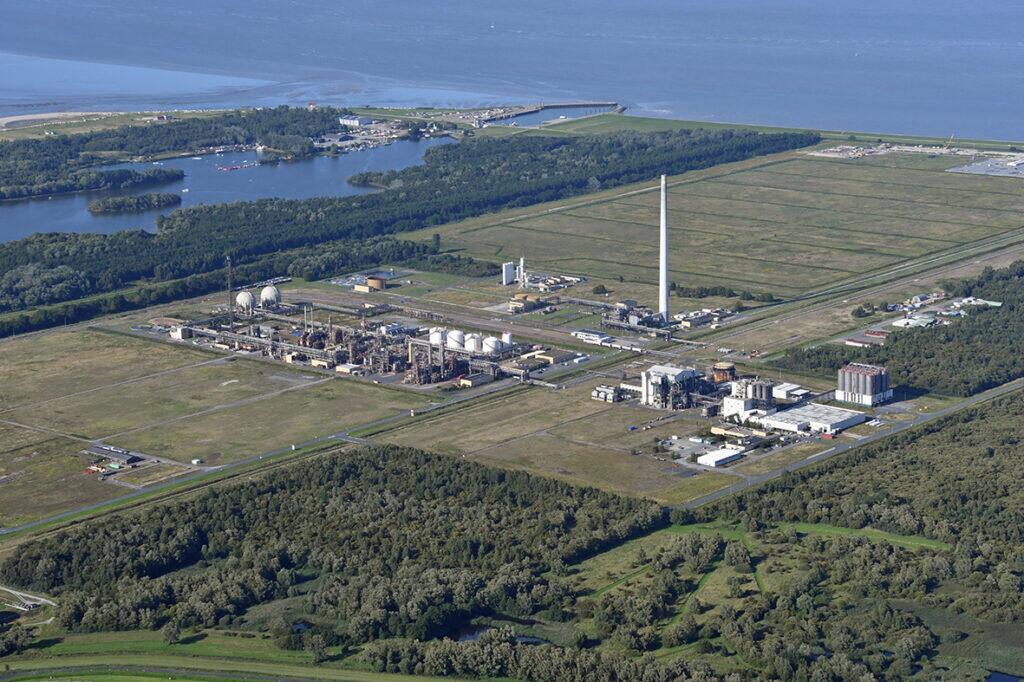
Westlake Vinnolit GmbH & Co. KG, newly acquired PVC and VCM plants in Wilhelmshaven.
