


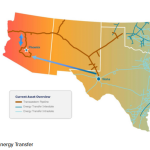
Permian natural gas production has been on the upswing for most of this century, creating an ever-increasing need for capacity to take gas out of the region. Most of the conversation has involved building pipelines to the East (see Come Dancing) where LNG facilities are increasing demand. We have even had some talk recently about new capacity to the North. But Energy Transfer released an announcement this morning that it had reached Final Investment Decision (FID) on an expansion of the Transwestern Pipeline to bring gas to the West.
Featured Articles


- Blog
By the Time I Get to Phoenix - Energy Transfer to Take Permian Gas West on Transwestern Expansion
Midstreamers developing natural gas takeaway capacity out of the Permian have understandably focused on pipelines to the Gulf Coast — and along the coast to LNG export terminals and other big gas consumers. But don’t forget the Desert Southwest, where demand for gas-fired power is soaring. Energy Transfer recently committed to building a 516-mile, 1.5-Bcf/d expansion to its Transwestern Pipeline system from West Texas to the Phoenix area, and hinted that it might double the project’s capacity due to the high level of interest. In today’s RBN blog, we discuss Energy Transfer’s aptly named Desert Southwest Project, what drove its quick progress to a final investment decision (FID), and what other westbound projects out of the Permian might still happen.


- Blog
U.S. Natural Gas Headed Way Down to Mexico Way—the Stateside Effect
Rapid growth in U.S. gas exports to Mexico already is having profound effects north of the border, and things will only get more interesting. Gas producers in the Eagle Ford and other Texas shale plays are finding the new buyers they need. But gas consumers in the Southwest—caught with a losing hand of stagnant regional gas production, rising gas demand, increasing gas exports to Mexico, and pipeline capacity tightness—face potentially serious delivery concerns and price premiums in the not too distant future.


- Blog
Blame It on Texas - Pipeline Alternatives Gunning to Provide Permian Relief
Natural gas supply growth from the Permian Basin has flooded the Texas market in recent months, filling up takeaway pipelines and sending Waha spot prices to steep discounts relative to its downstream markets. Incremental demand — from exports to Mexico for gas-fired power generation as well as for power demand in Texas — has provided some relief for West Texas prices in recent weeks. But Texas power demand is seasonal and, while Waha’s exports to Mexico are expected to continue growing, it’s likely to be on a piecemeal basis. Thus, longer term, new Permian takeaway capacity will be needed to balance the Waha market. To that end, there are a bevy of takeaway projects vying to expand capacity from the Permian. These projects — their timing and routes — will drive the Texas gas flows and pricing relationships over the next several years. Today, we continue our series on Permian gas, this time delving into the various takeaway capacity projects competing to move Permian supply to market.
