


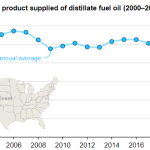
Growing use of renewable diesel and biodiesel have led to a steep drop in PADD 5 (West Coast) distillate consumption in 2023, which follows a similar decline in 2022, according to recent data from the EIA. That’s in contrast to the rest of the U.S., where distillate consumption has returned to pre-pandemic levels. PADD 5 consumption, as measured by product supplied (see graphic below), averaged 409 Mb/d for the first four months of 2023, down from 476 Mb/d in 2022, 520 Mb/d in 2021 and 572 Mb/d in 2006, the highest annual average in data that dates to 1989.
Featured Articles


- Blog
Driver's Seat, Part 2 - For Alternative Transportation Fuels, A Road Crowded with Possibilities
Countries around the world are formulating and refining their strategies to reduce greenhouse gas emissions. Their policies target numerous areas such as stationary emissions, electricity production, and transportation. Within the transportation sector, one aspect that has spurred quite a bit of investment relates to reducing the carbon intensity of transportation fuels. The low-carbon fuel policies that are in place today, coupled with those being evaluated for the future, have the potential to incentivize the development of a wide range of “greener” alternatives to petroleum-based fuels in the regions where they are adopted. In today’s RBN blog, we discuss highlights from Part 2 of our Drill Down report on low-carbon fuels, focusing this time on ethanol, biodiesel, sustainable aviation fuel, and hydrogen, and the government policies that help support them.


- Blog
Come Clean, Part 4 - Is Biodiesel a Viable Low Carbon Fuel Pathway or a Fading Fashion?
Biodiesel has long constituted a small but stable portion of the diesel fuel diet in North America, its production being driven primarily by the U.S. Renewable Fuel Standard and Biodiesel Income Tax Credit (BTC). Produced from a variety of feedstocks, including soybean oil, corn oil, animal fats, and used cooking oils, biodiesel offers a low “carbon intensity,” or CI — a big plus in California and other jurisdictions with low carbon fuel regulations. The incentives for producing biodiesel are substantial, but there are two big catches with the fuel: a limited supply of feedstocks and properties limiting how much can be blended with petroleum-based diesel. Today, we continue our series on low carbon fuel standards with a look at biodiesel’s pros, cons, history, and prospects.


- Blog
Come Clean, Part 5 - Why Everyone's Talking About Renewable Diesel
Renewable diesel is a popular topic in the transportation fuel space, and for good reason. For one, RD provides a lower-carbon, renewable-based alternative to petroleum-based diesel; for another, it’s a chemical twin of and therefore a “drop-in” replacement for ultra-low sulfur diesel. But, most of all, there are the large financial incentives provided by California’s Low Carbon Fuel Standard, the U.S. Renewable Fuel Standard, the U.S. Biodiesel Tax Credit, and other programs, which can make RD production highly profitable. Driven by these factors, there’s a lot of renewable diesel production capacity under construction or on the drawing board: everything from greenfield projects to expansions of existing RD refineries to conversions of old-school refineries so they can make RD. Today, we put the spotlight on RD and discuss how it differs from biodiesel, how it’s produced, and the new RD capacity coming online in North America.
