


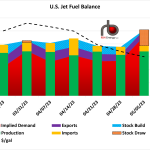
Implied demand for jet fuel soared nearly 400 Mb/d to 1.9 MMb/d last week, as passengers take to the skies heading into the summer travel season. This rise in demand was preceded by a steady slide in jet fuel prices, which have fallen from $2.62/gal to $2.10/gal over the past five weeks. Passengers have faced a 25% increase in the average U.S. airline fare since the start of the year, as reported in the Consumer Price Index by the Federal Reserve of St. Louis.
Featured Articles


- Blog
Jet - After a Scary Plunge in Production and Prices, the Jet Fuel Market Recovers and Prices Soar
The jet fuel market has been on a wild ride the past two-plus years. First, demand for the refined product took an unprecedented, COVID-induced nosedive in February and March 2020. By May 2020, Gulf Coast prices for jet fuel had plummeted to less than 50 cents/gal (from just under $2 at the start of that year) and refiners had slashed production to 505 Mb/d (from just under 1.9 MMb/d). It was a tough few months — the recovery from the market’s bottom was neither quick nor consistent. Domestic air travel is finally back, but with international travel slower to rebound, total jet fuel supply and demand are still off of their pre-pandemic levels. Jet fuel prices are taking off, though, last week hitting their highest mark since July 2008. In today’s RBN blog, we discuss the jet fuel market: how it’s rebounding, how it works and how it’s changing.


- Blog
What a Fool Believes - Will Crude Oil Hit $100 a Barrel?
After the crude oil price crash in the spring of 2020 and flat-at-$40/bbl oil last summer and early fall, prices for both WTI and Brent have been increasing steadily the past several months, and now stand at a kind-of-remarkable $75/bbl. This rise has been driven by a combination of demand recovery and supply restraint from both OPEC+ and U.S. producers — which begs the questions: what’s next on the supply and demand fronts, and how much more will oil prices increase from here? There’s been a lot of chatter lately that we might see $100/bbl crude prices sometime soon, and there are a lot of interested parties — many of whom don’t normally see eye-to-eye — who, for one reason or another, see their interests converge around the $100/bbl mark. The only problem is, it’s not showing up in the forward curve. Today, we look at the potential for “Benjamin-a-barrel” oil and how it might play out.


- Blog
Out of the Woods - Pacific Northwest Gas Supply Route Returns Full Force
After more than a year of reduced natural gas flows, inspections and integrity checks, Enbridge's Westcoast Energy/BC Pipeline system in British Columbia returned its T-South segment to normal operating pressure, effective December 1, ending 13 months of restricted exports of Western Canadian gas supplies to the U.S. Pacific Northwest gas market. The outage and the resulting reduction in export flows out of Western Canada had prolonged effects on local and downstream gas flows and prices, including a run-up in prices at the Sumas, WA, border crossing point to an all-time U.S. record high of $200/MMBtu last winter. Today, we provide an update on Westcoast flows and their downstream impacts.
