


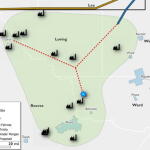
Omina Midstream Partners announced it has received federal funding from the DOE’s Office of Fossil Energy and Carbon Management (FECM) to conduct a feasibility study for it’s proposed carbon capture and sequestration (CCS) hub located on the Texas side of the Delaware Basin. (see map below).
Featured Articles


- Blog
Love Is A Long Road - Carbon-Capture Projects Reach Major Milestones, But Not All The News is Good
Progress in the carbon-capture industry can be slow, given the extended permitting process for sequestration wells, uncertain long-term outlook and skepticism about the real-world effectiveness in reducing carbon dioxide (CO2) emissions. The past several weeks have been a better-than-usual period for advocates of carbon capture and sequestration (CCS), with significant milestones reached for a trio of important projects under development, but not all the news was positive. In today’s RBN blog, we’ll look at what’s happening with a handful of key CCS projects.


- Blog
Stuck in the Middle With You, Part 2 - U.S. Outlines Criteria for Direct Air Capture Hubs
If the world is going to reduce greenhouse gas (GHG) emissions to net-zero levels by 2050, a lot of things need to go right, with the success of the International Energy Agency’s (IEA) long-term plan balancing on three different pillars. First, there are emissions reductions from improvements to fossil fuels and processes, such as power generation and industrial production. Next, there are advancements in bioenergy, a category that includes biofuels like ethanol, sustainable aviation fuel (SAF), and renewable diesel (RD). And then there’s direct air capture (DAC) — a minor factor so far, but one with the potential for significant growth, especially given the billions in U.S. funding already set aside for it. In today’s RBN blog, we look at U.S. plans to develop four regional DAC hubs, how those proposals will be evaluated, and the likely timeline for their development.


- Blog
The Contenders, Part 3 - LIGH2T Hydrogen Hub Seen as Platform for Industrial-Scale Decarbonization
There’s been a lot written about the federal government’s plan to provide billions of dollars in financial support to create a limited number of regional hydrogen hubs but not a lot of insight about how those hub proposals are being crafted to meet the Department of Energy’s (DOE) selection criteria. The details and strategies behind those plans have been hard to come by because few of the initial concept papers were made public while others remain a mystery, even months after the first informal winnowing of candidates. One exception is the Leading in Gulf Coast Hydrogen Transition (LIGH2T) hub proposal being prepared by a consortium that includes a large group of states, some key commercial partners, several universities and the National Energy Technology Laboratory (NETL). In today’s RBN blog, we look at what we know about the LIGH2T proposal, which will submit a full application by the April 7 deadline, and how it addresses three key factors likely to play a role in the selection process.
