


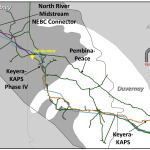
On December 28, 2023, the Canada Energy Regulator (CER) granted a Certificate of Public Convenience and Necessity for North River Midstream’s Northeast British Columbia (NEBC) Connector NGLs Pipeline (purple dashed line in map below). The certificate was issued after the project received approval from the federal Governor in Council (GIC) on December 21 and will allow the project to immediately proceed to construction subject to various conditions outlined by the CER.
Featured Articles


- Blog
Shock to the System - Alberta's Ethane Demand to Soar with Approval of New Dow Ethane Cracker
The demand for ethane by Alberta’s petrochemical industry has experienced a slow expansion in the past 20 or so years. However, that demand is likely to increase sharply by the end of the decade now that Dow Chemical has sanctioned a major expansion at its operations in Fort Saskatchewan, AB, that will more than double the site’s ethane requirements. As we discuss in today’s RBN blog, this will call for an “all-hands-on-deck” approach to increasing Alberta’s access to ethane supplies from numerous sources.


- Blog
(In) Your Back Yard - Keyera, SemCAMS Greenlight a New Montney Condensate/NGL Pipeline
Keyera Corp. and SemCAMS Midstream, two major midstream players in Western Canada, in mid-May announced they are proceeding with the construction of their joint-venture project — a new NGL and condensate pipeline system out of the liquids-rich Montney and Duvernay plays of Alberta. The planned Key Access Pipeline System would provide the first direct competition for the transportation of NGLs and condensate out of these producing regions, currently dominated by Pembina Pipeline Co. Any and all transportation options for the movement of condensate and other NGLs out of the Montney and surrounding plays will likely be welcomed by Western Canadian natural gas producers, who are looking to capitalize on oil-sands producers’ growing demand for homegrown sources of condensate for use as diluent in bitumen transportation. Today, we provide key details about the project and how it fits into the region’s existing condensate/NGLs market.


- Blog
He Ain't Heavy, He's My (Diluent), Part 2 - The Pipeline Networks that Source Diluent for the Oil Sands
The folks who transport bitumen from the Alberta oil sands to faraway markets depend on light hydrocarbons collectively known as diluent to help make highly viscous bitumen flowable enough to be run through pipelines or loaded into rail tank cars. The catch is — or was, we should say — that Western Canada wasn’t producing nearly enough condensate and other diluent to keep pace with fast-rising demand, so a few years ago, two pipelines from Alberta to the U.S. Midwest were repurposed to allow diluent to be piped north. More recently, though, Western Canadian production of diluent has been soaring and new pipeline capacity has been built within Alberta to deliver it to the oil sands. That has the potential to reduce the need for imports from the U.S. and may soon lead to at least one of the import pipes being repurposed yet again. Today, we continue our series on diluent with a review of the pipeline systems that collect locally produced light hydrocarbons that are eventually employed in the oil sands.
