


We have now entered the crude oil twilight zone. Never before has crude traded below zero, much less at the absurd level of negative $37.63/bbl. There is no doubt that demand for crude and motor gasoline are far below crude production volumes, leaving the market vastly oversupplied. But could it really be this bad? When you are talking about the market for physical barrels, the answer is “no”. It is bad. Really bad. But what happened yesterday had more to do with the mechanics of futures contracts and how they transition from month to month, than a complete mega-meltdown in physical barrels. That is not to say that negative prices for physical barrels are not already a fact of life in some locations. But negative $37.63/bbl? Something else must be going on. So, to put yesterday’s bizarre market action in perspective, we need to get into a few details on futures contract mechanics, and then look forward to what may be coming over the next few weeks. In today’s blog, we discuss the factors that are driving such extraordinary crude market developments.
Let’s start with what happened yesterday. The historic crash in the front-month price of WTI deep into negative territory was shocking, but some sort of collapse was not a total surprise to many players in the industry. It was a timing thing, related to the way futures contracts roll from one month to the next. The expiry of the May futures contract later today — Tuesday, April 21 — means that, as always, the spot price for WTI at Cushing will “converge with” the May futures price, and a few players with long positions (i.e., contracts to buy crude) apparently held on too long and found it excruciatingly painful to exit their positions. For the past few weeks, as U.S. refinery demand for crude was cratering and storage in Cushing and along the Gulf Coast was filling up fast, the spot price for crude had already fallen to the mid-to-low teens, well below the front-month contract. On Monday, traders still left holding futures contracts promising to buy barrels of crude for May delivery but with no place to go with the physical barrels found themselves with no one to sell to. Most of the buyers had disappeared. And the only ones left insisted on being paid to take out the positions. That meant buyers getting paid to take barrels. So the price of crude crashed to an unprecedented negative $37.63/bbl.

Crude Oil Permian provides detailed analysis of the fundamental drivers impacting the Permian Basin crude oil market including weekly data, analysis and market intelligence updates of: Permian crude oil supply and demand, pipeline outflows and capacity, prices, and infrastructure updates.
If you are not familiar with the way physically settled futures contracts work, futures positions that are not settled by end of close today will go to physical delivery. That means that buyers and sellers would have three days to get physical crude scheduled on a pipeline by April 25. Traders that mostly deal in paper barrels are not set up to move physical barrels and can find it necessary to pay dearly to unwind their positions as the contract month closes in on them. That’s the reason most futures positions get closed out before the last few days of trading. But yesterday, it looks like somebody waited a bit too long. And the result was a market mega-squeeze that resulted in a total blowout to the downside.
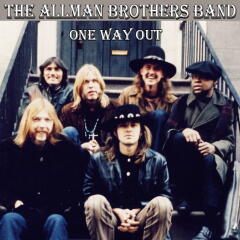
About the song
"One Way Out" was written by Elmore James and Marshall Sehorn, and was first released as a single by Sonny Boy Williamson in 1961, and posthumously as a single by Elmore James in 1965. The song was released as single by the Allman Brothers Band in December 1972, from their double album, Eat a Peach. This version was recorded live by Tom Dowd at the final night of the Fillmore East's closing in June 1971. It appeared as the first cut on side three of Eat a Peach. Personnel on the record were: Gregg Allman (lead vocals, keyboards), Duane Allman (slide guitar), Dickey Betts (lead guitar), Barry Oakley (bass), Jai Johanny Johanson (drums) and Butch Trucks (drums).
Eat a Peach was released after the death of Duane Allman. The live cuts are from the closing night of the Fillmore East in New York City in June 1971. The studio cuts were recorded in September through December 1971 at Criteria Studios in Miami. Tom Dowd produced the record. Released in February 1972, it went to #4 on the Billboard Top 200 Albums chart, and has been certified Platinum by the Recording Industry Association of America.
The Allman Brothers Band was formed in Jacksonville, FL, in 1969. The band released 11 studio albums, 16 live albums, 18 compilation albums and 21 singles. The Allman Brothers have won one Grammy Award and one Grammy Lifetime Achievement Award, and are members of the Rock and Roll Hall of Fame. Twenty members have passed through the ranks of the Allman Brothers Band during its tenure before their final show at New York's Beacon Theatre in October 2014. Founding members Duane Allman died in October 1971, Barry Oakley in December 1972, Butch Trucks in January 2017 and Gregg Allman in May 2017.




Comments
I would add "Will we see an echo of April 20th in the products markets on April 30th or May 31st?" And, what thoughts on the data there?
This was a repeat of something similar in 2009, except that we din't see negative prices. If I remember correctly, it was also the May contract and this happened closer to expiry (20th or 21st Apr). For the the physical players (commercials) with access to storage at Cushing and ability to take physical delivery, this was one of the best trades, other than all the hyper contango (floating storage) trades on gasoil cargoes in Europe and Asia in 2009.