On the 8th of October, the LNG carrier Golar Penguin loaded a cargo for RWE at the Freeport LNG terminal in Texas. Five days later, on October 13, the vessel was sitting just north of Panama. But then, the ship abruptly changed direction on the 14th and headed towards the Cape of Good Hope to deliver to the Far East. The reason for the diversion was that the vessel did not have a passage booked in the new locks of the Panama Canal and would have had to wait approximately nine days for its turn to transit, before heading across the Pacific Ocean to Asia. Since then, as queues of LNGCs for Panama Canal transits, both northbound (ballast) and southbound (laden) have developed, more ships have opted for the longer route. In today’s blog, we look at the delays that have developed surrounding the Panama Canal and the implications that its operations hold for global LNG trade.
The 2016 expansion of the Panama Canal to accommodate larger vessels with larger beams and greater drafts was a big deal for LNG shippers looking to lower the per-unit costs of delivering to Asia (more on the economics in a bit). But as increasing shipments seek to traverse the canal, wait times have increased and led to a bottleneck that not only affects existing traffic but presents a challenge for future projects hoping to minimize costs in a highly competitive global LNG market. The delays currently being experienced for voyages to Asia via the Panama Canal route were much less of a problem over the summer when shut-ins of U.S. LNG production (see Sultans of Swing) reduced the waiting time for LNG carriers wishing to pass in either direction. However, all first-wave LNG production facilities, with the exception of Corpus Christi Train 3, are now operational, resulting in nameplate production capacity of over 60 MMtpa from the Lower 48 states, or roughly a sixth of the current world production capacity. In November, the U.S. sent out a record number of cargoes — and that number will likely be surpassed this month. Given the determination of project sponsors aiming to develop a second wave of U.S. Gulf Coast LNG export schemes, what constraints and costs will the Panama Canal impose on these projects, and just as importantly, what advantage might the projects under development on the west coast of North America enjoy over their rivals? We’ll get to answering that shortly, but first some historical background on the Canal usage and scheduling.
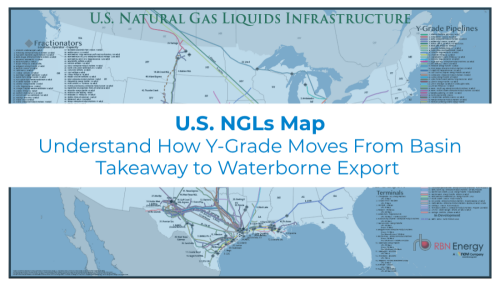
Visualize the infrastructure behind U.S. NGL movement.
The U.S. NGLs Map provides a comprehensive view of the transport, processing, and export networks moving NGLs across the U.S.
The expansion of the Panama Canal was planned and approved in 2006 and falls under the Panama Canal Authority (ACP). At the time of its approval by the Panamanian government, LNG export from the U.S. to Asia was not under consideration, and in that year the U.S. was a major LNG importer. However, following the advent of shale gas development, owners of import facilities on the Gulf Coast and in Maryland took the initiative of converting their facilities into LNG export plants. In doing so, they attracted LNG buyers from the Far East, eager to make LNG purchases that were not priced on the basis of a linkage to crude oil but instead based on Henry Hub gas prices. Today, Far East LNG players account for 24 MMtpa of Lower-48 LNG production capability.
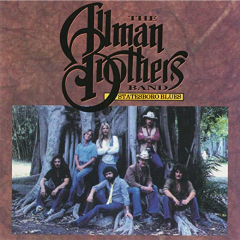
About the song
"Statesboro Blues" was written by Blind Willie McTell, who originally recorded the song that refers to the small town of Statesboro, GA, in 1928. Blues musician Taj Mahal released his version of the song on his first solo studio album in 1968. Around this time, Duane Allman, his brother Gregg, and members of their band Hour Glass went to see Taj Mahal and his band play a show at the Magic Mushroom nightclub in Studio City, CA. Duane took note of guitarist Jesse Ed Davis' prowess on slide guitar, especially on "Statesboro Blues." After the show, Duane Allman went home, emptied the pills out of a glass Coricidin bottle, soaked off the label, and went to work learning what he had seen Davis playing. If you listen to Taj Mahal's version of the song and The Allman Brothers Band's version on At Fillmore East, you will see that Allman learned it very well.
"Statesboro Blues" appears as the opening number on The Allman Brothers Band's double album, At Fillmore East. The album was recorded over two nights in March 1971, with Tom Dowd producing. Released in July 1971, it went to #13 on the Billboard Top 200 Albums chart and has been certified Platinum by the Recording Industry Association of America. Personnel on the record were: Gregg Allman (vocals, organ, keyboards), Duane Allman (lead guitar, slide guitar), Dickey Betts (lead guitar), Berry Oakley (bass), Jai Johanny Johanson (drums, congas, timbales), and Butch Trucks (drums). Many people consider At Fillmore East to be one of the best live rock-and-roll albums of all time. The song remains one of the quintessential bottleneck blues numbers.
The Allman Brothers Band was an American rock band formed in Jacksonville, FL, in 1969 by Duane Allman, Gregg Allman, Dickey Betts, Berry Oakley, Jai Johanny Johanson, and Butch Trucks. Twenty members passed through the band during its existence. The band has released 12 studio albums, 16 live albums, 18 compilation albums, and 21 singles. It has won one Grammy Award, a Grammy Lifetime Achievement Award, and is a member of the Rock and Roll Hall of Fame. Guitarists Duane Allman and Dickey Betts are listed in many "greatest guitarists of all time" polls. The band retired for good after a final show at the Beacon Theatre in New York in 2014. Duane Allman died in 1971, Barry Oakley in 1972, and Butch Trucks and Gregg Allman in 2017. The band earned seven Gold and four Platinum albums during its career.