

The developer of a planned natural gas pipeline across North Dakota has reached a final investment decision (FID) after securing long-term, demand-side commitments for almost all its 1.4 Bcf/d of capacity. The question is, with crude oil-focused drilling activity in the Bakken flat despite elevated WTI prices, will WBI Energy’s roughly $3 billion Bakken East Pipeline leave the play with way too much gas takeaway space? In today’s RBN blog, we’ll discuss the pipeline project, the financial support the state of North Dakota is providing, and the conflicting forecasts for crude oil and associated gas production in the Bakken.
Over the past 15 years we’ve written frequently about the ongoing need to build more midstream infrastructure to serve Bakken production. Crude oil gathering systems and takeaway pipelines. Crude-by-rail terminals. Gas gathering systems and gas processing plants. And, most recently, natural gas and NGL pipelines. Why? Because while Bakken oil production has been holding steady at about 1.2 MMb/d — well below the play’s 1.5-MMb/d peak in 2019 — a fast-rising gas-to-oil ratio (GOR) has increased the volumes of NGLs-rich associated gas being produced. (More on Bakken GORs and the play’s gas production outlook in a moment.)

The Natural Gas Master Class is a one-day online event focusing on understanding flow analysis, interpreting pipeline data and forecasting future flows. This course is designed to equip you with the knowledge and skills to effectively analyze the complexities of natural gas markets, flow analysis, and pipeline modeling. Join us online
October 21 | Online
The Bakken East Pipeline Project
We covered the NGL-pipeline angle in July 2025’s Two Gunslingers. That same month we told the gas-pipeline story in Torn Between Two (Pipelines), which focused on competing proposals by WBI Energy (the Bakken East Pipeline) and a combo of Intensity Infrastructure Partners and Rainbow Energy Center (the Intensity Pipeline) to develop new gas takeaway capacity from the Bakken production region in western North Dakota to the Fargo area at the eastern edge of the state.
In a twist we discussed in that blog, the North Dakota Industrial Commission (NDIC) — eager to encourage more in-state use of the Bakken’s gas bounty — undertook a competitive evaluation process to determine which pipeline proposal would receive up to $500 million in state support via a 10-year, $50 million/year commitment for about 150 MMcf/d of capacity on the new pipe.
The three-member NDIC, comprised of the state’s governor, attorney general and agriculture commissioner, in August 2025 unanimously picked WBI Energy’s two-phase, 343-mile Bakken East proposal (dashed pink and red lines in Figure 1 below), citing the company’s experience in developing and operating gas pipelines and the financial strength of WBI’s corporate parent, Bismarck, ND-based MDU Resources, which also owns four electric and/or gas utilities from Minnesota to Washington state. In addition, the commission determined that WBI was more likely to secure the commercial commitments needed to make the project a “go.”
About the song
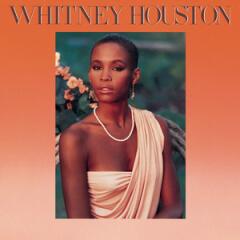
“How Will I Know” was written by George Merrill, Shannon Rubicam and Narada Michael Walden and appears as the first song on side two of the eponymous debut album of Whitney Houston. The song was originally pitched to Janet Jackson, but her management passed on it. The dance-pop tune is about the nervous excitement of trying to figure out if a crush likes you back. Released as the third single off the album in November 1985, it went to #1 on the Billboard Hot 100 Singles chart and has been certified 3X Platinum by the Recording Industry Association of America (RIAA). A video directed by Brian Grant and choreographed by Arlene Phillips won Best Female Video at the MTV Video Music Awards in September 1986. Personnel on the record were: Whitney Houston (vocals), Tom Salta (programming), Preston Glars (keyboards), Randy Jackson (bass), Corrado Rustici (guitar), Narada Michael Walden (drums, percussion), Premik Russell Tubbs (saxophone), and Cissy Houston, Whitney Houston, Mary Canty, Yvonne Lewis (backing vocals).
The album, Whitney Houston, was recorded during 1983 and 1984 at The Hit Factory and The Record Plant in New York City; Digital by Dickson in Bloomfield, NJ; The Record Plant in Los Angeles; Tarpan Studios in San Rafael, CA; and New Music Group Studio in Stamford, CT. Produced by Kashif, Narada Michael Walden, Jermaine Jackson and Michael Masier, the album was released in February 1985 and went to #1 on the Billboard 200 Albums chart. It has been certified 14X Platinum by the RIAA. Seven singles were released from the LP.
Whitney Houston was an American singer, actress, record producer and film producer. She was known for her powerful vocal delivery, crossover appeal and dynamic live performances. With more than 220 million records sold worldwide, she is one of the best-selling music artists of all time. She released seven studio albums, two live albums, three soundtrack albums, 10 compilation albums, seven EPs, and 60 singles. Houston won 22 American Music Awards, 36 Billboard Awards, two Emmy Awards, nine Grammy Awards, a Grammy Lifetime Achievement Award, an MTV Video Music Award, and five World Music Awards. She starred in five motion pictures and produced six films. Whitney Houston died in Beverly Hills in February 2012 at 48.
"About the Song" -- written by Mickey McMahan , RBN Director of Musicology