
The White House issued a 60-day waiver of the Jones Act on March 18 that will allow foreign-flagged tankers to move crude oil and refined products between U.S. ports in a bid to cool gasoline prices. It’s a technical move, which will certainly impact how crude and products flow, but the influence on prices might not be enough to notice through the significant noise of overall market swings. In today’s RBN blog, we’ll dive into what the Jones Act waiver could mean for U.S. refiners, consumers, and other market participants.
The Jones Act — formally Section 27 of the Merchant Marine Act of 1920 — requires that cargo moving between U.S. ports travel on vessels that are U.S.-built, U.S.-owned, U.S.-flagged and primarily U.S.-crewed. The post-World War I law was designed to protect the domestic shipbuilding industry and to ensure a reliable U.S. merchant fleet for national defense and emergency response.

The RBN Crude Oil Analytic Suite gives you access to four weekly reports covering crude oil markets, including: Crude Billboard, Crude Permian, Crude TradeView, and Crude Voyager.
In the energy sector, the Jones Act fleet breaks down into five main vessel types: smaller inland barges that typically carry about 10 Mbbl or 30 Mbbl of crude or refined products on rivers and coastal canals; regional offshore tank barges (such as those in New York Harbor) with capacities of 50 Mbbl to 135 Mbbl; coastal barges, including larger articulated tug barges (ATBs) with capacities of roughly 142 Mbbl to more than 320 Mbbl; product and crude tankers that run in coastal and international trades and generally carry around 330 Mbbl; and large crude tankers dedicated to the Alaskan trade.
Back in 2013-14, a runup in demand for Jones Act tankers and ATBs –– and a spike in time-charter rates — spurred orders for new vessels. By the time the new tankers were built and launched, however, demand for them had fallen off. That decline was mostly due to the mid-decade slump in U.S. crude oil production and, with the lifting of the ban on most U.S. crude exports in late 2015, the drop in crude shipments from one U.S. port to another. Term charter rates plummeted and shipowners stopped ordering new tankers and large ATBs. According to Bloomberg and RBN data, there are currently about 101 Jones Act-eligible ships in the market today. That number was as high as 400 ships in 1950, with the count largely flat but edging lower over the past decade.
The requirements the Jones Act imposes on ships operating between U.S. ports add costs, including less-favorable economies of scale at U.S. shipyards and reduced competition among U.S. shipbuilders (resulting in higher construction costs), and higher wages and insurance costs for Jones Act workers. Those higher costs have reduced the number of ships built for “coastwise” and “non-contiguous” movement of crude oil. The relatively small size of the U.S.-flagged fleet, along with increased competition for Jones Act vessels, has resulted in higher charter costs and shipping fees. Charter costs and shipping fees, of course, are key factors in determining whether transporting crude on a Jones Act vessel makes economic sense in a particular situation.
Because of the added costs, the Jones Act shapes the movement of crude and products between U.S. coasts and refineries (green-shaded areas in Figure 1 below). The dark- and light-blue dashed lines on the map show the routes Jones Act-qualified barges and tankers take to move barrels between ports such as Corpus Christi, Houston, New York Harbor and the West Coast. The pink dashed line illustrates foreign-flagged tankers that transport barrels of Gulf Coast crude through international waters to destinations like Eastern Canada, as this route is less costly than complying with Jones Act restrictions (these barrels could be refined and re-exported to the U.S.). Moving from the Gulf Coast to the East Coast on a direct Jones Act path is typically a shorter trip, for example, but often more expensive per barrel than longer foreign-flagged routes via Canada or the Panama Canal. We’ll note that by far the largest Jones Act refined product movements occur between various Gulf Coast ports and destinations on both coasts of Florida (>700 Mb/d), which aren’t served by pipelines (see our recent Fuel blog).

Figure 1. Jones Act Coastal Crude and Product Flows. Source: RBN
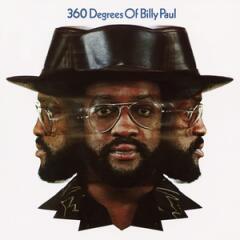
About the song
“Me and Mrs. Jones” was written by Kenny Gamble, Leon Huff and Cary Gilbert. It appears as the fourth song on side one of Billy Paul’s fourth studio album, 360 Degrees of Billy Paul. The song is a slow scorcher of a soul ballad about an extramarital affair between a man and his lover, Mrs. Jones. Released as a single in September 1972, it reached #1 on the Billboard Hot 100 Singles chart and was certified Gold by the Recording Industry Association of America (RIAA). It was Paul's only #1 single. It has been inducted into the Grammy Hall of Fame. The song has appeared in numerous television shows and motion pictures, and has been covered by Freddie Jackson, Michael Bublé, and The Dramatics. Personnel on the record were: Billy Paul (vocals), Bobby Eli, Norman Harris (guitars), Ron Baker (bass), Eddie Green, Leon Huff (piano), Earl Young ( drums), Vincent Montana Jr. (vibraphone, percussion), and Don Renaldo (string arrangements).
360 Degrees of Billy Paul was recorded at Sigma Sound in Philadelphia in 1972. It was produced by Gamble and Huff and released in October 1972. It went to #1 on the Billboard Top Soul and #17 on the Billboard 200 Albums charts and has been certified Gold by the RIAA. Two singles were released from the LP.
Billy Paul (Paul Williams) was an American soul singer. He began singing at 11, appearing on the Philadelphia radio station WPEN. He started singing in nightclubs in the area when he was 16 and released his first single, “Why Am I,” on Jubilee Records in April 1952. He teamed up with Gamble and Huff and became a part of the "Philly Sound" in 1968. He released 12 studio albums, a compilation album, and 37 singles. He won an American Music Award and a Grammy Award. Paul died in April 2016 in Blackwood, NJ, at 81.
"About the Song" -- written by Mickey McMahan , RBN Director of Musicology