Russia has long been a significant supplier of refined intermediates and finished products to Europe, just as it has been of crude oil. That changed, however, in the wake of Russia’s invasion of Ukraine in February 2022 as the European Union (EU) implemented a formal embargo on imports of Russian crude oil in December 2022, followed by refined products in February 2023. In today’s RBN blog, we review the reduction in imports of Russian refined products and intermediates into Europe and the specific replacement sources.

The Natural Gas Master Class is a one-day online event focusing on understanding flow analysis, interpreting pipeline data and forecasting future flows. This course is designed to equip you with the knowledge and skills to effectively analyze the complexities of natural gas markets, flow analysis, and pipeline modeling. Join us online
October 21 | Online
As we described in Part 1 of this series, Russia supplied about 25% of all crude oil and refined products to Europe and accounted for about 38% of EU imports before the embargo. The total volume was about 4.7 MMb/d, of which crude oil comprised more than 3 MMb/d. Total refined products supplied by Russia to Europe were around 1.5-1.6 MMb/d before February 2023, when the volume slumped to less than 500 Mb/d (multicolored bar to far right in Figure 1).
The EU ban on Russian refined products took effect on February 5, 2023, leading to significant reductions in diesel/gasoil, fuel oil/refinery feedstocks, and naphtha/gasoline. Diesel and gasoil (dark-green bar segments) contributed about one-half of Russian refined products imported by the EU with just under 800 Mb/d in 2021 and 2022, declining to 264 Mb/d in February-March 2023 (time period represents the 40 days after the embargo came into effect). Fuel oil and refinery feedstocks (yellow segments) had been trending in the 400-500 Mb/d range before falling to 153 Mb/d. Finally, naphtha and gasoline (blue segments) declined from 310 Mb/d to 65 Mb/d.
About the song
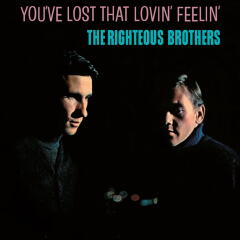
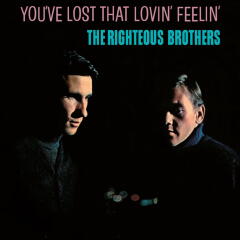
“You’ve Lost That Lovin’ Feelin’” was written by Phil Spector, Barry Mann, and Cynthia Weil. It appears as the first song on side one of The Righteous Brothers’ fourth studio album, You’ve Lost That Lovin’ Feelin’. This would be The Righteous Brothers’ first effort for producer Phil Spector’s Philles Records label. Spector had asked songwriting team Mann and Weil to write a hit for the newly signed duo. Inspired by “Baby I Need Your Loving” by The Four Tops, they came up with “You’ve Lost That Lovin’ Feelin’.” Spector came up with the line at the end of the chorus: “Now it’s gone, gone, gone,” in addition to the bridge that starts with: “Baby, baby, I get down on my knees for you.” The recording of the song took place at Gold Star Studios in Hollywood in September 1964. Spector had all the instrumental tracks recorded before singers Bill Medley and Bobby Hatfield (The Righteous Brothers) came in to record the vocals. They did over 39 takes to meet Spector’s expectations of making the perfect pop single. When Hatfield expressed frustration about Medley singing the first verse solo, asking him what he was supposed to do during that time, Spector replied: “You can go directly to the bank.” The song was released as a single in November 1964 and went to #1 on the Billboard Hot 100 Singles chart. Many music critics consider it to be the ultimate expression of Spector’s “Wall of Sound” production techniques. A number of other artists have covered the song, with Cilla Black, Dionne Warwick, and Hall and Oates having charted hits with the tune. Personnel on the record were: Bill Medley, Bobby Hatfield (vocals); The Blossoms and Cher (backing vocals); Don Randi (piano); Barney Kessel and Tommy Tedesco (electric guitar); Carol Kaye (acoustic guitar); Ray Pohlman (bass),; Earl Palmer (drums); and uncredited session musicians (trumpet, sax, trombone).
The album, You’ve Lost That Lovin’ Feelin’, was compiled of previously recorded tracks of The Righteous Brothers produced by Bill Medley and new ones recorded and produced by Phil Spector at Gold Star Studios. Released in January 1965 on Philles Records, it went to #4 on the Billboard 200 Albums chart. One has to wonder if people drinking coffee at the Starbucks located in the mini-mall at 6252 Santa Monica Blvd. in Hollywood can still feel the vibe of all the historic recordings made there when it was the location of Gold Star Studios. The massive gasoline storage tanks that were used for the reverb chambers on the “Wall of Sound” are buried beneath the asphalt of the parking lot.
The Righteous Brothers are an American vocal duo formed in Los Angeles in 1963 by Bill Medley and Bobby Hatfield. Both had previously performed together in the five-member group, The Paramours. While working with producer Phil Spector, they invented the term “blue-eyed soul.” They have released 15 studio albums, seven compilation albums, and 28 singles. They were inducted into the Rock and Roll Hall of Fame in 2003, and the Vocal Group Hall of Fame in 2005. After the death of founding member Bobby Hatfield in November 2003, Medley has continued to tour as a solo artist and as The Righteous Brothers with singer Bucky Heard replacing Bobby Hatfield.