It’s a new world, folks. The Saudis and Russians, who until a few days ago had been trying to prop up crude oil prices through supply management, are now engaged in an all-out war for market share. Crude oil prices are sharply lower. Three weeks ago, West Texas Intermediate was selling for $53/bbl and Western Canadian Select for $37/bbl; yesterday, they were selling for $34/bbl and $22/bbl, respectively. And things may get worse. All this has profound implications for North American production, but the effects on production in U.S. shale plays versus the Canadian oil sands will be very different. Today, we explain how the oil sands provide steady-as-she-goes baseload supply through pricing peaks and valleys while U.S. shale plays serve as a global swing supplier.
The crude-oil market gyrations of the past few days have left the energy industry shell-shocked, and for good reason. It’s been years since we’ve seen anything close to the once-unthinkable confluence of events that has dragged down oil prices. A coronavirus pandemic that is now affecting more than 100 countries, including the U.S. and Canada, and crippling global oil demand. The utter collapse of a fragile-but-effective coalition of OPEC and non-OPEC producers — including Russia — that for more than three years had held crude supply in check to keep prices from tumbling. And then there’s the stock market, whose free fall in recent days has left a long list of North American exploration and production companies (E&Ps) in a financially precarious state.
This got us thinking about the challenges that U.S. shale and Canadian oil sands producers will be facing, particularly if crude oil prices stay low for a long time. The ups and downs of shale plays and the oil sands have been frequent topics in the RBN blogosphere. In our new Dakota series, for example, we’ve been discussing how gathering-system development has been sustaining an oil-production resurgence in the Bakken Shale. On the downside, we discussed slumping activity and production in the SCOOP and STACK plays of Oklahoma in Broke Down Engine. For the oil sands, there’s been more down than up since the crude oil price slump of 2014-16, as we noted in several series such as The Thrill is Gone, although bitumen production keeps rising. And in our series Everybody Wants to Rule the World, we covered the competitive strain that rising non-OPEC production had been putting on OPEC and its supply-management collaborators.

Canadian crude output is rising, requiring new export routes. As traditional pathways face constraints, the U.S. Rockies—especially the Guernsey, WY hub—are emerging as key corridors for moving Canadian heavy crude to downstream markets, including the Gulf Coast.
About the song
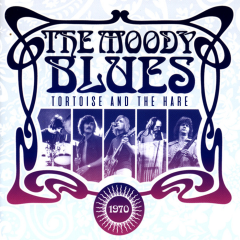
"Tortoise and the Hare" was written by John Lodge, and appears as the sixth song of side one on The Moody Blues’ sixth studio album, A Question of Balance. The song is based around the Aesop's Fable of the tortoise and the hare, and how being slow and steady, rather than being quick and careless, can win the race.
A Question of Balance was recorded between January and June 1970 at Decca Studios in West Hampstead, London. Produced by Tony Clarke, the album featured a more streamlined sound that differed from the band's usual lush, orchestrated and psychedelic aural landscape. This would enable the band to perform the songs live like you heard them on the album. Released in August 1970, the album went to #3 on the Billboard Top 200 Albums chart. Personnel on the record were: Justin Hayward (vocals, acoustic and electric guitars, mandolin), John Lodge (vocals, bass), Ray Thomas (vocals, flute, tambourine), Graeme Edge (drums, percussion) and Mike Pender (vocals, Mellotron, synthesizer, piano, harpsichord, maracas, acoustic guitar).
The Moody Blues are an English rock band formed in Birmingham, England, in 1964. The band first came to prominence playing rhythm and blues music. Their first hit single, "Go Now!", featured Denny Laine on lead vocals and guitar. It would reach #10 on the Billboard Hot 100 Singles chart in February 1965. The song featured one of the first promotional films of a song in the British Invasion era. The film was directed and produced by the band's co-manager, Alex Wharton. Denny Laine would later leave The Moody Blues and join Paul McCartney's Wings band. Wings’ live concerts would often feature Laine singing "Go Now!" in a segment of the show. Justin Hayward replaced Laine, and John Lodge came aboard as bassist shortly thereafter, solidifying the line-up that would be the most popular of the band between 1967 and 1972.
The Moody Blues have released 16 studio albums, six live albums, 24 compilation albums and 36 singles. They are members of the Rock and Roll Hall of Fame and the Vocal Group Hall of Fame. Ray Thomas died in January 2018. Long-term members Graeme Edge, Justin Hayward and John Lodge still occasionally tour as The Moody Blues. Lodge is currently on a solo tour, which features Moody Blues’ songs, and Hayward will start a similar solo tour beginning in April.