In the first half of 2018, the U.S. E&P sector continued to reap the benefits of its dramatic evolution from decades of “boom or bust” exploration to large-scale, manufacturing-style exploitation of premier resource plays. Upstream companies halved their break-evens and reserve replacement costs through technological innovation, financial discipline, and ruthless portfolio paring, which allowed them to generate record domestic oil production in 2018 on half the capital outlays expended in 2014. As a result, the 44 E&Ps we track reported $21 billion in pre-tax operating profits in the first half of 2018, up from $6.2 billion in the first six months of 2017, and over $50 billion in operating cash flow, up from $39 billion a year ago. Most notably, these companies are on pace to garner an astonishing $30 billion in free cash flow. Today, we discuss the ongoing effort by leading E&Ps to maintain financial discipline in a period of strong oil and gas prices.

Strategically, management’s focus has shifted from survival to sustained long-term growth. Resisting the impulse to spend the rising influx of cash to spur near-term output growth, companies are opting for a balanced approach, allocating capital to measured spending increases, debt reduction, and rewarding shareholders through dividends and share buybacks. In their financial reports for the first half of 2018, our group of 44 E&Ps boosted total 2018 capital spending by 5% over their initial guidance to $68.1 billion, which is 10% higher than their 2017 investment. The companies returned $9.3 billion to shareholders through dividends ($3.3 billion) and share buybacks ($6 billion) in 2018’s January-through-June period and have paid down debt by about $8 billion since year-end 2017.
In earnings calls over the past few weeks, management teams did address some headwinds facing the industry, primarily current infrastructure constraints out of the Permian Basin and service cost inflation, which resulted in some short-term reallocation of capital. But the emphasis was on new three-to-five-year plans designed to generate rising output growth and profitability into and through the 2020s. In other words, E&Ps are increasingly adopting the long-term investment strategies of integrated oil majors.
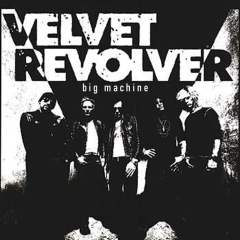
About the song
“Big Machine” was the third track on Contraband, the 2004 debut studio band by American hard rock band Velvet Revolver. Velvet Revolver formed when Guns N' Roses musicians Slash (guitar), Duff McKagan (bass) and Matt Sorum (drums) combined to play at a benefit concert for fellow musician Randy Castillo in 2002. They decided to form a band and recruited guitarist Dave Kushner, who had previously played with Suicidal Tendencies, Wasted Youth, and Dave Navarro. They also recruited lead singer Scott Weiland, who had been lead singer for Stone Temple Pilots. Velvet Revolver won a 2005 Grammy Award for Best Hard Rock Performance for its single “Slither” from the same album. The group released a second album, Libertad, in 2007, but recorded no further albums after Weiland left the band to return to Stone Temple Pilots in 2008.