In February 2019, the U.S. Treasury Department announced new sanctions on Petróleos de Venezuela SA (PDVSA), the national oil company of Venezuela, which halted imports of Venezuelan crude oil into the U.S. Since then, refineries that relied on Venezuelan crude have had to backfill their import requirement with alternative sources of oil. This adjustment has had ramifications not only on the refiners that processed Venezuelan crude, but also on the entire U.S. Gulf Coast crude oil market. Today, we discuss the quality adjustments made to the U.S. crude oil diet.
When we last looked at crude imports from Venezuela nine months ago, the U.S. sanctions on PDVSA had just been announced. In that blog, we reviewed the quantity of Venezuela crude oil imported into the U.S. in 2018 (~420 Mb/d), the qualities of the types of crude oil being imported from Venezuela (primarily heavy-sour), and the U.S. destinations for the PDVSA-sourced crude (primarily the Gulf Coast, with Citgo and Valero refineries being the largest consumers). We then considered alternative grades of crude oil that could be utilized as substitutes for the Venezuelan varieties, assuming supplies could be made available.

Crude Oil Permian provides detailed analysis of the fundamental drivers impacting the Permian Basin crude oil market including weekly data, analysis and market intelligence updates of: Permian crude oil supply and demand, pipeline outflows and capacity, prices, and infrastructure updates.
We’ll begin today by looking at pricing for major crude oil streams on the Gulf Coast. The decline in heavy crude supply since the Venezuela sanctions kicked in has had a predictable effect on heavy crude prices in the region. The price differential between West Texas Intermediate (WTI, the light-sweet benchmark) at Magellan East Houston (MEH) and Maya (a heavy-sour crude oil from Mexico) for Gulf Coast delivery (blue line in Figure 1), had been on a narrowing trend in recent years. However, in anticipation of the sanctions in December 2018 through a short period after the sanctions were announced, the price differential collapsed. This happened as absolute prices for heavy crude oils strengthened relative to their premium-priced light-sweet counterparts due to a perceived heavy-crude shortage. The differential has widened again in recent months but is still below the 2017 and 2018 average spreads. Similarly, the differential between WTI MEH and Mars, a medium-sour crude from the offshore Gulf of Mexico (orange line), actually turned negative multiple times this year (reflecting a Mars premium to MEH) and remains below $2/bbl on average.
About the song
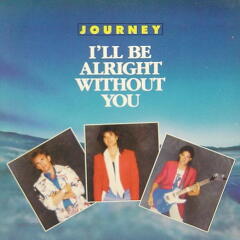
"I'll Be Alright Without You,” written by Jonathan Cain, Steve Perry and Neal Schon, was the second track on Side Two of Journey's ninth studio album, Raised on Radio. Released as the fourth single from the LP in May 1986, the song went to #7 on the Billboard Adult Contemporary chart, and #14 on the Billboard Hot 100.
Raised on Radio was recorded at the Record Plant in Sausalito, CA, and Fantasy Studios in nearby Berkeley between October and December 1985. It was the first new Journey album in three years, and was released in April 1986. Raised on Radio went to #4 on the Billboard Top 200 Albums chart, and has been certified 2x Platinum by the Recording Industry Association of America. Personnel on the record were: Steve Perry (lead vocals), Neal Schon (guitars, keyboards, backing vocals), Jonathan Cain (keyboards, backing vocals); Bob Glaub and Randy Jackson (bass); and Larrie London, Steve Smith and Mike Baird (drums).
Journey is an American rock band formed in San Francisco in 1972. Fifteen members have passed through the band's ranks over the years. The group has released 14 studio albums, four live albums, eight compilation albums, two EPs and 59 singles. Journey was inducted into the Rock and Roll Hall of Fame in 2017, and has sold over 75 million records worldwide. The current lineup of longtime members Schon, Cain, Smith and bassist Ross Valory — with the addition of vocalist Arnel Pineda — continue to record and tour to this day.