


Energy Transfer’s latest Texas-to-Mexico natural gas pipeline project—the 1.4-Bcf/d Trans-Pecos Pipeline—began service a little over a week ago (on March 31, 2017). It’s the third Tejas-to-Méjico gas transportation project to come online in the past six months, following the expansion of ONEOK’s Roadrunner Gas Transmission pipeline in October 2016 and the in-service of Energy Transfer’s Comanche Trail Pipeline in January 2017. The three projects have added a total of nearly 3.0 Bcf/d to pipeline export capacity since last October, all originating in the Permian Basin at the Waha gas trading hub in West Texas. A game-changer, right? Well, the reality is not so simple. These expansions on the U.S. side are largely reliant on takeaway capacity on the Mexico side of the border as well as the growth of power demand downstream to support flows, not all of which is coinciding with capacity additions on the U.S. side. Today we look at the latest export pipeline capacity additions and prospects for near-term export demand growth along the Texas-Mexico border.
As we‘ve discussed extensively in our It Takes Two and Coming Around Again blog series, Mexico’s thirst for natural gas has been growing, spurred on by an expanding fleet of natural gas-fired combined cycle power generation plants. With gas production in decline there, Mexico is expected to rely heavily on piped U.S. gas supply, especially from Texas, to feed this growing demand. To facilitate higher utilization of the gas-fired generation plants, the state-owned Comisión Federal de Electricidad (CFE) has big plans to expand its gas pipeline network: 800 miles of gas pipeline are under construction and another 2,500 miles are on the way, including seven projects totaling 8.0 Bcf/d of transport capacity that have been awarded contracts for construction, all with in-service dates in 2017 or 2018. Several of these originate at or near the Texas-Mexico border and extend south or west to connect with other projects and Mexico’s existing mainline systems.
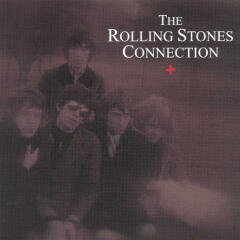
About the song
“Connection” was written by Mick Jagger and Keith Richards and appears as the fourth song on side one of The Rolling Stones’ seventh American studio album, Between the Buttons. The song seems to portray the time that The Rolling Stones spent waiting on planes at various airports while touring. On closer inspection of the lyrics, it seems to foreshadow the drug busts that Richards, Jagger and Brian Jones experienced in Great Britain in 1967. “My bags they get a very close inspection. I wonder why it is that they suspect ’em. They’re dying to add me to their collection. And I don’t know if they'll let me go.” Norman Pilcher, the arresting officer in the Richards, Jagger, Jones, Donovan, John Lennon and George Harrison cases on similar cannabis possession charges, was later convicted himself in September 1973 of perjury and sentenced to four years in prison. The line “simolima pilchard” in the lyrics of The Beatles’ “I am the Walrus” refers to the ex-sergeant, as does the 2003 Primus song, “Pilcher’s Squad.” The thumping kick drum heard on “Connection” was supplied by Jagger, who beat on Charlie Watts’s kick drum with his hands during an overdub. Personnel on the record were: Mick Jagger (harmony vocal, tambourine, kick drum), Keith Richards (lead vocal, guitars, bass), Charlie Watts (snare drum), and Jack Nitzsche (piano, organ bass pedals).
Between the Buttons was recorded between August and December 1966 at RCA Studios in Hollywood and Olympic and Pye Studios in London, with Andrew Loog Oldham producing. Released in February 1967 in the US, it went to #2 on the Billboard 200 Albums chart. It has been certified Gold by the Recording Industry Association of America. The album featured Brian Jones using an assortment of different instruments, including a recorder, vibraphone, saxophone, accordion, and dulcimer. It would be the last Rolling Stones album produced by Loog Oldham. One single was released from the LP.
The Rolling Stones are a British rock band formed in London in 1962 by Mick Jagger, Keith Richards, Brian Jones, Bill Wyman, and Charlie Watts. Jones left the band in 1969 and was replaced by Mick Taylor. Taylor was replaced by Ronnie Wood in 1974. Bill Wyman left the band in 1993 and has been replaced by Darryl Jones on tour. Charlie Watts died in 2021 and has been replaced by Steve Jordan on tour. They have released 30 studio albums, 35 live albums, 29 compilation albums, three EPs, and 121 singles and have sold more than 200 million records worldwide. The Rolling Stones have won three Grammy Awards and a Grammy Lifetime Achievement Award, and are members of the Rock and Roll Hall of Fame and the UK Music Hall of Fame. In 2003 Mick Jagger was knighted by Queen Elizabeth II for his services to popular music. The Rolling Stones continue to record and tour.







Comments
" . . . 625 MMcf/d of which is contracted to serve the 924-MW Central Norte III combined-cycle power plant . . . ."
That seems like a bit of overkill on supply. Is one of these numbers wrong or are substantial power plant additions on the way there?