The Uinta Basin in northeastern Utah boasts enormous reserves of unusual, waxy crude oil with many characteristics that refiners desire: medium-to-high API gravity and very low sulfur, acid and metal content among them. Moreover, the combination of long horizontal wells and hydraulic fracturing now give producers access to the basin’s waxy crude at a remarkably low cost per barrel. The catch is that the crude’s most notable feature — its shoe-polish-like consistency at room temperature — poses a major economic and logistical challenge: how to cost-effectively transport the stuff to distant markets. Refineries in nearby Salt Lake City have been making good use of the waxy oil for decades, but there are limits to how much they can process, so Uinta Basin producers, midstreamers and investors have been working on ways to move large volumes to faraway places like the Gulf and West coasts. They may finally be making real progress. Today, we begin a series on the prospects for taking waxy-oil production from the often-overlooked Uinta Basin to the next level.

Canadian crude output is rising, requiring new export routes. As traditional pathways face constraints, the U.S. Rockies—especially the Guernsey, WY hub—are emerging as key corridors for moving Canadian heavy crude to downstream markets, including the Gulf Coast.
Crude oil is a commodity, which suggests a kind of uniformity — corn is corn, silver is silver, orange juice is OJ — but crude sure as heck comes in many, many varieties. Heavy, medium, light, superlight. Very sour to very sweet (a measure of sulfur content, from high to low). Viscous like thick-as-molasses bitumen to very free-flowing like condensate. High total acid numbers (TANs) to low; the same for metal content. We could go on. The point is that crude can be as different as the musical styles of John Lennon and “Weird Al” Yankovic, and that the value of each type of crude to refiners is based on the oil’s unique matrix of characteristics. Refineries can be very different from one another too, of course; depending on its equipment and its sophistication, refineries range widely in their ability to break down different crude types into high-value products like gasoline, distillate, and even lube oil. And don’t forget that a big factor in the delivered cost of crude to refineries is, well, the cost of delivery.
These are good things to keep in mind as we start our look at the Uinta Basin’s past, present and future crude oil production trends. The Uinta Basin — pronounced “you-IN-ta” — includes parts of Duchesne and Uintah counties in northeastern Utah (blue-shaded area in Figure 1 map and inset), more than 100 miles east/southeast of Salt Lake City.
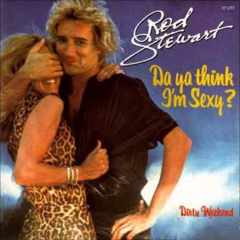
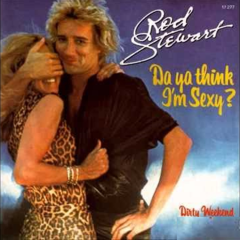
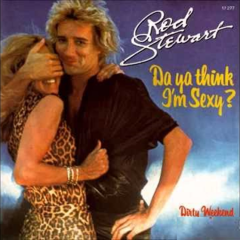
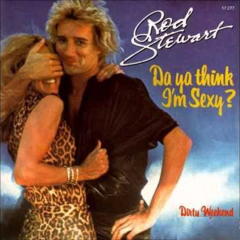
About the song
“Da Ya Think I'm Sexy” was written by Rod Stewart, Carmine Appice and Duane Hitchings, and appeared as the first cut on side one of Rod Stewart's ninth solo album, Blondes Have More Fun. Released as a single in November 1978, the song went to #1 on the Billboard Hot 100 chart. Co-writer Duane Hitchings in a 2007 interview said the song “was a spoof on the lounge lizards of the ‘Saturday Night Fever’ days.” As a side note, the late Ian McLagan — Rod Stewart's bandmate and keyboardist in The Faces — hated the song and refused to play it when he was the keyboardist in Stewart’s touring band. He would stand behind his organ with his arms crossed as the band performed the song. He said of the song, “It’s an insult to the mentality of any musician.” Personnel on the record were: Rod Stewart (lead vocals), Gary Grainger and Billy Peek (guitars), Jim Cregan (guitar, backing vocals), Phil Chen (bass, backing vocals), Carmine Appice (drums, backing vocals), Duane Hitchings (keyboards, synthesizer) and Del Newman (string arrangements). Blondes Have More Fun was produced by Tom Dowd. It went to #1 on the Billboard Top 200 Albums chart and has been certified Platinum by the Recording Industry Association of America.
Sir Rod Stewart — he was knighted in 2016 — is a British singer and songwriter. He was the lead singer in The Jeff Beck Group and The Faces, making two albums with the former and four studio LPs and one live album with The Faces. As a solo artist, Sir Rod has released 31 studio albums, four live albums and 147 singles. He has won one Brit Award, one Grammy Award and an ASCAP Founders Award, and has been inducted into the Rock and Roll Hall of Fame twice — once as a solo artist, and once as a member of The Faces. Stewart has sold more than 100 million records worldwide. He continues to tour and has dates scheduled into December, with stops planned in the U.S., Mexico, the Dominican Republic, Uruguay, Chile, Argentina, Germany, Switzerland, Austria, Bulgaria, Greece and the UEA.