In their first earnings calls of 2025, the handful of large midstream companies that provide the gamut of “wellhead-to-water” services in Texas laid out plans for yet another round of projects — everything from gas processing plants and takeaway pipelines to fractionators and export terminal expansions. At the same time, many of these same midstreamers expressed a degree of caution about overbuilding. They sought to reassure Wall Street that they were only approving plans underpinned by strong commercial support. In today’s RBN blog, we discuss the latest capital spending plans of this select, upper tier of midstream service providers.

Visualize the infrastructure behind U.S. NGL movement.
The U.S. NGLs Map provides a comprehensive view of the transport, processing, and export networks moving NGLs across the U.S.
Over the past few years, a small but gradually growing group of midstreamers have seen the benefits of owning and operating the infrastructure that processes, transports and, in many cases, exports the increasing volumes of crude oil, natural gas and NGLs emerging from wells in the Permian Basin. As we said in Get Ready, our late-2023 Drill Down Report on gas-and-NGL-focused “networks” in the Lone Star State, offering a full range of midstream services “provides a number of important benefits — chief among them, the ability to operate with extraordinary efficiency, collect fees from shippers each step of the way, and feed pipelines, fractionators, storage and export terminals along the network’s value chain.”
In the report, we focused on the four companies with the most comprehensive sets of midstream assets in that space — Enterprise Products Partners, Energy Transfer, Targa Resources and Phillips 66. More recently, in At Last, we blogged about MPLX and ONEOK joining that august club with their plans (some joint and some solo) to build out NGL pipeline, fractionation and LPG export capacity in the Texas City, TX, area.
A few midstreamers also provide wellhead-to-water services for crude oil, including Enbridge, which holds significant ownership interests in the Gray Oak and Cactus II pipelines as well as 100% of the U.S.’s #1 crude export terminal, the Enbridge Ingleside Energy Center (EIEC) near Corpus Christi. Similarly, Enterprise owns, among other things, the South Texas Crude Oil Pipeline System, stakes in elements of the Midland-to-ECHO system, and a host of oil storage and export terminals, including the ECHO terminal and Enterprise Hydrocarbons Terminal (EHT) in the Houston area.
In today’s blog, we’ll begin a review of what the largest midstream network owners in Texas have committed to adding to their portfolios this year and in 2026. As you’ll see, most of these companies continue to expand their Permian-to-Gulf capabilities at a full-throttle pace, though — as we noted up top — at least a few of them have sought to assure Wall Street analysts (and investors in general) that they will not get over their skis.
Enterprise is a case in point. The midstream giant recently made headlines when, during its February 4 earnings call, it acknowledged that the company had so far “not gotten enough traction” in commercializing its long-planned Sea Port Oil Terminal (SPOT) and would not proceed with the project unless market dynamics shift and long-term volume commitments materialize. Co-CEO Jim Teague said that while the economics behind SPOT — a deepwater crude oil export facility off Freeport, TX, that would be capable of fully loading Very Large Crude Carriers (VLCCs) — continue to compare favorably to onshore terminals that can only partially load VLCCs, there have been at least a couple of notable changes in the market since the project was proposed six years ago.
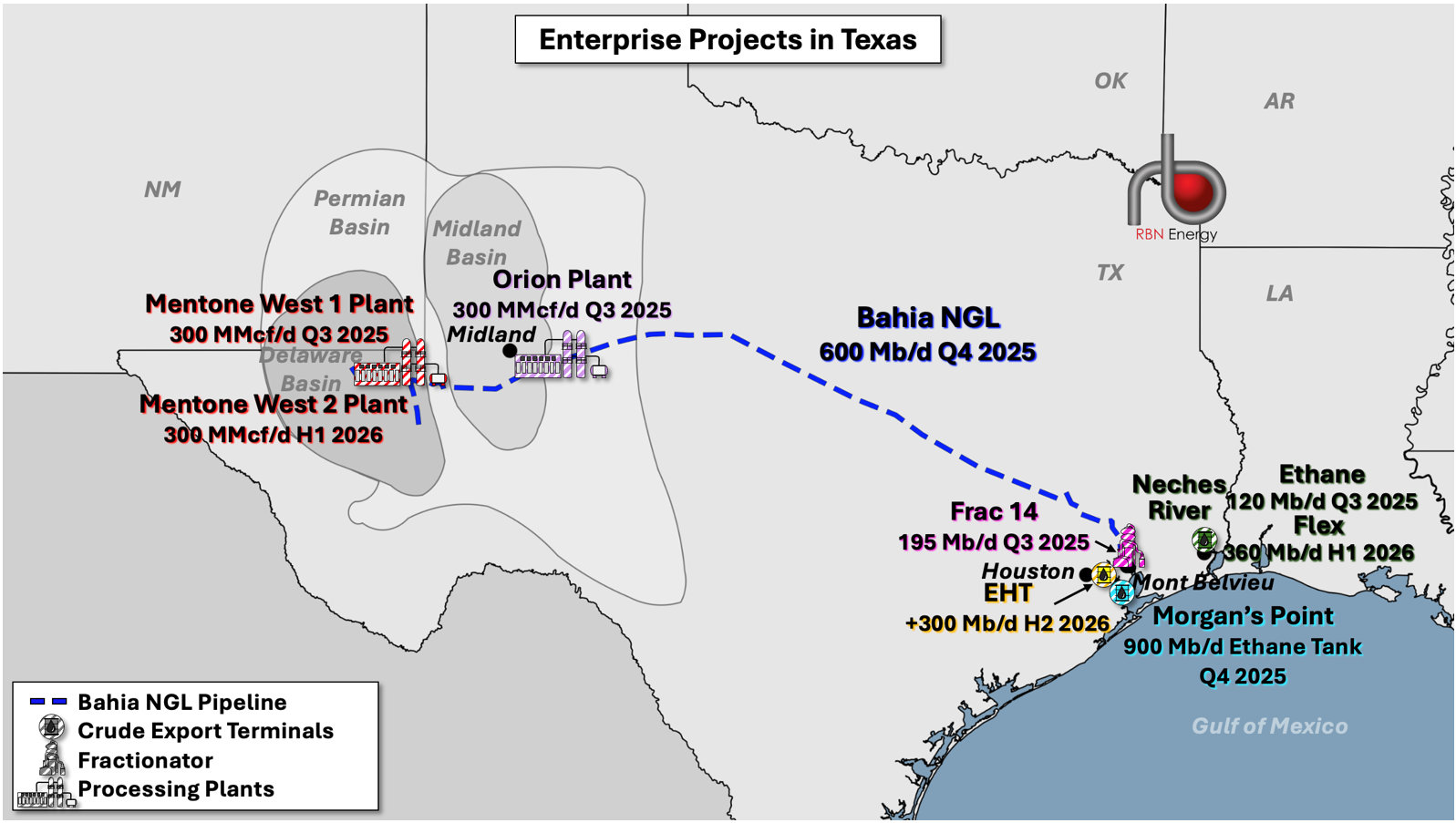
Figure 1. Enterprise Projects in Texas. Source: RBN
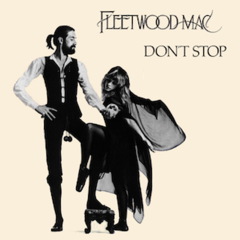
About the song
“Don’t Stop” was written by Christine McVie and appears as the fourth cut on side one of Fleetwood Mac’s 11th studio album, Rumours. The song was written about staying strong and positive after McVie’s separation from husband and Fleetwood Mac bassist John McVie. It was released as a single in March 1977 and went to #3 on the Billboard Hot 100 chart. Fleetwood Mac performed “Don't Stop” at President Bill Clinton's inaugural ball in 1993. Clinton had used the song extensively during his election campaign. Personnel on the record were: Christine McVie (piano, lead vocals), Lindsey Buckingham (guitar, lead vocals), Stevie Nicks (tambourine, backing vocals), Mick Fleetwood (drums) and John McVie (bass).
Rumours was recorded during 1976 at The Record Plant in Sausalito, CA, and Wally Heider Studios in Los Angeles. It was produced by the band with Ken Caillat and Richard Dashut. The LP was released in February 1977 and went to #1 on the Billboard Top 200 Albums chart. Four Top 10 singles were released from the album. It won a Grammy Award for Album of the Year in 1978. Rumours has been certified 2x Diamond (20 million in sales) by the Recording Industry Association of America. It has sold more than 40 million copies worldwide, making it one of the best-selling albums of all time.
Fleetwood Mc has released 18 studio albums, 10 live albums, 23 compilation albums, one EP, and 62 singles. The band has won four American Music Awards, two Brit Awards, three Grammy Awards, and was inducted into the Rock and Roll Hall of Fame in 1998. It last toured on the band’s An Evening with Fleetwood Mac tour, which began in October 2018 and ended in November 2019. The tour featured long-time Fleetwood Mac members Mick Fleetwood, John McVie, Christine McVie and Stevie Nicks, joined by Neil Finn (Crowded House) and Mike Campbell (Tom Petty and the Heartbreakers). Former Fleetwood Mac guitarist Danny Kirwin died in June 2018 at the age of 68. Former guitarist Peter Green died in July 2020 at 73. Singer, keyboardist, songwriter Christine McVie died in November 2022 at 79. In an interview with Mojo magazine in September 2024, Mick Fleetwood said that he was open to re-forming the band.