About a year ago, we chronicled the performance of publicly traded companies holding oil and gas mineral and royalty interests, the approximately 20% of gross revenues generated from wells without responsibility for the costs associated with development and production. M&A activity in the minerals/royalty space, which peaked in 2018-19, quieted during a prolonged post-pandemic wave of major E&P consolidation. As rising realizations for both oil and natural gas have recently boosted cash flows, the minerals/royalty sector has seen both the first major consolidation of the publicly traded firms as well as a recent successful initial public offering (IPO) that harkens additional entrants to the arena. In today’s RBN blog, we update our comparison of the performance of these entities with traditional E&Ps, analyze the valuation trends for each mineral/royalty company, and review significant transaction market activity.

Join industry leaders in Calgary on October 29 for market insights, technical presentations, Duvernay inventory analysis, an expert panel, and networking focused on the next chapter of Canadian energy.
Before we dive deeper on this, let’s quickly define a few key terms and explain in simple terms the financial side of well development and who gets what money-wise from a producing well. First, some definitions:
Mineral interests are the exclusive rights to the minerals, including oil and natural gas, found on, in, or beneath a piece of land. These rights may be leased to companies that extract oil and gas but are retained in perpetuity and survive the lease.
Royalty interests are payments to mineral interest holders negotiated as part of the lease and based on a percentage of oil and gas production. Royalty holders are not responsible for costs associated with oil and gas production except applicable taxes on revenue and have no abandonment or environmental liabilities. Royalty interests are terminated when the lease ends.
Working interests constitute ownership of the remaining production from a lease. Working interest (WI) owners are responsible for 100% of the costs of finding, developing, and producing oil and gas on the leasehold, as well as funding abandonment of the well and any environmental liabilities. In describing assets, E&P companies often identify their relative working interest (e.g., 100% WI) and the net revenue interest (81.4% NRI), which reflects the total royalties paid.
Because they don’t incur production costs, companies that solely hold mineral and royalty interests retain a larger margin of their share of the net revenues derived from production than traditional E&Ps. In Figure 1 below, we compare the Q1 2026 income statements of seven publicly traded mineral/royalty companies (generally referred to as royalty trusts, or RTs), four of them U.S.-based (Viper Energy, Black Stone Minerals, Kimbell Royalty Partners, and Dorchester Minerals), and three based in Canada (PrairieSky Royalties, Freehold Royalties, and Topaz Energy), with the results of a universe of 34 major E&P companies that we cover. (Note: We have excluded hybrid firms that have significant revenue streams other than oil and gas mineral/royalty rights to simplify valuation calculations). Because of the virtual lack of production costs, the RTs generated pre-tax free cash flow of $37.32/boe, or 94% of net revenues, compared with $26.87/boe, or 70% of net revenues, for the E&Ps. Pre-tax net income for the RTs was 60% of net revenues, compared with 35% for the E&Ps.
About the song
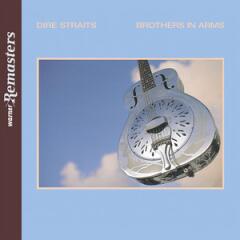
“Money for Nothing” was written by Mark Knopfler and Sting and appears as the second song on side one of Dire Straits’ fifth studio album, Brothers in Arms. Knopfler was inspired to write the song by comments from an employee at a New York City appliance store about an MTV video playing on one of the store’s television sets: “Money for nothing and chicks for free.” Sting makes an appearance on the song, singing “I want my MTV” to the melody of The Police’s “Don’t Stand So Close to Me.” Released as the second single from the LP in June 1985, it went to #1 on the Billboard Hot 100 Singles chart. It won the band a Grammy Award in 1986 and the Video of the Year Award at the third annual MTV Video Music Awards. Personnel on the record were: Mark Knopfler (lead vocals, guitar), John Illsley (bass, backing vocals), Guy Fletcher (synthesizer, Synclavier, keyboards), Alan Clark (Hammond organ), Terry Williams (drum intro), Omar Hakim (drums), and Sting (vocals).
Brothers in Arms was recorded at AIR Studios in Montserrat between October 1984 and February 1985, and produced by Mark Knopfler and Neil Dorfsman. The album was released in May 1985 and went to #1 on the Billboard 200 Albums chart, where it stayed for nine weeks. It has been certified 9X Platinum by the Recording Industry Association of America. Five singles were released from the LP.
Dire Straits was a British rock band formed in London in 1977 by Mark Knopfler, David Knopfler, John Illsley, and Pick Withers. They were active from 1977 to 1988 and again from 1991 to 1995. Twelve members passed through the band since their formation, with Mark Knopfler always at the helm. They released six studio albums, five live albums, three compilation albums, three EPs and 31 singles and have sold more than 100 million records worldwide. Dire Straits has won four Grammy Awards, three Brit Awards and two MTV Video Music Awards and are members of the Rock and Roll Hall of Fame. Mark Knopfler continues as a solo artist and retired from touring after a final concert at Madison Square Garden in September 2019. His latest album, One Deep River, was released in April 2024.
"About the Song" -- written by Mickey McMahan , RBN Director of Musicology