The stock market of 2025 often felt like two different movies playing on adjacent screens. On one, the broader market surged, fueled by AI-infused optimism and resilient consumer spending. On the other, economically sensitive sectors such as oil and gas stocks quietly slid into the background. While the S&P 500 marched steadily upward, exploration and production (E&P) stocks largely failed to keep pace. Oil prices fell sharply during the year, natural gas prices whipsawed and the traditional E&P investment playbook — free cash flow generation, dividends and buybacks — proved insufficient to offset macro headwinds for many companies. In today’s RBN blog, we examine the 2025 stock market performance of the 35 public E&P companies we cover, breaking down results by peer group and linking shareholder returns to key drivers such as commodity exposure, leverage, dividends and strategic positioning.

The Natural Gas Master Class is a one-day online event focusing on understanding flow analysis, interpreting pipeline data and forecasting future flows. This course is designed to equip you with the knowledge and skills to effectively analyze the complexities of natural gas markets, flow analysis, and pipeline modeling. Join us online
October 21 | Online
As the analysis shows, 2025 was not simply a story of “energy underperformance,” but rather a reminder that in volatile markets, financial structure matters as much as resource quality — and that leverage can be either a tailwind or a headwind, depending on which way the commodity breezes are blowing. Yet beneath the surface, performance across the sector was far from uniform. Some Gas-Weighted E&Ps thrived as natural gas prices recovered, while Oil-Weighted and Diversified E&Ps struggled to convince investors they could navigate a weaker crude environment without balance-sheet stress.
Figure 1 below shows the relative 2025 performance of the S&P 500 (gray line), SPDR S&P Oil & Gas Exploration & Production ETF (XOP; blue line) and WTI oil prices (orange line), all indexed to 100 starting on January 2, 2025. The S&P 500 outpaced the other two indices with a nearly 17% gain in 2025, while the XOP, an index of E&P companies, fell about 6% and WTI plunged by more than 20%. Henry Hub natural gas prices (not pictured) gyrated wildly during 2025, finally increasing 1% on the year. The median stock price change for our peer group of 35 companies was a 4% loss. The Gas-Weighted E&Ps were the best-performing peer group, sporting a 13% gain, while the Oil-Weighted E&Ps and the Diversified E&Ps fell by 11% and 20%, respectively. The poor performance of the Diversified E&Ps was influenced by the heavy debt load held by many of its companies. (More on that shortly.)
About the song
“When the Levee Breaks” was written by Kansas Joe McCoy and Memphis Minnie and was released as a 78-rpm single in June 1929. Released at a time before Billboard began tracking blues records, it was said to have been a moderate hit on jukeboxes. The song is a country-blues tune about the Great Mississippi Flood of 1927, which inundated 26,000 square miles of the Mississippi Delta, resulting in the deaths of hundreds of people — thousands of others lost their homes and businesses. Memphis Minnie was living with her family in Walls, MS, when the flood occurred. McCoy and Minnie recorded the song during their first recording session for Columbia Records in New York City in June 1929. It was released as a single in August 1929. Personnel on the record were: Kansas Joe McCoy (vocals, rhythm guitar) and Memphis Minnie (lead guitar).
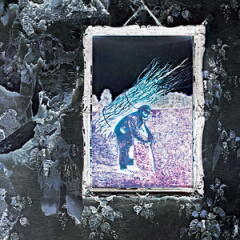
Many other artists have recorded the song, the most well-known being Led Zeppelin, whose version appears as the fourth song on side two of their fourth album, Led Zeppelin IV (also known as the “Runes” album). Led Zeppelin IV has been certified 24X Platinum by the Recording Industry Association of America. Recorded at Hedley Grange in Hampshire, England, during January 1971, “When the Levee Breaks” was mixed at Sunset Sound in Hollywood with Jimmy Page at the production helm in February 1971. It is worth noting that Page recorded Led Zeppelin drummer John Bonham’s drums in a massive stone hall at Headley Grange, utilizing two additional mics down the hall for ambience while recording Bonham’s drums. Bonham's two-bar intro to the song has been sampled many times by artists such as Eminem, Dr. Dre, Mike Oldfield and Sophie B. Hawkins.
Wilbur “Kansas Joe” McCoy died in January 1950, Memphis Minnie passed in August 1973, and John Bonham died in September 1980.
"About the Song" -- written by Mickey McMahan , RBN Director of Musicology