As a volatile 2017 nears the finish line, the big question for U.S. exploration and production companies (E&Ps) is whether they will throttle back their capital expenditures in 2018, cruise on at the same pace or step on the accelerator. We won’t have all the answers for a couple of months, but early guidance issued along with third-quarter 2017 earnings results indicates a solid 14% increase in investment by seven oil-weighted and diversified producers. The big story among this handful of announcements is a 22% gain in planned 2018 capex by giant ConocoPhillips, which had been slashing investment since 2014. The company’s $2 billion capex boost includes doubling spending on its North American unconventional portfolio. Preliminary guidance for the natural gas producers, on the other hand, tells a different and less interesting story. Six companies, two-thirds of the nine gas-weighted E&Ps we’ve been tracking, indicate their 2018 investment will be relatively flat with the preceding year. So today, we focus on the 2018 plans of the oil producers and take an in-depth look at the ConocoPhillips budgeting process and the company’s noteworthy investment increase.
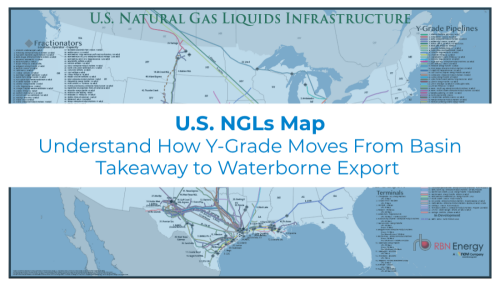
Visualize the infrastructure behind U.S. NGL movement.
The U.S. NGLs Map provides a comprehensive view of the transport, processing, and export networks moving NGLs across the U.S.
How We Got Here
Earlier this year, we examined the ongoing transformation of the U.S. E&P sector in Piranha!, our market study of 43 top U.S.-based E&Ps that included an analysis of the strategies E&Ps adopted to survive the oil price plunge and thrive in a $50/bbl world. As oil prices rose solidly above that mark, we chronicled in Jump! that our universe of companies budgeted an average 42% surge in 2017 investment after slashing outlays by 70% in 2014-16. Even though oil prices had declined about 12% at mid-year 2017 from their December 2016 highs, U.S. E&Ps largely maintained their aggressive drilling and completion spending plans (see Rock Steady). And while net income in the second quarter fell after a strong first quarter, the industry remained solidly profitable after posting massive losses in 2015-16 (see Roller Coaster).
A Quick Third-Quarter 2017 Review
E&Ps’ confidence in their long-term strategies was rewarded by a nice rebound in oil prices to over $55/bbl by October — a level above the December 2016 mark. But the companies in our universe continued to stay the course to the end of the year. The companies raised their total capital budgets by just $348 million to $55 billion (red rectangle in Figure 1), a minuscule 0.6% change; they also trimmed their estimate for 2017 oil and gas production (in barrels of oil equivalent, or boe) by 1% (blue rectangle).
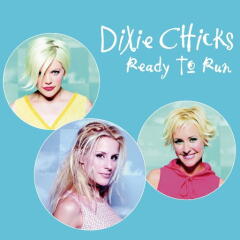
About the song
The Dixie Chicks were founded in Dallas in 1989 by sisters Martie Maguire and Emily Robison in 1989; Natalie Maines joined the group in 1992. Maines is the lead vocalist and guitarist, while Martie Maguire plays fiddle, mandolin, and sings backing vocals, and Robison plays banjo, dobro, and sings backing vocals. The band took its name from the 1973 song and album “Dixie Chicken” by Lowell George of Little Feat.
"Ready To Run" was written by band member Martie Maguire, along with Marcus Hummon. It was the first single from The Dixie Chicks' fifth studio album, Fly, in 1999. It reached #2 on the Billboard Hot Country Songs chart, and #39 on the Billboard Hot 100. The song helped win the Chicks a Grammy for Best Country Performance by a Duo or Group in 1999. To date, The Dixie Chicks have sold over 30 million albums worldwide, and have won 13 Grammys.
As a side note of interest: Natalie convinced the other band members to join her in having tiny chicken feet tattooed on their feet to mark milestones in their career (pictured below) — such as #1 singles, #1 albums, gold and platinum album certificates, etc. So far, they would have earned 22 tattoos. Natalie's husband, Adrian Pasdar, summed it up best in a 2007 interview, stating: "The Chicks have stopped getting the tattoos because otherwise they would be covered up to their knees."