One of life’s vicarious pleasures is indulging in some daydreaming about what we’d do with a substantial financial windfall, maybe from a lottery win, a bequest from a long-lost relative, or a five-horse parlay. Thanks to a dramatic surge in post-pandemic commodity prices, U.S. E&Ps are living out that dream as 2022 cash flow from operating activities (CFOA) is on track to quadruple from 2020 lows and more than double from pre-pandemic levels. In allocating those funds, producers face the same kinds of decisions we would all face: ramping up current spending, whittling away at debt, tucking cash away for a rainy day, or distributing funds to family and friends. Possibly influenced by the upcoming holiday season, oil and gas producers turned extremely generous in the third quarter as shareholder returns reached record levels. In today’s RBN blog, we detail the cash-flow allocations made by the 42 publicly owned E&Ps we follow and speculate on future trends.
Let’s take a quick look at the largesse. The cash flowing into the coffers of the companies we track is on pace to exceed $160 billion, or $45 per barrel of oil equivalent (boe) produced, this year. CFOA hasn’t exceeded $25/boe since 2014, when oil prices last topped $100/bbl. The estimated 2022 result is 25% higher than the $36/boe generated in 2014, 4x the $11/boe reported in 2020, and 125% more than the $20/boe in 2021. Most impressively, the total cash generated this year is estimated to be $15 billion higher than the total net debt of the 42 producers we track.
The funds generated far exceed the disciplined post-pandemic investment programs adopted by the major E&Ps, who have dramatically shifted strategy from growth to cash flow generation. As shown in Figure 1, in 2019, capital investment of $89 billion exceeded CFOA by $16 billion, or 22%. In COVID-impacted 2020, producers slashed capital spending by 60% to just $36 billion, which represented 84% of cash flow. That reinvestment rate dropped to 43% in 2021 as investment rose just 12% while soaring commodity prices more than doubled cash generation from $42 billion to $93 billion. As we discussed in I Can’t Go For That (No Can Do), our series of blogs on capex and production guidance, 2022 capital budgets rebounded from $40 billion to $60 billion — an increase driven by 20-25% inflation in oilfield-related costs and the need to ramp up drilling after a steep drawdown in the inventory of drilled but uncompleted wells (DUCs) over the previous two years. However, rising commodity prices more than offset the impact of higher investment: Capex represented just 35% of E&Ps’ Q3 cash flow and 38% of their cash flow in the first nine months of 2022.
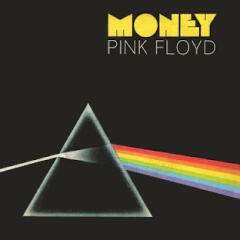
About the song
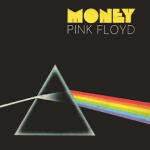
“Money” was written by Roger Waters and appears as the first song on side two of Pink Floyd’s eighth studio album, The Dark Side of the Moon. Released as a single in May 1973, it went to #13 on the Billboard Hot 100 Singles chart. The song features tape loops of money-related sound effects. One of the coin-jingling effects was produced by a string of coins that drummer Nick Mason made. Personnel on the record were: David Gilmour (lead vocals, electric guitars), Roger Waters (bass), Richard Wright (Wurlitzer electric piano), Nick Mason (drums, percussion, coin sound effects), and Dick Parry (tenor saxophone).
The Dark Side of the Moon was recorded between May 1972 and February 1973 at EMI (Abbey Road) Studios in London. Produced by Pink Floyd, engineered by Alan Parsons and mixed by Chris Thomas, the album was released in March 1973. It went to #1 on the Billboard 200 Albums chart and stayed on the charts for an unprecedented 736 weeks. It has been certified 15x Platinum by the Recording Industry Association of America and has sold more than 45 million copies worldwide. Two singles were released from the LP. In August 1995 it was discovered that The Dark Side of the Moon, when synced up with the 1939 film, The Wizard of Oz, held a lot of audio/visual synchronicities, resulting in a phenomenon referred to as “The Dark Side of Oz” and “Dark Side of the Rainbow.” The band has disavowed any participation in this.
Pink Floyd is an English rock band formed in London in 1965 by Syd Barrett, Roger Waters, Nick Mason, and Richard Wright. David Gilmour joined the band in 1967, and Syd Barrett left the group in 1968 due to mental health issues. They have released 15 studio albums, four live albums, 12 compilation albums, three EPs and 27 singles and have sold more than 250 million records worldwide. The band was inducted into the Rock and Roll Hall of Fame in 1996 and the UK Music Hall of Fame in 2005. Syd Barrett died in 2006 and Richard Wright died in 2008. Roger Waters left the band in 2005. At this point there are no plans for a Pink Floyd reunion, although Gilmour and Mason used the name Pink Floyd in March 2022 to make the single, “Hey, Hey, Rise Up,” protesting Russia’s invasion of Ukraine. Waters, Gilmour and Mason still record, and Waters and Mason still tour as solo acts.