The U.S. natural gas market’s exposure to global gas and LNG markets has come into sharp focus in recent days. A gas supply crunch in Europe and scant LNG cargoes have roiled the international markets and kicked competition into overdrive. European natural gas and Asian LNG prices are at record highs and locked in a race to the top. The U.S. gas market has been relatively buffered from the full extent of the panic-driven premiums enveloping European and Asian markets, constrained primarily by its limited ability to help meet international demand. In other words, the U.S.’s LNG export capacity ceiling is likely the only thing reining in Henry Hub prices from following European and Asian gas/LNG prices to the moon. As explosive as Henry Hub futures are these days, if not for the capacity constraint, they would be much higher. That ceiling is about to get a little higher, however, as two liquefaction projects — Cheniere Energy’s Sabine Pass Train 6 and Venture Global’s Calcasieu Pass — get ready to export LNG from U.S. shores this winter, amid what’s already the most bullish Lower 48 gas market in years. In today’s RBN blog, we detail the timing and demand implications of these two projects.
Last week, the Federal Energy Regulatory Commission (FERC) approved Cheniere Energy’s Sabine Pass to introduce feedgas to the commissioning Train 6 liquefaction unit. Venture Global’s greenfield Calcasieu Pass LNG terminal, which has also started commissioning, is likely not far behind. This step of the projects’ start-up process marks the beginning of a level-shift up in baseline demand for feedgas. There is currently about 75 MMtpa (~9.9 Bcf/d) of LNG export capacity operating in the U.S., 67.3 MMtpa (8.9 Bcf/d) of that on the Gulf Coast. At full utilization, that amounts to about 11 Bcf/d of feedgas demand. The completion of Train 6 and the entirety of the Calcasieu Pass project will increase total liquefaction capacity to 89.65 MMtpa (nearly 12 Bcf/d) and bring total feedgas deliveries up by about 2.25 Bcf/d to more than 13 Bcf/d by the end of 2022. And a chunk of that will be in final commissioning stages and possibly start service during the coming winter.
For U.S. LNG producers and offtakers, the incremental liquefaction capacity couldn’t come at a better time. Global gas/LNG demand is elevated, and prices are at record highs, with European and Asian benchmark indices all trading well above $20/MMBtu, up more than 150% from where they were in April. With U.S. benchmark Henry Hub trading mostly in the $4.50-5.50/MMBtu range, price spreads to European and Asian destination markets have blown out, a clear distress signal for more LNG cargoes in the market. The resulting economics for U.S. LNG producers and offtakers are some of the most attractive we’ve seen since the U.S. began exporting in earnest back in 2016.
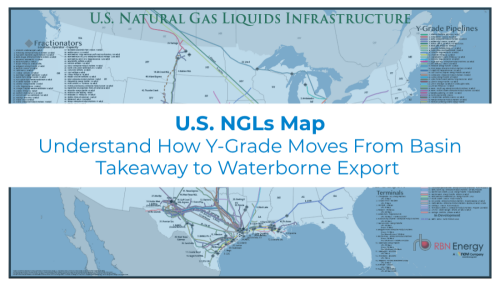
Visualize the infrastructure behind U.S. NGL movement.
The U.S. NGLs Map provides a comprehensive view of the transport, processing, and export networks moving NGLs across the U.S.
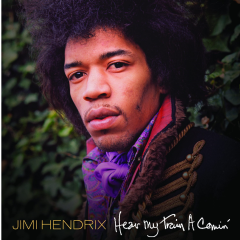
About the song
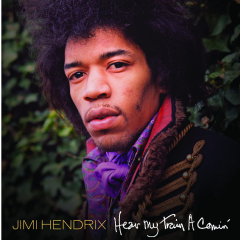
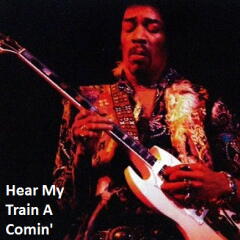
"Hear My Train A Comin'" is a slow blues written by Jimi Hendrix. It has appeared in several live, studio, and jam sessions involving Hendrix between 1967 and 1970. No versions of the song were ever completed to Hendrix's satisfaction before his death in 1970. The first known recording of the song was with the Jimi Hendrix Experience, with Mitch Mitchell on drums and Noel Redding on bass for the BBC Top Gear radio program in December 1967. Hendrix has also called the song "Getting My Heart Back Together" in some versions. It has appeared in various forms on the albums: Radio One, BBC Sessions, Blues, Woodstock, Woodstock Two, Live at Woodstock, Midnight Lightning, Jimi Hendrix Experience Box Set, Valleys of Neptune, Both Sides of the Sky, as well as People, Hell, and Angels. Live performances of the tune can be seen in the films: Experience, Jimi Hendrix, Woodstock, Rainbow Bridge, and Jimi Plays Berkeley. Several live versions of the song can be streamed for free at the Experience Hendrix official website.
Jimi Hendrix was an American guitarist, singer, songwriter, and musician from Seattle, Washington. He started playing guitar when he was 15. After playing the chittlin' circuit in his early 20s with The Isley Brothers, Little Richard, Wilson Pickett, and Curtis Knight, he was discovered at the Cafe Wha? in New York City by Animals bassist Chas Chandler. Chandler became Hendrix's manager and producer, and moved him to London. Hendrix soon became a sensation in London and secured a record deal. He achieved fame in the U.S. after his appearance at the Monterey Pop Festival in 1967. Hendrix released three studio albums, three live albums, and 14 singles with the Experience. He released 13 studio albums, 28 live albums, 19 compilation albums, 27 EPs and 28 singles. He also recorded one live album with the Band of Gypsys, rather than his original group. Another 23 “official bootleg” albums were released posthumously. He is a member of the Rock and Roll Hall of Fame and the UK Music Hall of Fame, and has a star on the Hollywood Walk of Fame. He won two Grammy Awards, a Grammy Lifetime Achievement Award, and has a statue and park named after him in Seattle. He is considered by many to be one of the most influential guitarists and musicians to have ever lived. Hendrix died in London in September 1970. He was 27 years old.