Crude oil prices and, just as important, the availability of pipeline takeaway capacity, have supported continued production growth in the Bakken. Good news, right? Except, that’s led to sharply increased output of associated gas in a region that for years has been playing catch-up on the gas processing capacity front. As a result, gas-flaring volumes have soared this year, putting pressure on crude-focused producers to slow down their drilling-and-completion activity. Things are finally getting better, though — 670 MMcf/d of processing capacity has come online in western North Dakota since late July, and another 200 MMcf/d will start up next month. That gives Bakken producers some room to grow but also poses a problem for Western Canadian producers, namely that more pipeline gas out of the Bakken means less room for Alberta and British Columbia gas on pipes to the Midwest. Today, we begin a short blog series on incremental Bakken gas processing capacity and its impacts on producers — and natural gas prices — up in Canada.
The RBN Crude Oil Analytic Suite gives you access to four weekly reports covering crude oil markets, including: Crude Billboard, Crude Permian, Crude TradeView, and Crude Voyager.
After falling 23% from 1.16 MMb/d in December 2014 to 895 Mb/d in December 2016, crude oil production in the Bakken has rebounded with a vengeance over the past two years, rising to a record 1.46 MMb/d in October 2019, according to the most recent data from the North Dakota Oil & Gas Division (blue area in left graph in Figure 1). (Data from IHS Markit’s PointLogic Energy suggest production has remained at a similar level since then.) Higher oil prices through most of 2017-19 helped make that 63% increase since December 2016 possible, but so did the June 2017 startup of the Dakota Access Pipeline (DAPL), which freed producers from pipeline takeaway constraints that had dogged them since soon after Bakken production took off back in the early 2010s.
About the song
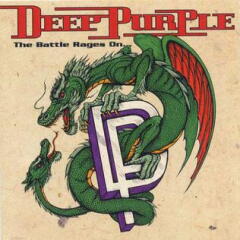
"The Battle Rages On," written by Ritchie Blackmore, Ian Gillan, Jon Lord and Ian Paice, appears as the first song on Deep Purple's 14th studio album of the same name. The basic tracks of the album were recorded at Bearsville Studios in Woodstock, NY, with vocals and overdubs done at Red Rooster Studios in Tutzing, Germany, and Greg Rike Studios in Orlando, FL. The album was mixed at Sound on Sound in New York City and Ambient Recording Company in Stamford, CT. The Battle Rages On LP was produced by Thom Panunzio and Roger Glover, and released in July 1993. It went to #192 on the Billboard Top 200 Albums chart. Personnel on the record were: Ian Gillan (vocals), Ritchie Blackmore (guitar), Jon Lord (keyboards), Roger Glover (bass) and Ian Paice (drums). Ritchie Blackmore left Deep Purple for good after a gig in Helsinki in November 1993 supporting The Battle Rages On album. Guitarist Joe Satriani was hired as a temporary replacement so the band could finish the tour.
Deep Purple is an English rock band formed in Hertford, England, in 1968. The group is considered to be one of the pioneers of modern hard rock and heavy metal music. It has released 20 studio albums, 35 live albums, 21 compilation albums and 44 singles. Deep Purple was inducted into the Rock and Roll Hall of Fame in 2016, and won an Ivor Novello Award in 2019. Fifteen people have passed through the ranks of the band over the years. The current lineup includes original member Ian Paice, along with Ian Gillan, Roger Glover, Steve Morse and Don Airey. The band will begin a major European tour starting in June 2020.