For a month now, the number of active drilling rigs in the U.S. has topped 1,000, the first time that’s happened since the spring of 2015, when the rig count was in the midst of a frightening tailspin — it fell from more than 1,900 in November 2014 to only 400 in May 2016. What a long, strange trip it’s been, not just for the rig-count total but for gains producers have seen in drilling productivity and in crude oil and natural gas production per well. Exploration and production companies are doing far more with less, trimming costs and increasing returns in the Permian, the Marcellus/Utica and other key production basins to levels few would have thought possible a few years ago. Today, we review the key changes we’ve seen in drilling productivity, and what they mean for U.S. E&Ps and midstream companies and the rig count going forward.

Canadian crude output is rising, requiring new export routes. As traditional pathways face constraints, the U.S. Rockies—especially the Guernsey, WY hub—are emerging as key corridors for moving Canadian heavy crude to downstream markets, including the Gulf Coast.
The rotary rig count, compiled weekly by Baker Hughes (and its corporate predecessor, Hughes Tool Co.) since 1944, is among the most closely tracked statistics in the energy sector — and for good reason. The level of drilling activity is a leading barometer of E&P interest in increasing, maintaining or reducing production, typically in response to shifts in crude oil and natural gas prices, which in turn reflect the ever-changing balances between supply and demand (and a number of other factors). And, given that Baker Hughes slices and dices its rig-count data by state and production basin — and by whether the rigs are oil- or gas-focused — we can anticipate shifts in where production will be occurring, and in how much oil and gas is likely to be produced in the coming weeks and months.
Figure 1 suggests that there is a consistent and clear correlation between crude oil prices and the number of active drilling rigs in the U.S. In the 2012-14 period, when West Texas Intermediate (WTI) was selling for north of $80, $90 and even $100/bbl (black line, right axis in Figure 1), well over 1,500 drilling rigs were active in the U.S. (sum of colored layers), according to Baker Hughes. But when the oil price started free-falling in the second half of 2014, the active-rig count plummeted too, dropping to as low as about 400 in May 2016 (just after oil prices bottomed out) before starting a steady rebound that has continued pretty much unabated ever since.
About the song
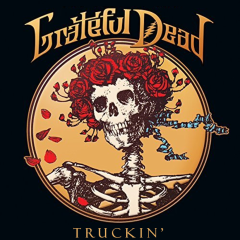
“What a long, strange trip it’s been” is a key phrase in the chorus of “Truckin’,” one of the best-known and most-loved songs by The Grateful Dead, as well as the title of The Dead’s second compilation album, released in 1977. “Truckin’” is from the Grateful Dead's sixth album, 1970's American Beauty. It was written by band members Jerry Garcia, Bob Weir, Phil Lesh and long-time Dead lyricist Robert Hunter. The song is an autobiographical tale of life on the road in a touring rock and roll band. The phrase "What a long strange trip it's been" has become part of the vernacular of Deadheads everywhere, and is often used in its abbreviated form, WALSTIB.
The Grateful Dead was formed in 1965 in Palo Alto, CA, and was a pioneer of the psychedelic sound coming out of the San Francisco Bay area in the late 1960s. The band's key members were: Garcia (lead guitar and vocals), Weir (rhythm guitar and vocals), Lesh (bass guitar and vocals), Ron "Pigpen" McKernan (keyboards, harmonica and vocals) and Bill Krueutzman (drums). Over the years, Mickey Hart had been added at times as a second drummer. After Pigpen's death in March 1973, five other keyboardists came and went within the band.
After Jerry Garcia's death in 1995, the band officially disbanded, but various members of The Dead have kept touring in offshoot groups and solo ventures to this day. The Grateful Dead was inducted into The Rock and Roll Hall of Fame in 1994. In February 2007, the band received a Grammy Lifetime Achievement Award. Rolling Stone magazine ranked The Grateful Dead #57 on its list of “The 100 Greatest Artists of All Time.”