Just a few years ago, when the Shale Revolution had matured into the Shale Era, the world settled into a nice groove, with crude prices generally rangebound between $40 and $70/bbl. As the U.S. looked to assume OPEC+’s role and evolve into the world’s swing supplier of oil, ramping up production when prices rose and slowing it down when they fell, it seemed reasonable to expect that market-driven responses would help maintain stability. Well, things haven’t turned out that way. COVID, the emphasis on ESG, a hydrocarbon-averse administration, and Russia’s war on Ukraine combined to put “reasonable expectations” in the trash. An entirely new set of expectations is emerging, and few metrics explain it better than today’s different-as-can-be relationship between crude oil prices and the U.S. rig count, as we discuss in today’s RBN blog.

The RBN Crude Oil Analytic Suite gives you access to four weekly reports covering crude oil markets, including: Crude Billboard, Crude Permian, Crude TradeView, and Crude Voyager.
As we said in Long, Strange Trip back in 2018, the rotary rig count, compiled weekly by Baker Hughes (and its corporate predecessor, Hughes Tool Co.) since 1944, is among the most closely tracked statistics in the energy industry — and for good reason. The level of drilling activity is a leading barometer of E&P interest in increasing, maintaining or reducing production, typically with a couple months’ delay in response to shifts in crude oil (and natural gas) prices. As any student learns early on in economics class, those prices, in turn, reflect the ever-changing balances between supply and demand (and a number of other factors). And, given that Baker Hughes slices and dices its rig-count data by state, county and production basin — and by whether the rigs are oil- or gas-focused — we can anticipate shifts in where production will be occurring, and in how much oil and gas is likely to be produced in the coming weeks and months.
For many years — until COVID hit the U.S. hard in March 2020 — there was a close and consistent correlation between the two-month trailing average monthly price of WTI and the oil rig count. The left graph in Figure 1 shows this relationship between January 2013 and June 2020, with the end-month selected to show how the April 2020 price for WTI (established in March of that year) affected the rig count two months later. (The black line and right axis in the left graph shows the two-month trailing average monthly WTI price and the blue-shaded area and left axis shows the rig count). In fact, according to our analysis, the two numbers (trailing WTI and crude oil rig count) moved with a 95% correlation and that relationship was very similar when oil prices declined.
About the song
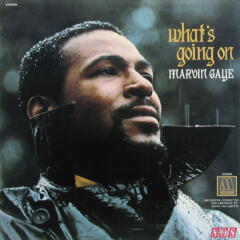
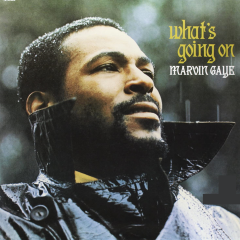
“What's Going On” is the title of the single from the 1971 album of the same name by Motown artist Marvin Gaye. It was written after Four Tops member Renaldo Benson, along with fellow Motown songwriter Al Cleveland, wrote the first version of the song that was given to Marvin Gaye for consideration. Gaye loved the tune but rearranged it and added a new melody, sharing in the songwriting credits on the song.
When Gaye played the song to Motown label head Barry Gordy, he hated it, saying the song was too political to be a hit. Motown executives Harry Balk and Barney Ales disagreed with Gordy's appraisal and helped Gaye record the song and put out the single. It immediately became a smash hit, going to #1 on the Hot Soul Singles chart and #2 on the Billboard Top 100 chart. Barry Gordy was stunned by the success of the single and gave Gaye the green light to record and produce a complete album. The album was recorded between June 1970 and May 1971 and became the first Marvin Gaye album to reach Billboard's Top Ten in the Top LP category, and peaked at #6, staying on the charts for a year.
Marvin Gaye helped to shape the sound of Motown in the sixties with a string of hit singles. What's Going On was a revolutionary departure from focusing on hit singles to shifting toward an album-oriented consciousness with a recurring social theme. Marvin Gaye died in 1984 at the age of 44, fatally shot by his father at their Los Angeles home. Among his many awards is a Grammy Lifetime Achievement Award, induction into the Rock and Roll Hall of Fame, and a star on the Hollywood Walk of Fame.