It has been a chaotic couple of years for North American LNG and the global gas market. In a short time, international gas markets went from oppressively oversupplied balances, high storage inventories, and historically low prices for much of 2020 to reckoning with panic-inducing supply shortages, low inventories, and multi-year or all-time high prices in the biggest LNG-consuming regions. The resulting whiplash has transformed key aspects of the LNG market, making a profound impact on the way existing LNG terminals operate, how projects secure funding and capacity commitments, and what offtakers expect for the next generation of LNG capacity buildout. The tight market appears to have settled the question of whether more export capacity is needed, at least for now, but the market’s sharp U-turn has also put potential offtakers on edge and underscored the need for contractual flexibility. Additionally, pressure to reduce greenhouse gas (GHG) emissions is higher than ever, and LNG offtakers are increasingly demanding greener solutions to address government regulations and public concerns. This convergence of factors has put the LNG market at a crossroads. Taking all of the lessons learned from the last two years and before, the industry must now forge a new path forward. In the encore edition of today’s RBN blog, we discuss highlights from our recent Drill Down report, looking at the major trends that will define the North American LNG market in the coming years.
In observance of today’s holiday, we’ve given our writers a break and are revisiting a recently published blog on our Drill Down Report on North American LNG Markets. If you didn’t read it then, this is your opportunity to see what you missed! Happy Thanksgiving!

The domestic and international LNG markets today are almost unrecognizable from a year ago. At this time last year (yellow-shaded area in Figure 1), U.S. Gulf Coast LNG producers were still emerging from the peak of the cargo cancellations that occurred in the summertime, precipitated by COVID-related shutdowns and demand destruction around the globe. International gas prices had partially recovered from the all-time lows seen over the summer but were still near multi-year lows, while Henry Hub was languishing in the low to mid-$2/MMBtu range. The economics for delivering to Europe and Asia still left U.S. LNG mostly out of the money (see Sultans of Swing for a detailed breakdown of export economics). For example, the Japan-Korea Marker (JKM; gray line on the right axis), the oldest and most liquid LNG price index and a good representation of the global LNG market, fell to historic lows near $2/MMBtu in the spring of 2020 and carried $2 handles through much of that summer. As COVID conditions in Asia began to ease (earlier in Asia than in Europe or the U.S.) last year, JKM prices staged a modest recovery but stayed below $3/MMBtu until the September contract expired in mid-August and prices began climbing from there. This time last year, prices were on the rise, heading for $10/MMBtu.
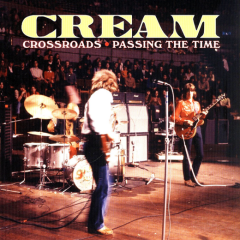
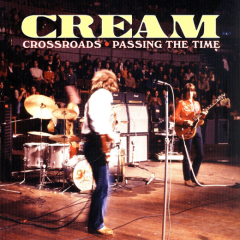
About the song
"Crossroads" was first written and recorded as "Cross Road Blues" by Robert Johnson in 1936, with his recording released the following year. This song has a lot of mythology surrounding it, with the main story being that Johnson was a guitarist with limited skills until he sold his soul to the devil at the crossroads described in his song. There is a roadside landmark at the intersection of Highway 61 and Highway 49 in Clarksdale, MS, where this event is said to have transpired. American blues artist Elmore James also released two versions of the song, one in 1954, and the other in 1965. Cream recorded its version of the song — retitled "Crossroads" and including a verse from Robert Johnson's "Traveling Riverside Blues" — in November 1966 for broadcast on the BBC Guitar Club radio show. The band recorded a longer live version of the song at the Winterland Ballroom in San Francisco in March 1968. It is this version that leads Side 3 of Cream's two-disc 1968 album, Wheels of Fire. Personnel on the record were: Eric Clapton (vocals, guitar), Jack Bruce (bass), and Ginger Baker (drums).
Wheels of Fire is the third album released by Cream. Disc 1 of the double-LP was recorded in the studio at IBC Studios in London, and Atlantic Studios in New York City. Disc 2 features live material recorded by the band at the Winterland and Fillmore ballrooms in San Francisco. Produced by Felix Pappalardi, the record was released in the U.S. in July 1968 and went to #1 on the Billboard Top 200 Albums chart. It has been certified Platinum by the Recording Industry Association of America. Two singles were released from the album.
Cream was a British rock power trio formed in London in July 1966 with Eric Clapton, Jack Bruce, and Ginger Baker. They released four studio albums, four live albums, 10 compilation albums, and 10 singles. They are members of the Rock and Roll Hall of Fame and have a Grammy Lifetime Achievement Award. The band announced its breakup in May 1968 and performed its final live show in November of that year. Cream reunited to perform three songs live during its induction into the Rock and Roll Hall of Fame in 1993. The band reunited again for four shows at the Royal Albert Hall in London in May 2005 and three shows at Madison Square Garden in New York City in October 2005. All three members of Cream went on to successful careers as solo artists and members of other ensembles. Jack Bruce died in October 2014, and Ginger Baker in October 2019. Eric Clapton continues to record and perform live.