Not long ago, the economics for U.S. LNG exports were practically a no-brainer. Despite the longer voyage times and the resulting higher shipping costs from Gulf Coast and East Coast ports to Europe and Asia — by far the biggest LNG consuming regions — LNG priced at the U.S.’s Henry Hub gas benchmark presented a competitive alternative to other global LNG supply, much of which is indexed to oil prices, which were higher then. But earlier this year, as oil prices collapsed, COVID-19 lockdowns decimated worldwide gas demand, and international gas prices plummeted, the decision to lift U.S. cargoes has become much more nuanced, and the commercial agreements to support the development of new liquefaction capacity are much harder — if not impossible — to come by. Today, we discuss highlights from RBN’s latest Drill Down Report on the impact of recent market events on U.S. export demand, capacity utilization, and new project development.
In observance of today’s holiday, we’ve given our writers a break and are revisiting a recently published blog on the U.S.’s shifting role in the global LNG market. If you didn’t read it then, this is your opportunity to see what you missed! Happy Labor Day!
In the first few years since the U.S. began to export LNG in earnest in 2016, U.S. LNG producers and offtakers enjoyed a sort of honeymoon period. The first wave of U.S. export projects was well-subscribed, with over 90% of the capacity under long-term contract. The economics made sense. Abundant and still-growing gas supplies, particularly from the Marcellus/Utica and Permian basins, kept Henry Hub range-bound and relatively low compared with global LNG prices that were indexed to higher oil prices. Additionally, growing gas demand in Asia and a tightening balance in Europe kept destination prices at significant premiums, providing attractive “arbs” (the difference between U.S. and export destination prices) and netbacks (the delivered price less the variable costs for moving a cargo) for U.S. offtakers. As additional liquefaction capacity came online in relatively rapid succession in 2016-19, utilization rates of each new capacity addition ran high, and exports grew steadily in lockstep with capacity, save for temporary reductions due to maintenance.

As they grew, U.S. LNG exports became a significant and critical demand component of the U.S. gas market balance, providing a much needed and steady outlet for the flood of Marcellus/Utica and Permian gas production, particularly along the Gulf Coast. The U.S.’s entrance into the global gas market also shifted dynamics abroad, including contributing to growing oversupply conditions by 2019. But, even with a supply glut brewing and shrinking arbs last year, U.S. export capacity continued to grow and offtakers, which include a number of global portfolio players along with European and Asian consumers and trading companies, continued to utilize U.S. terminals at high rates — in part because U.S. capacity contracts afford offtakers a lot of delivery flexibility.
About the song
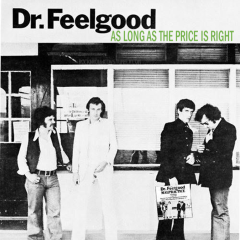
"As Long As the Price is Right" was written by Larry Wallis. The song was originally recorded by Wallis's band, The Pink Fairies, but was never released. The song appears as the sixth track on Dr. Feelgood's fifth studio album, Be Seeing You. The album was the first to feature guitarist Gypie Mayo, after the departure of guitarist and founding member Wilko Johnson. Be Seeing You was produced by Nick Lowe and was released in October 1977. The album's title was taken from a catchphrase used in the popular British television show, The Prisoner. "As Long As the Price is Right" also appears as the 12th track on Dr. Feelgood's seventh album, the 1979 live album, As It Happens. This is the version that was released as a single in April 1979. The 7-inch single came in a choice of black, brown, blue, or purple vinyl. It reached #40 on the UK Singles chart. Personnel on the record were: Lee Brilleaux (vocals, rhythm guitar, harmonica), John "Sparko" Sparks (bass, backing vocals), John "The Big Figure" Martin (drums, backing vocals), and Gypie Mayo (lead guitar).
Dr. Feelgood is an English pub rock band formed in Canvey Island, England, in 1971 by Johnson, Brilleaux, Sparks, and Martin. They took their name from a 1962 record by blues pianist Willie Lee Perryman who was also known as Piano Red and Dr. Feelgood. By the mid-1970s, the group was one of the most popular bands on the London pub rock circuit. Many feel that the British pub rock scene was the road that led to punk rock. Dr. Feelgood released 16 studio albums, 10 live albums, 11 compilation albums, one EP, and 25 singles. Sixteen people have passed through the ranks of the band since its inception. Founding member and lead singer Lee Brilleaux passed away in 1994. A band still tours under the Dr. Feelgood banner without any of the original members. Filmmaker Julien Temple made an excellent documentary on Dr. Feelgood called Oil City Confidential, which was released to much critical acclaim in 2009 and shown on BBC Four in 2010.