Permian-focused M&A activity may grab all the headlines, but don’t forget about the Eagle Ford. Over the past couple of years, a steady stream of big-dollar deals have been announced in the South Texas shale play, most of them tied to efforts by growth-oriented E&Ps to increase their scale, improve their operational efficiency and expand their inventory of top-tier drilling sites. As we’ll discuss in today’s RBN blog, the dealmaking has continued this spring, most recently with Crescent Energy’s announcement that it will be acquiring SilverBow Resources.
As we said a while back in a two-part blog series on Eagle Ford M&A, the South Texas production area had its glory days in the early years of the Shale Era, slugging it out with the Permian and offshore Gulf of Mexico for the #1 spot in crude oil production and with the then-preeminent Haynesville for top honors in natural gas output. But the mid-decade crash in oil and gas prices hit the Eagle Ford harder than any other U.S. production area and it didn’t rebound the way those other basins did for a variety of reasons. For the past year and a half, however, South Texas gas production has been topping 7 Bcf/d for the first time since 2015 and oil production has been holding steady at about 1.1 MMb/d for even longer — not Permian numbers by any means, but significant nonetheless.
The replay of our Fall 2026 School of Energy (September 9 & 10, Houston) is now available online!
Learn from RBN experts, participate in hands-on Excel modeling, connect with industry peers, and gain a stronger understanding of today's interconnected energy markets.
More pertinent to today’s topic, M&A activity in the Eagle Ford has been through the roof. We’ll get to the latest deals in a moment. First, let’s quickly recap some of the nine- and 10-figure deals that have closed the in just the past couple of years involving South Texas acreage and production. (Note that this isn’t an exhaustive list and there were several other high-profile transactions that happened prior to this timeframe.) These include:
- Devon Energy’s $1.8 billion purchase of Validus Energy, a privately held Eagle Ford producer, which closed in September 2022.
- Marathon Oil’s December 2022 acquisition of Ensign Natural Resources’ Eagle Ford assets for $3 billion (discussed in Come Back Song).
- Spanish energy giant Repsol’s February 2023 purchase of the South Texas acreage and production of Japan’s INPEX Corp. for an undisclosed amount.
- U.K.-based INEOS’s purchase of some of Chesapeake Energy’s South Texas assets for $1.1 billion — a deal that was finalized in May 2023.
- Canadian producer Baytex Energy’s June 2023 acquisition of Eagle Ford pure-play Ranger Oil in a cash-and-stock deal valued at $2.2 billion.
- The $551 million purchase by privately held Ridgemar Energy of Callon Petroleum’s Eagle Ford assets, which closed in July 2023.
- The recently announced, $22.5 billion plan by ConocoPhillips to acquire Marathon Oil — as we’ll get to, both companies have a significant presence in the Eagle Ford.
About the song
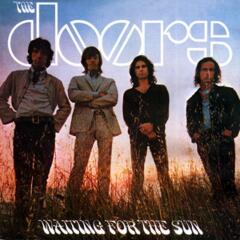
“We Could Be So Good Together” was written by Jim Morrison, Ray Manzarek, Robby Krieger and John Densmore (The Doors). It appears as the third song on side two of The Doors’ third studio album, Waiting for the Sun. The song had been recorded during the sessions for The Doors’ second album, Strange Days. It was issued as the B-side for the single of “The Unknown Soldier.” The up-tempo song with its conflicted lyrics may be a reference to Morrison’s relationship with girlfriend Pamela Courson. The second
song on side one of the LP, “Love Street,” is certainly about Pamela and Jim and their residence on Rothdell Trail in Los Angeles’ Laurel Canyon. Personnel on the record were: Jim Morrison (vocals), Ray Manzarek (keyboards), Robby Kreiger (guitar), John Densmore (drums) and Doug Lubahn (bass).
Waiting for the Sun was recorded at TTG and Sunset Sound in Hollywood between November 1967 and May 1968 and produced by Paul Rothchild. The Doors’ prior two albums were made from a cache of previously written songs. After the whirlwind of being on the road and constant press and publicity chores, the band found they were short of material when it came time to record their third album. Originally side two of the LP was going to be “Celebration of the Lizard,” a long piece developed from a poem of Morrison’s. The poem was printed on the album’s gatefold sleeve. “Not to Touch the Earth” was the only fragment from “Celebration of the Lizard” used on the album. Photographer Paul Ferrara took the iconic cover shot of The Doors from the roof of his Rambler station wagon as the sun was rising over Laurel Canyon. Morrison’s growing immersion in alcoholism stymied the progress of the album — he often missed sessions or was too drunk to perform. Despite the setbacks, the album was released in July 1968 and went to #1 on the Billboard 200 Albums chart. It has been certified Platinum by the Recording Industry Association of America. Two singles were released from the LP.
The Doors were an American rock band formed in Los Angeles in 1965 by Jim Morrison, Ray Manzarek, Robby Krieger and John Densmore. They are considered the quintessential rock band from Los Angeles in the 1960s. They released nine studio albums, five live albums, 21 compilation albums, two soundtrack albums, and 21 singles and have sold more than 100 million records. The group was inducted into the Rock and Roll Hall of Fame in 1993 and has a star on the Hollywood Walk of Fame. Jim Morrison died in Paris in 1971. Ray Manzarek died in Los Angeles in 2013.