When firing up the backyard propane grill and watching that first propane molecule flash to life, most people don’t think much about what it took to get that fuel to the cylinder they picked up at the store. But that long and winding road from the production well to the tank beneath your grill is actually a fascinating tale of supply-chain logistics involving producers, midstreamers, and propane retailers. In today’s blog, we will take that interesting and sometimes mysterious trip with a molecule of propane. We will travel over 1,000 miles, moving in and out of various facilities, purifying our product and incurring various costs each step of the way. So strap on your seat belt for a selection from our greatest blog hits, in which we track a typical propane molecule’s journey from beginning to end.
Over the years, we’ve written extensively in the RBN blogosphere about the propane market and how the logistics of that market are tied together by gathering systems, gas processing plants, pipelines, storage facilities, fractionators, and distribution networks. Propane makes up about one-third of natural gas liquids (NGL) production from natural gas processing, with U.S. propane production averaging about 1.7 MMb/d so far this year. Over 60% of that volume makes its way to market with a stopover at the Mont Belvieu storage and processing hub — center of the NGL universe — located about 30 miles east of Houston (see our Between Mont Belvieu And The Deep Blue Sea series, our Magical Mystery Tour series, and our Wild Ride Drill Down Report).
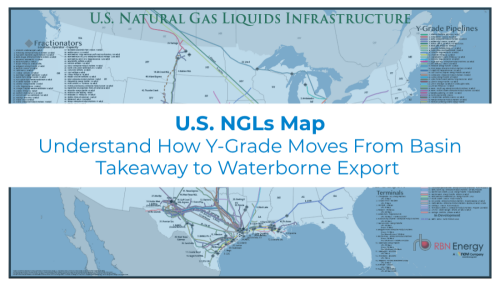
Visualize the infrastructure behind U.S. NGL movement.
The U.S. NGLs Map provides a comprehensive view of the transport, processing, and export networks moving NGLs across the U.S.
Like all energy commodity markets, propane is going through COVID-era changes, with supplies poised to decline and regional exports increasing (see Caught in the Balance and Hold On To Your Hat, Part 3). But even with all these changes in the market, the fundamentals of the propane supply chain remain relatively unscathed, particularly for molecules coming from one of the oldest and most prolific of supply basins: the Permian, which today is the source for about 35% of U.S. propane supplies from gas processing.
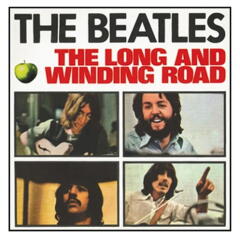
About the song
"The Long and Winding Road" was written by Paul McCartney and credited to Lennon-McCartney. It appears as the seventh cut on side two of The Beatles’ 12th studio album, Let It Be. Released as a single in May 1970, the song went to #1 on the Billboard Hot 100 Singles chart. It would be the 20th and last #1 single for The Beatles. McCartney wrote the song at his farm in Scotland, inspired by the growing tensions in the band during the filming of the “Let It Be” documentary film. McCartney was unhappy with the orchestral and chorale overdubs added to the song by producer Phil Spector. In 2003, McCartney oversaw the remix of Let it Be, entitled Let It Be...Naked. In that version, he removed the Spector embellishments and presented the song in its raw form. Personnel on the record were: Paul McCartney (lead vocals, acoustic piano), John Lennon (bass), George Harrison (electric guitar), Ringo Starr (drums), and Billy Preston (Fender Rhodes electric piano).
Let It Be is the 12th and final released studio album of The Beatles. It was recorded at Twickenham Studios and Abbey Road Studios in London between January 1969 and April 1970 as part of a documentary film showing The Beatles returning to their live-performing roots. In the finished film, you can sense the discord among the band members — they were basically breaking up The Beatles as the cameras rolled. The Spector-produced Let It Be album was released in May 1970, and went to #1 on the Billboard Top 200 Albums chart. It has been certified 4X Platinum by the Recording Industry Association of America. Three singles were released from the LP.
The Beatles were an English rock band formed in Liverpool in 1962. With band members John Lennon, Paul McCartney, George Harrison, and Ringo Starr, The Beatles changed the face of rock and roll. The band was featured in four motion pictures, and released 23 studio albums, five live albums, 53 compilation albums, 21 EPs, and 63 singles. They have sold more than 600 million records worldwide. The band has won one Academy Award, four Brit Awards, seven Grammy Awards, and 15 Ivor Novello Awards. They have a Grammy Lifetime Achievement Award, and are members of the Rock and Roll Hall of Fame. All four Beatles are Members of the Order of the British Empire. Paul McCartney was knighted by Queen Elizabeth II in March 1997; Ringo Starr (Richard Starkey) was knighted by the Duke of Cambridge in March 2018. The Beatles officially broke up in April 1970. John Lennon died in 1980, followed by George Harrison in 2001. McCartney and Starr continue to record and tour as solo artists.