


About two-thirds of all of the propane consumed in the U.S. is used as fuel — for indoor and outdoor cooking, home heating, water heaters, drying crops, and running forklifts and fleet vehicles. The other one-third is used as a feedstock for producing ethylene and other petchems. About 95% of the propane supply to meet this demand is produced and processed right here in the U.S. of A., making propane the most American fuel we’ve got. But when firing up the grill out back and watching that first propane molecule flash to life, most backyard chefs don’t think much about the long and winding road their propane has traveled. It’s actually a fascinating tale of supply-chain logistics that involves high pressures, bitter cold, wild rides up and down tall towers, storage deep underground, and, of course, trains, trucks, and tanks. We think it’s a tale that needs to be told, and that’s what we’ve been doing in this update of another Greatest Hit blog.

Crude Oil TradeView provides up-to-date data and insights into the behavior of differentials for 33 crude assessments across North America. Each week, it also walks you through the reasoning of why differentials widen, narrow, flip (premium vs. discount), or blow out.
Over the past three weeks, we’ve been tracking a typical propane molecule from the point that it departs a shale formation 10,000 feet below the surface of West Texas until it arrives at the burner tip of a propane BBQ grill in your backyard. In Part 1, we started with the moment our little propane molecule squeezed through a fracture in the Permian’s Spraberry formation and into the wellbore of Brook-Funkhouser 19-A in Upton County, TX. Our molecule reached the surface as part of a bubbling, comingled, multi-phase stream of crude oil, produced water, and natural gas laden with natural gas liquids (NGLs) and a host of impurities. It then was processed through separator and heater treater equipment. Our little molecule was “flashed off” with a stream of NGL-rich natural gas and sent via gathering pipeline system to Targa Resources’ 200-MMcf/d Joyce natural gas processing plant, where it was chilled to minus 120 degrees Fahrenheit. At that point, most of the NGLs in the gas stream, including our little molecule, condensed into liquid phase, while the methane kept on flowing into a natural gas pipeline.
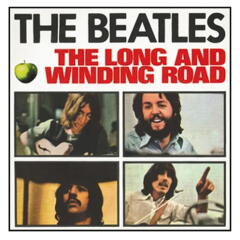
About the song
"The Long and Winding Road" was written by Paul McCartney and credited to Lennon-McCartney. It appears as the seventh cut on side two of The Beatles’ 12th studio album, Let It Be. Released as a single in May 1970, the song went to #1 on the Billboard Hot 100 Singles chart. It would be the 20th and last #1 single for The Beatles. McCartney wrote the song at his farm in Scotland, inspired by the growing tensions in the band during the filming of the “Let It Be” documentary film. McCartney was unhappy with the orchestral and chorale overdubs added to the song by producer Phil Spector. In 2003, McCartney oversaw the remix of Let it Be, entitled Let It Be...Naked. In that version, he removed the Spector embellishments and presented the song in its raw form. Personnel on the record were: Paul McCartney (lead vocals, acoustic piano), John Lennon (bass), George Harrison (electric guitar), Ringo Starr (drums), and Billy Preston (Fender Rhodes electric piano).
Let It Be is the 12th and final released studio album of The Beatles. It was recorded at Twickenham Studios and Abbey Road Studios in London between January 1969 and April 1970 as part of a documentary film showing The Beatles returning to their live-performing roots. In the finished film, you can sense the discord among the band members — they were basically breaking up The Beatles as the cameras rolled. The Spector-produced Let It Be album was released in May 1970, and went to #1 on the Billboard Top 200 Albums chart. It has been certified 4X Platinum by the Recording Industry Association of America. Three singles were released from the LP.
The Beatles were an English rock band formed in Liverpool in 1962. With band members John Lennon, Paul McCartney, George Harrison, and Ringo Starr, The Beatles changed the face of rock and roll. The band was featured in four motion pictures, and released 23 studio albums, five live albums, 53 compilation albums, 21 EPs, and 63 singles. They have sold more than 600 million records worldwide. The band has won one Academy Award, four Brit Awards, seven Grammy Awards, and 15 Ivor Novello Awards. They have a Grammy Lifetime Achievement Award, and are members of the Rock and Roll Hall of Fame. All four Beatles are Members of the Order of the British Empire. Paul McCartney was knighted by Queen Elizabeth II in March 1997; Ringo Starr (Richard Starkey) was knighted by the Duke of Cambridge in March 2018. The Beatles officially broke up in April 1970. John Lennon died in 1980, followed by George Harrison in 2001. McCartney and Starr continue to record and tour as solo artists.





Comments
One of the interesting uses of propane is in RV refrigerators. Which also have lovely hydrogen and ammonia to go with the flammable propane. And no pump. As a mechanical engineer, this just seems like chemical magic. No normal freon cycle, being driven by an electrically powered compressor.
Good series on propane!
Maybe you would consider doing a similar series on petroleum products journey to terminals and beyond! You could have a traveling iso-octane molecule, could be represented as a centipede (or similar). Start at the beginning, you know, where Jed Clampett shoots and crude comes bubbling out of the ground, all the way thru to a "tiger in your tank".
Or even do a series on a history of oil & chemical company mascots, such as a winged-footed runner, a green dinosaur, a lion, even a red horse.
Callie - this was a great article and so useful to explain to others how NGL's get to market. Thanks!