


Before the bullish winter of 2021-22, it appeared the Northeast natural gas market was headed for familiar territory: worsening seasonal takeaway constraints and deeper, constraint-driven price discounts starting as early as this spring. Instead, the market went in the other direction the past few months. Takeaway utilization out of Appalachia has been lower year-on-year and, for the most part, Appalachian supply basin prices have followed Henry Hub higher even as that benchmark rocketed to 14-year highs. That’s not to say that constraints out of the Northeast aren’t on the horizon. But the market is now poised to escape the worst of it this year, despite the completion of the last major takeaway pipeline project in the region, Mountain Valley Pipeline (MVP), being pushed out another year or longer, if it crosses the finish line at all. In today’s RBN blog, we provide an update on regional fundamentals and what recent trends mean for gas production growth and pricing in the region.
As we’ve discussed many times in the RBN blogosphere — mostly recently in our latest discussion of the MVP project in Will It Go Round in Circles? — the Appalachia production basin has long struggled with midstream constraints. For much of the Shale Era, Appalachian producers were champing at the bit to grow production with every little piece of incremental takeaway capacity that came online. The situation became particularly dire by the middle of the last decade, when Northeast supply outgrew intra-regional demand (see One Step Closer) and local production growth became constrained by producers’ ability to access markets outside the Northeast region. Production growth “slowed” to an average of 2.5 Bcf/d each year in the 2015-17 timeframe, compared with close to 4 Bcf/d in 2013 and 2014, as midstream capacity couldn’t keep up. Producers got a respite in 2018-19 as major capacity additions were completed and for the first time in years there was unused egress out of the basin, easing constraints and allowing Appalachian prices to strengthen relative to Henry Hub. But with conditions improving, production took off again, increasing by more than 4 Bcf/d in 2018, once again resuming the march toward midstream constraints and weaker prices. The pandemic slowed growth, of course, as rig counts fell and domestic and export demand evaporated, but Northeast production still grew by nearly 1 Bcf/d in 2020 and nearly 2 Bcf/d in 2021 to a record of 35.5 Bcf/d by December 2021, bringing with it record outflows.

The Natural Gas Master Class is a one-day online event focusing on understanding flow analysis, interpreting pipeline data and forecasting future flows. This course is designed to equip you with the knowledge and skills to effectively analyze the complexities of natural gas markets, flow analysis, and pipeline modeling. Join us online
October 21 | Online
So, it appeared that the region was again moving toward worsening constraints in 2022 and beyond (see our Headed for Heartbreak series) — only this time without the assurance that a spate of pipeline capacity additions would eventually come along to alleviate the bottlenecks. As we said in Up Around the Bend, the bulk of the FERC-approved expansions are now completed and online, with the last big one — MVP — facing an uncertain future and in danger of being canceled altogether. Moreover, the capital investment and regulatory appetite for hydrocarbon development in the Northeast has largely dried up, particularly in light of the challenges faced by MVP and other greenfield projects before it that were ultimately canceled due to similar challenges. Earlier this month, the Biden administration proposed reinstating state and tribal authority given under the Clean Water Act to block energy and other infrastructure projects based on their potential to negatively impact the water quality of local rivers and streams. (The Trump administration had implemented a rule in 2020 to limit that authority, which had previously been in place since the early 1970s.) While Russia’s war on Ukraine has triggered concern about energy security globally and softened sentiment somewhat toward hydrocarbons, that hasn’t saved MVP from the staunch opposition by environmental activists or their legal challenges. Nor has it done much to alleviate the fears of any other midstreamer that might attempt to tap additional Appalachian supply.
About the song
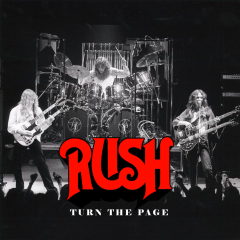
“Turn the Page” was written by Bob Seger and first appeared as the fifth cut on side one of his sixth studio album, Back in ’72. However, the song would receive more radio airplay when it was included on Seger’s 1976 live album, Live Bullet. Drummer David Teegarden says Seger wrote this song after an incident at a truck stop when Seger was touring with the Tulsa band Teegarden, Van Winkle & Bruce backing him. En route to their next show, some truck drivers at the truck stop’s diner hassled them and made derogatory comments about their long hair and appearance. By the next day, Seger had written “Turn the Page” about the event.
Back in ’72 was recorded at Leon Russell’s Paradise Studios in Tia Juana, OK; Pampa Studios in Warren, MI; and Muscle Shoals Studios in Muscle Shoals, AL. Produced by Punch Andrews and Bob Seger, the album was released in January 1973 and went to #188 on the Billboard Top 200 Albums chart. Personnel on the record were: Bob Seger (lead vocals, guitar), Dick Sims (Hammond organ, bass pedals, piano and Clavinet), Jamie Oldaker (drums), Sergio Pastora (percussion), Alto Reed (saxophones and flute) and Marcy Levy (background vocals). Oldaker and Levy would record with Leon Russell, and then join Sims in becoming part of Eric Clapton’s band later in the 1970s.
Live Bullet was recorded at Cobo Hall in Detroit in September 1975 and released in April 1976. The record was produced by Punch Andrews and Bob Seger. Now billed as Bob Seger and the Silver Bullet Band, this live showcase of Seger's talents went to #34 on the Top 200 Albums chart. The considerable amount of radio airplay it received helped prime the way for Seger to become a national star with his next LP release, Night Moves. “Turn the Page” was one of the highlights from the live album. The personnel on Live Bullet were: Bob Seger (lead vocals, guitar, piano), Drew Abbott (lead guitar, backing vocals), Alto Reed (saxophones, backing vocals), Robyn Robins (keyboards), Chris Campbell (bass, backing vocals) and Charlie Martin (drums, backing vocals).
Metallica covered the song and released it as a single in November 1998 from their Garage Inc. album. It went to #1 on the Billboard Mainstream Rock Singles chart.
Bob Seger is an American singer, songwriter and musician from Detroit. He has released 18 studio albums, two live albums, seven compilation albums and 68 singles. Seger has sold more than 75 million records worldwide and is a member of the Songwriters Hall of Fame, the Michigan Rock and Roll Legends Hall of Fame and the Rock and Roll Hall of Fame. He has won one Grammy Award and concluded his Roll Me Away final tour in November 2019.
"About the Song" -- written by Mickey McMahan , RBN Director of Musicology




Comments
If there is excess takeaway capscity, why has basis increased? Both summer and next wintwer basis increased from earlier in the year.