The U.S. natural gas pipeline sector is entering a challenging period for recontracting a major chunk of its capacity. The numerous pipeline systems built during the early years of the Shale Era’s midstream boom were anchored by 10-year, firm shipper contracts, mostly with producers, making them so-called “supply-push” pipelines. Many of those initial contract periods have begun to roll off, exposing pipelines to producer-shippers’ renewal decisions based on current fundamentals. Shippers typically expect substantially lower rates for a renewal contract, because much of the pipeline has been paid off through depreciation. But there’s another issue that is becoming more important: shipper recontracting may not happen for market reasons. For pipeline owners, this is happening at the worst possible time. The market is in turmoil and facing ongoing uncertainty. Gas production is down, demand from LNG export facilities is in flux, and regional supply-demand dynamics are shifting. As if that weren’t enough, new, large-diameter pipelines out of the Permian now nearing completion will reshuffle gas flows around the country. And other transportation corridors that not long ago were bursting at the seams and feverishly expanding to ease constraints are now at risk of being underutilized. Today, we discuss the factors that together may present significant risk for pipelines approaching the proverbial recontracting “cliff.”

The Shale Revolution began in the early 2000s and quickly ramped up production in several regions, one after another. Figure 1 shows the three plays that have resulted in the biggest capital investments in supply-push pipelines for natural gas: Barnett/Haynesville, Marcellus/Utica, and Permian. Other plays such as Bakken and SCOOP-STACK also ramped up, but didn’t result in the huge waves of infrastructure development that happened in these three areas.
About the song
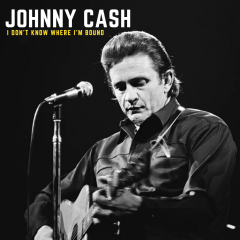
"I Don't Know Where I'm Bound" was written by Terry Cuddy and Johnny Cash, and appears as the third song on the 2000 re-issue bonus CD of Johnny Cash at San Quentin, Cash's 31st album. The song lyrics were written by an inmate at San Quentin (Terry Cuddy), and presented to Cash the day before he performed there. Cash wrote the music to it, and he and his band performed it the next day at the concert.
Johnny Cash at San Quentin was recorded live at San Quentin State Prison in California in February 1969, and released in June that year. It was the second live album from a prison by Cash, who had released At Folsom Prison the year before. The San Quentin album was produced by Bob Johnston, and went to #1 on the Billboard Top 200 Albums chart and Top Country Albums chart. The single from the LP, "A Boy Named Sue," was released in July 1969, and went to #1 on the Billboard Country Singles, and #2 on the Billboard Hot 100 Singles chart. Johnny Cash at San Quentin has been certified 3x Platinum by the Recording Industry Association of America. Personnel on the record were: Johnny Cash (lead vocals, acoustic guitar), June Carter Cash and the Carter Family (backing vocals), The Statler Brothers (backing vocals), Marshall Grant (bass), W.S. Holland (drums), Carl Perkins (electric guitar), and Bob Wootton (electric guitar). The iconic album cover photo was shot by Jim Marshall.
Johnny Cash was an American singer, songwriter, musician, and actor. He has sold more than 90 million records worldwide. He released 67 studio albums, 12 live albums, 102 compilation albums, four soundtrack albums, and 170 singles. Cash had 13 #1 singles in his career, and has won four Academy of Country Music Awards, one American Music Award, nine Country Music Association Awards, 17 Grammy Awards, and one MTV Video Music Award. He is a member of the Rock and Roll Hall of Fame, Country Music Hall of Fame, Gospel Music Hall of Fame, and Rockabilly Hall of Fame. Cash has won a Kennedy Center Honor, a National Medal of Arts, and a Grammy Lifetime Achievement Award, and has a star on the Hollywood Walk of Fame. Johnny Cash died in September 2003, four months after his wife June.