Permian oil and gas production may have slammed up against capacity constraints, but that does not mean production growth has ground to a halt. Far from it. In the past 10 weeks, Permian gas production is up another 8% — a gain of almost 700 MMcf/d. Crude production now tops 3.5 MMb/d, with incremental barrels finding their way to market via truck, rail and new pipeline capacity — soon including Plains All American’s new Sunrise project, which will move more Permian crude toward the hub in Cushing, OK. Record-setting volumes of NGLs are streaming their way out of the Permian to Mont Belvieu. This market is moving so fast that if you blink, you’ll miss something important. So to get caught up with all things Permian, last week RBN hosted PermiCon, an industry conference designed to bridge the gap between fundamentals analysis and boots-on-the-ground market intelligence. We think PermiCon accomplished that goal, and in today’s blog, we summarize a few of the key points discussed during the conference proceedings.
About 750 industry leaders joined us for the conference. Our content combined six presentations by RBN and the views of 14 CEOs and senior executives with significant operations in the Permian. We had keynotes from John Christmann, CEO Apache, and Alan Armstrong, CEO Williams. Panelists were Kevin Lafferty, SVP Devon; Dan Westcott, President Legacy Reserves; Stephanie Reed, SVP Parsley; Mike Mears, CEO Magellan; Jeremy Goebel, Senior Group VP Plains; Uzi Yemin, CEO Delek; Heath Deneke, EVP Crestwood; Brian Freed, incoming CEO Altus Midstream; Christer Rundlof, CEO WhiteWater; Tom Whitener, President Energy Spectrum; Zach Lee, CEO ARM Energy/Salt Creek; and Ken Snyder, CCO Frontier Energy. These people know what is going on!

NATGAS Permian is a weekly natural gas fundamentals analysis focusing entirely on the key market drivers within the Permian basin. The report contains details and forecasts around natural gas production, demand, pricing, and a summary of pipeline outflows and capacities from the Permian to neighboring regions.
Production
Of course, we kicked things off with the force of nature driving all of the Permian activity — namely, production growth over the past 10 years, shown in Figure 1. Back in 2008, Permian crude oil production was languishing at 900 Mb/d. By 2014, volumes had doubled, and they never dropped off after the price crash that year. Now crude production has doubled again, up to 3.5 MMb/d.
About the song
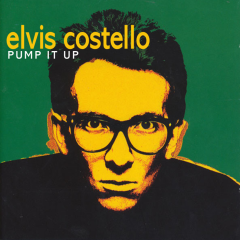
"Pump It Up," written by Elvis Costello, appears on his second album, 1978's This Year's Model. The LP was the first to feature his band The Attractions. (A San Francisco-based band, Clover, backed him up on his first album.) This Year's Model was recorded at Eden Studios in London, with Nick Lowe producing. Costello wrote all of the songs on the album. An interesting side story on the LP comes from when photographer Chris Gabrin was shooting photos for the cover, Costello requested that he play The Eagles "Hotel California" during the session. Gabrin thought that was a curious request, and Costello explained to him that he loathed the song and wanted it played so he would look angry for the album cover. Personnel on the LP were: Elvis Costello (guitar and vocals), Steve Nieve (piano and organ), Bruce Thomas (bass), and Pete Thomas (drums).
Elvis Costello (Declan Patrick McManus) is an English singer-songwriter, musician, composer, record producer, author and actor. He began his career as a musician in the burgeoning London pub rock scene in the 1970s — a scene that represented the roots of British punk and new wave music. His first album, My Aim Is True, was released in 1977. He has recorded 25 studio albums and eight collaborative albums to date, and has received one Grammy Award, one Grammy Hall of Fame Award, and one MTV Video Music Award. Elvis Costello and The Attractions were inducted into the Rock and Roll Hall of Fame in 2003. Costello is married to jazz singer/pianist Diana Krall. They have two children.