Right now, pipeline capacity out of the Permian is constrained, and consequently some producers have cut back on well completions, more gas is getting flared, and ethane recovery is being driven more by bottlenecks than by gas plant economics. But even with these issues, there are still 487 rigs drilling for oil in the basin (according to Baker Hughes), and all will come along with sizable quantities of natural gas. Not only does this production need to be moved out of the Permian, the volumes need to find a home — either in the domestic market or overseas. These were all issues that were considered by our speakers, panelists and RBN analysts last month at PermiCon, our industry conference designed to bridge the gap between fundamentals analysis and boots-on-the-ground market intelligence. In today’s blog, we continue our review of some of the key points discussed during the conference proceedings.
PermiCon was held on October 10 and about 750 industry leaders joined us for the conference. Our content combined six presentations by RBN alongside the views of 14 CEOs and senior executives with significant operations in the Permian. In Part 1 of this series, we discussed the driver of all action in the Permian — production growth, with crude oil growing from 900 Mb/d ten years ago, doubling by 2014, never dropping off after the crude price crash that year, and now up by double again, to 3.5 MMb/d (left graph, Figure 1). We covered the implications of this growth for current crude oil pipeline takeaway capacity (regularly maxed out), Permian crude price differentials (wide, though a little narrower in the near term due to the rush to bring on new capacity), new crude oil pipeline projects designed to relieve the bottlenecks, and the strategies that infrastructure companies are taking to position themselves to be able to ride out any possible overbuild cycle in the crude pipeline capacity market.
We also considered the implications for natural gas and NGLs, also up on the very same trajectory as crude oil, because these hydrocarbon streams come right along with crude oil from the wellhead. So Permian gas production is up to nearly 8.7 Bcf/d (middle graph, Figure 1) and NGL production is at about 1.3 MMb/d (right graph, Figure 1).
About the song
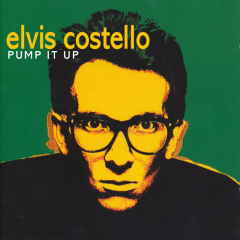
"Pump It Up," written by Elvis Costello, appears on his second album, 1978's This Year's Model. The LP was the first to feature his band The Attractions. (A San Francisco-based band, Clover, backed him up on his first album.) This Year's Model was recorded at Eden Studios in London, with Nick Lowe producing. Costello wrote all of the songs on the album. An interesting side story on the LP comes from when photographer Chris Gabrin was shooting photos for the cover, Costello requested that he play The Eagles "Hotel California" during the session. Gabrin thought that was a curious request, and Costello explained to him that he loathed the song and wanted it played so he would look angry for the album cover. Personnel on the LP were: Elvis Costello (guitar and vocals), Steve Nieve (piano and organ), Bruce Thomas (bass), and Pete Thomas (drums).
Elvis Costello (Declan Patrick McManus) is an English singer-songwriter, musician, composer, record producer, author and actor. He began his career as a musician in the burgeoning London pub rock scene in the 1970s — a scene that represented the roots of British punk and new wave music. His first album, My Aim Is True, was released in 1977. He has recorded 25 studio albums and eight collaborative albums to date, and has received one Grammy Award, one Grammy Hall of Fame Award, and one MTV Video Music Award. Elvis Costello and The Attractions were inducted into the Rock and Roll Hall of Fame in 2003. Costello is married to jazz singer/pianist Diana Krall. They have two children.